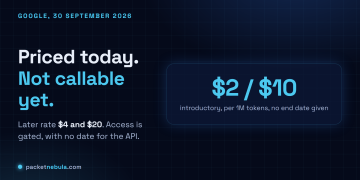





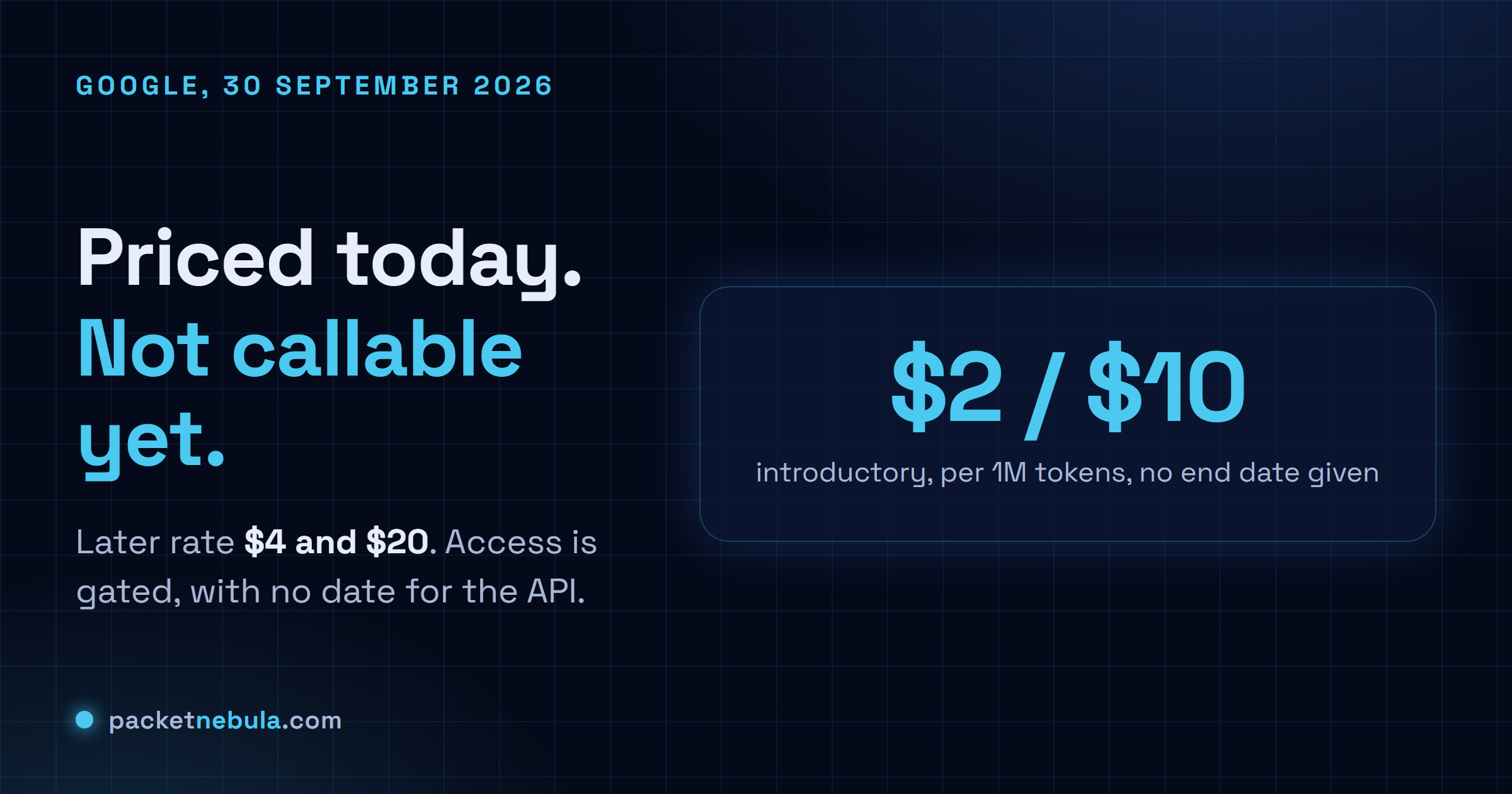
Google put a price on Gemini 4 Argon this week, and then told almost everyone they can't have it. We checked the announcement twice because the two halves don't sit well together. On 30 September 2026 Google DeepMind listed Argon at $2 per million input tokens and $10 per million output, with a later rate of $4 and $20. Today it's limited to a small group of trusted testers.
The short answer
Argon's introductory price is $2 input and $10 output per million tokens, cached input is 95% cheaper, and Google says the rate will rise to $4 and $20 without saying when. Output can run to 1 million tokens in one trajectory, up from 64,000. You can't call it yet: paid API customers and Google AI Ultra subscribers come next, with no date given. The benchmark numbers are Google's own.
What Google actually announced
Koray Kavukcuoglu, Google's chief AI architect, announced it in a blog post. Argon is the first flagship Gemini since February, according to Yahoo's report on the launch, and the headline spec isn't the price. It's the output ceiling. Google says Argon can generate up to 1 million tokens in a single trajectory, where earlier Gemini models stopped at 64,000. The post's own argument is that a model with room to think for hundreds of thousands of tokens reaches a different depth on hard problems.
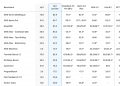
Honestly, we like that framing more than the benchmarks. Google reports 77.9% on DeepSWE v1.1, 51.3% on AutomationBench (first place on its list) and 91.7% on LVBench, a long video test. Yahoo's write-up puts the DeepSWE figure next to 74.2% for Claude Opus 5.5 and 74.1% for GPT-6 Astra. A three point lead on a coding benchmark is the kind of number we'd wait on. Every one of these figures comes from Google, and nobody outside has re-run them yet.
Availability is the awkward part. Argon is rolling out through Google's Fairwind Program to a few hundred vetted organisations first. Google says it wants developers, enterprises and consumers to get it as soon as possible, starting with paid API customers and Google AI Ultra subscribers. Its own wording is that a phased approach is required. There's no calendar attached to any of that.
The price, and the promotion hiding in it
Look at the rate card again. $2 and $10 are introductory. The standard rate is $4 and $20, so the price you can plan around is the one that doubles. Google hasn't said how long the introductory rate lasts. We can't tell you whether that's weeks or a quarter, and we'd be inventing it if we tried.
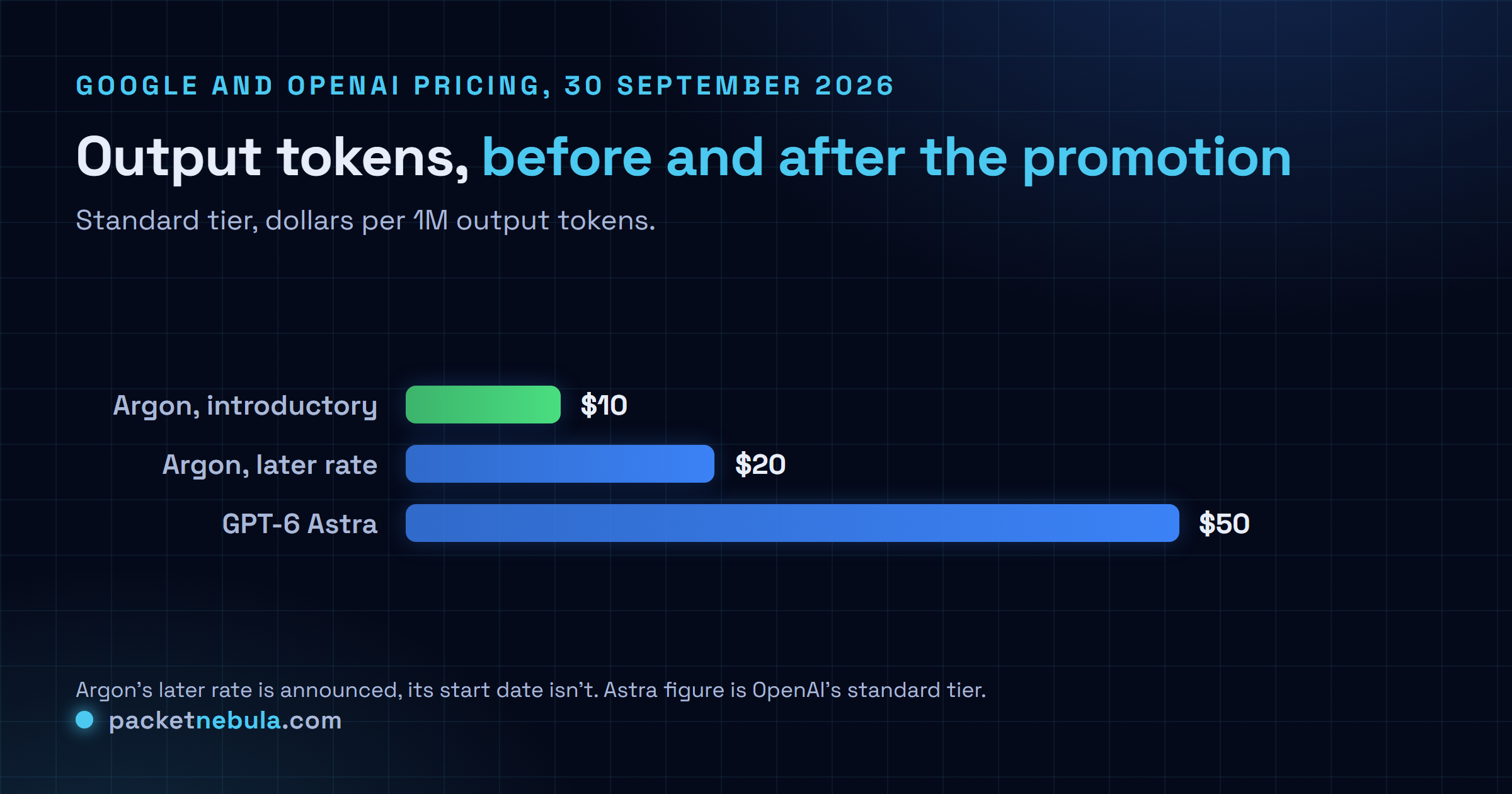
It matters most on the output side, because that's where a 1M token trajectory lands. Run one full-length trajectory and you've generated 1 million output tokens: $10 at the introductory rate, $20 at the later one. For comparison, GPT-6 Astra lists at $10 input and $50 output, and its output is capped at 128,000 tokens, so a maxed out answer costs about $6.40. Different shape, different bill. Argon is cheaper per token and can still cost more per answer if you let it think at length.
Cached input is 95% off, according to the announcement. If that applies to the listed input rate, and we're doing the arithmetic ourselves here, cached input comes to about $0.10 per million now and $0.20 later. That's the line we'd watch for agent work, where the same long prefix gets sent over and over. Anthropic's pricing has its own sharp edges, as we found when Opus 5.5 landed with four breaking changes, so compare whole workloads, not sticker prices.
What we'd do this week
Nothing, mostly. If you aren't in the gated programme you can't test it, and a price you can't call isn't a reason to rewrite a budget. I might be wrong about the timing, since Google could open the API within days, but the announcement gives no hint of it.
Two things are worth doing now. Write down your current cost per finished task on whatever model you run today, because that's the number Argon will have to beat once it's available. And decide in advance whether you'd accept the $4 and $20 rate, since that's the one you'll end up paying. If the answer is no, the introductory price is a trial, not a plan.
Image: packetnebula.com, built from Google's published figures.
Sources
Google, Gemini 4 Argon: our next era of frontier intelligence, 30 September 2026 (pricing, the 1M output limit, benchmark figures, the phased rollout wording). 9to5Google, Google announces Gemini 4 Argon as its new frontier model, 30 September 2026 (independent confirmation of the rates and the rollout order). Yahoo Finance, Google's Gemini 4 Argon closes the pricing triangle (comparison figures for Opus 5.5 and GPT-6 Astra, and the note that they're vendor-reported).
Frequently asked questions
How much does Gemini 4 Argon cost?
$2 per million input tokens and $10 per million output tokens at the introductory rate, with cached input 95% cheaper. Google says the rate will later be $4 and $20 and hasn't said when.
Can I use Gemini 4 Argon today?
Not unless you're in Google's gated Fairwind Program. Paid API customers and Google AI Ultra subscribers are next, and Google hasn't given a date.
What's new compared with earlier Gemini models?
The output ceiling. Argon can generate up to 1 million tokens in one trajectory, where the previous limit was 64,000. Google also reports 77.9% on DeepSWE v1.1.
Is Argon better than GPT-6 Astra and Claude Opus 5.5?
Google's figures say so on several benchmarks, including 77.9% on DeepSWE against roughly 74% for both rivals. They're vendor-reported and unverified, so wait for independent runs before switching anything.