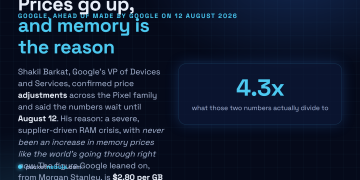





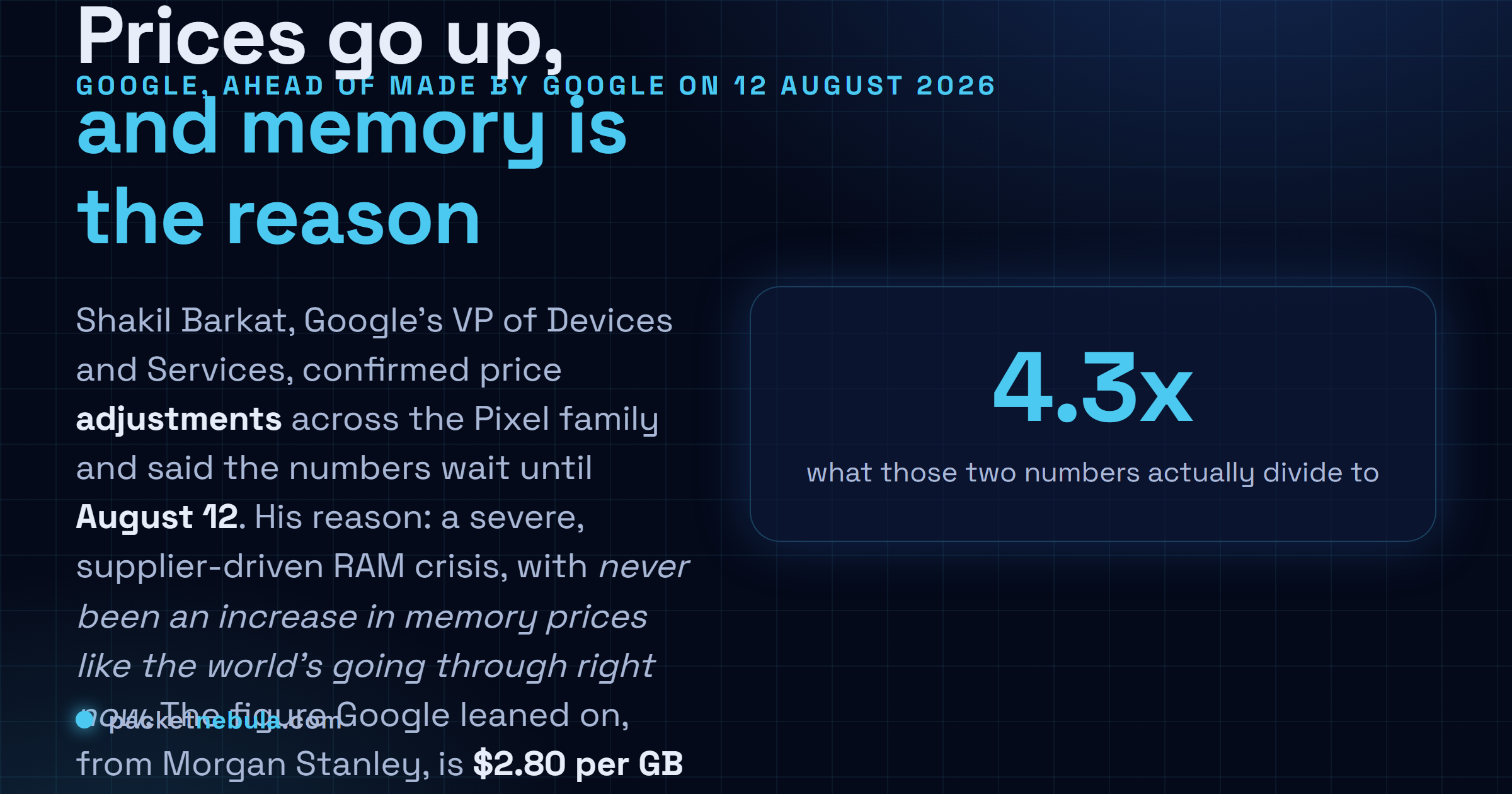
You go to re-quote a laptop refresh you scoped in January, and the same machine comes back a fifth dearer. That is the crunch Google just used, on the record, to explain why the Pixel 11 will cost more than the Pixel 10 did, with the actual prices held back until the Made by Google event on August 12. Shakil Barkat, its VP of Devices and Services, called it a severe supplier-driven memory crisis and leaned on one figure: Morgan Stanley has a gigabyte of RAM going from $2.80 in 2025 to $12 this year. Half the coverage then called that sixfold. It isn't. It's 4.3, and both numbers were sitting in the same sentence.
The short answer
Google confirmed the Pixel 11 line will cost more and named the cause: a supplier-driven memory crisis driven by AI demand. The specifics land on August 12. The number doing the rounds, a sixfold rise in RAM cost, does not match the two prices it was drawn from. What matters for your own hardware budget is that this is not a phone story.
What Google actually said
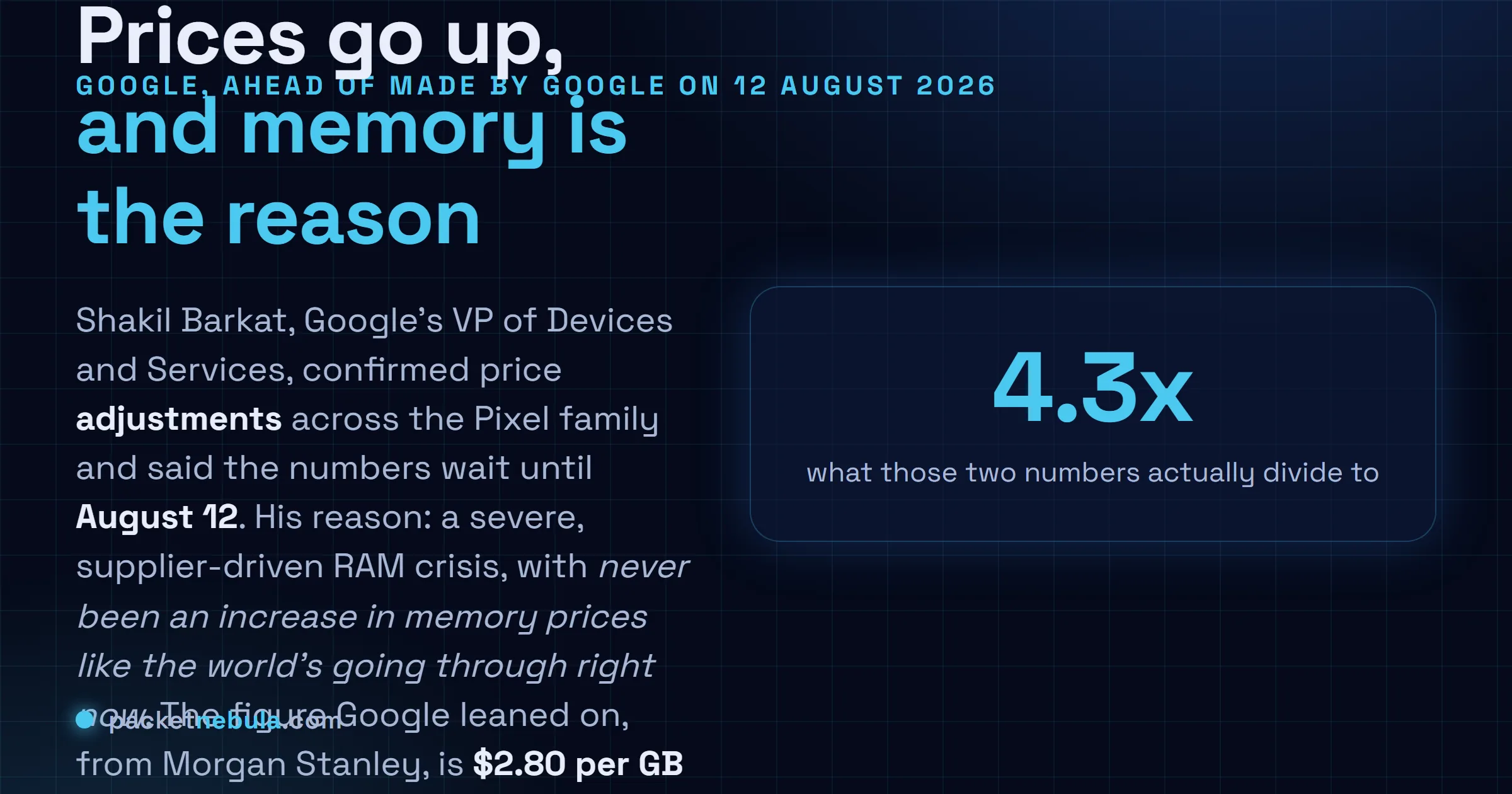
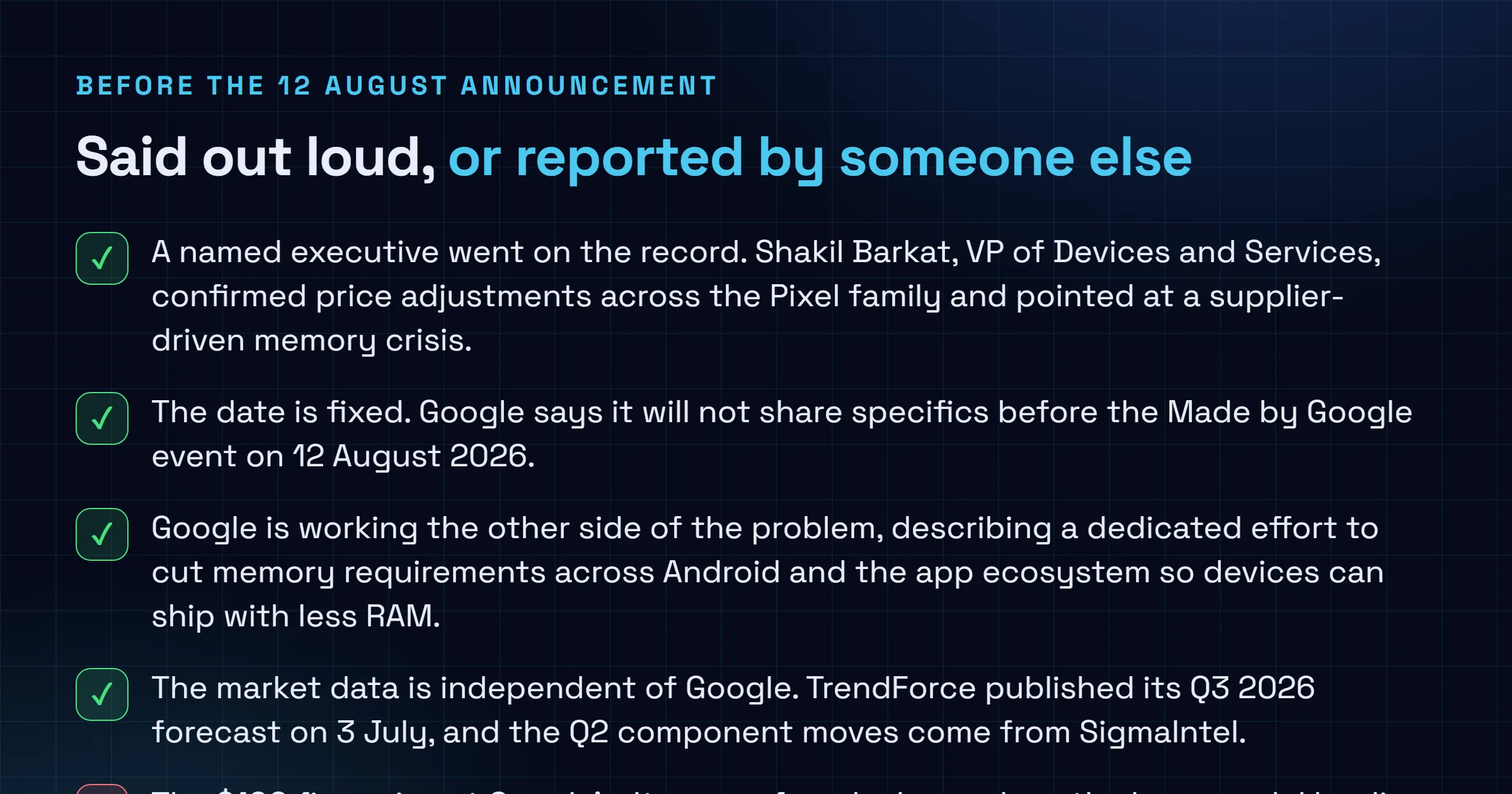
Barkat’s line, the one every outlet picked up: “there’s never been an increase in memory prices like the world’s going through right now.” He confirmed price adjustments across the Pixel family and was clear that Google won’t share specifics before the August 12 event.
He also described a dedicated effort to pull memory requirements down across Android and its app ecosystem, so devices can ship with less RAM without feeling worse. Honestly, that’s the more interesting half of the interview. A platform owner publicly optimising for less memory is a reversal of roughly fifteen years of Android direction, and it’s a concession that the component curve isn’t bending back any time soon.
Everything past that is leaked. The $100 increase, the base model at $899 against the Pixel 10’s $799, the 128 GB tier disappearing in favour of a 256 GB entry point, a Pro shipping with 12 GB of RAM instead of 16. All of it is plausible. None of it came from Google, and we’d rather you knew which is which before the twelfth.
The sixfold that isn’t
Here’s the bit that made us go and check.
Morgan Stanley put a gigabyte of RAM at $2.80 in 2025 and $12 in 2026. That is the pair of numbers Google’s coverage cited, and it’s a genuinely ugly move: a 329 percent rise inside a year, on a component that sits in everything. Then headline after headline called it a sixfold surge, printed directly above the two figures that don’t support it. Twelve over 2.80 is 4.29. Sixfold would be $16.80.
Small thing. It’s also the thing that decides whether your CFO believes the next number you put in front of them.
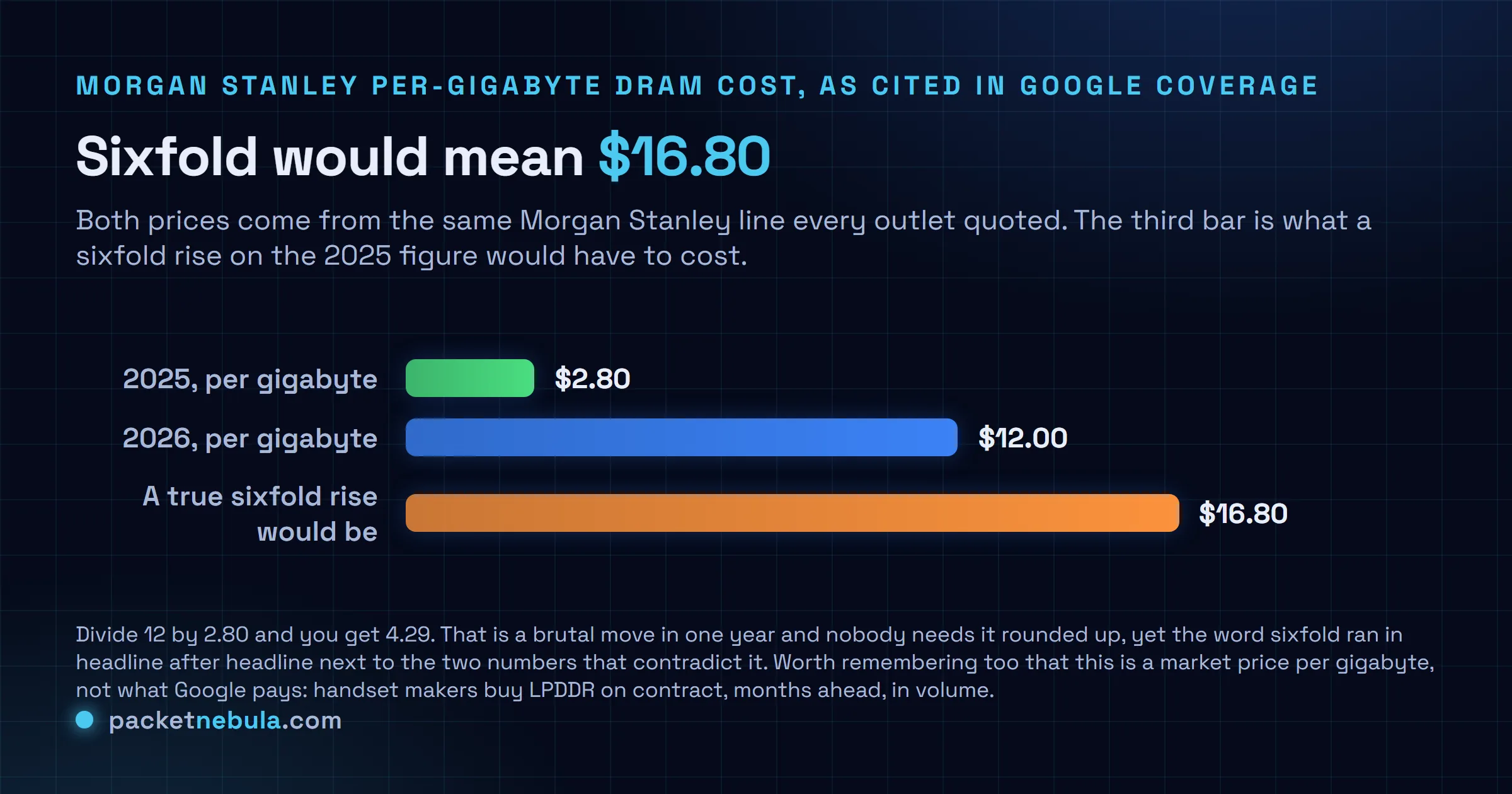
There’s a second caveat nobody attached to it. That per-gigabyte figure is a market price, and Google is not buying at market. Handset makers commit to LPDDR volumes on contract, often months out, which is exactly why Barkat can say the economics shifted without saying by how much for a Pixel. The $12 tells you the direction of the pain. It does not tell you the bill of materials.
It isn’t just phone RAM, and it isn’t just this quarter
Strip the Pixel out and the picture gets more useful to anyone who buys hardware for a living.
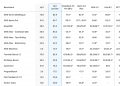
In Q2 2026 alone, SigmaIntel has a 96 Gb LPDDR5X module going from $77.10 to $145.90, a 16 GB DDR4 module from $137 to $207.10, and a 512 GB NVMe Gen4 SSD landing at $126.30 after a 54 percent quarter. UFS storage more than doubled. These are contract prices, quarter on quarter, on parts that were already expensive going in.
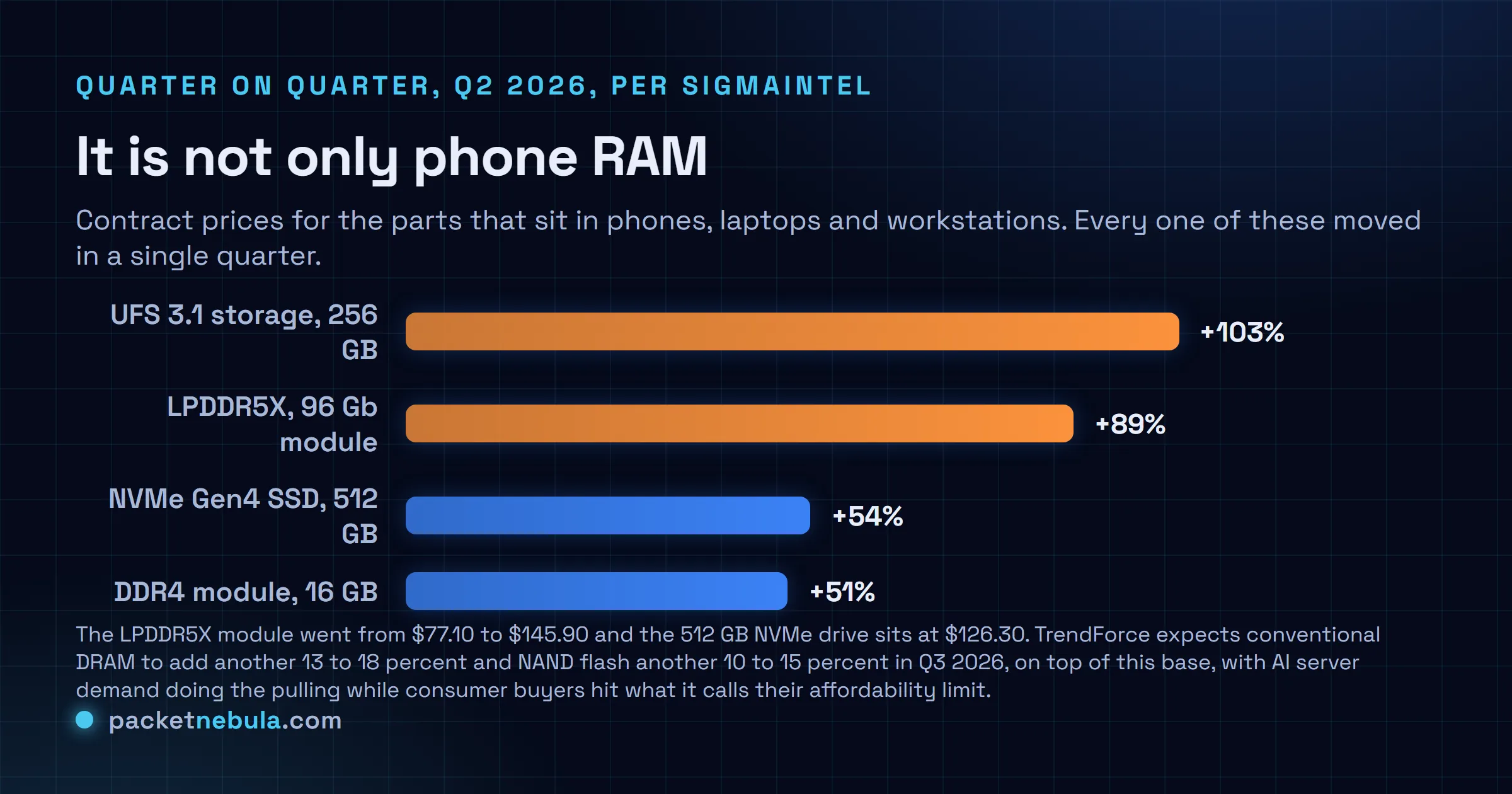
TrendForce’s July 3 forecast then puts conventional DRAM up another 13 to 18 percent and NAND flash up another 10 to 15 percent in Q3, compounding on that base. Its framing is worth reading twice: the increases are moderating not because supply recovered, but because consumer buyers are “reaching their affordability limit” while AI server demand keeps pulling. IDC models the consequence as a PC market contracting 4.9 percent this year, 8.9 percent in its pessimistic case, with average selling prices up 4 to 8 percent depending which scenario you believe.
The cause runs straight back through everything we’ve been covering. Memory makers moved capacity to high-bandwidth memory because an HBM stack for an accelerator earns more per wafer than the LPDDR in a mid-range handset. When SK and NVIDIA signed letters of intent for a 2 gigawatt AI factory on SK hynix HBM4, that capacity came from somewhere. It came from here.
What we’d do about a 2026 refresh
Buy earlier rather than later, where the money is already approved. That’s not a prediction so much as an admission that nobody credible is forecasting a fall this year, and both Samsung and SK hynix have pointed at 2027 and beyond. If you were going to spend it in November, spending it in August is the cheaper half of a bet you’re making either way.
Spec storage honestly and stop over-provisioning RAM out of habit. That habit was free when a gigabyte cost $2.80. On the flip side, watch out for the reverse trap in consumer kit: if the 128 GB Pixel really does vanish, you’re paying for storage you didn’t choose, and the same repackaging is happening across laptop lines where a “price hold” quietly comes with less memory.
And if you were budgeting a machine to run models locally, redo that arithmetic now. The whole appeal of running Qwen 3.7 offline on your own hardware was that the hardware was a one-off cost against a per-token bill. That comparison just moved, and not in local’s favour. I still think local wins for anything touching data you can’t send out. It’s a much closer call than it was in January.
One last note, mostly because it amused us. Google’s answer to memory costing too much is to make Android need less of it. Which is what everyone said the platform should have done back when RAM was cheap and nobody was listening.
Sources
The Barkat interview and quotes come from 9to5Google, with the confirmed-versus-leaked breakdown cross-checked against TechRepublic. The Q3 2026 contract price forecast is TrendForce’s own press release of July 3, 2026. Q2 component prices are SigmaIntel data as reported by TweakTown, and the market scenarios are from IDC. The Morgan Stanley per-gigabyte figures are quoted as reproduced by that coverage.
Frequently asked questions
How much will the Pixel 11 cost?
Google hasn't said. Shakil Barkat confirmed there will be price adjustments across the Pixel family and stated that specifics wait until the Made by Google event on 12 August 2026. The $100 increase and the $899 entry price being quoted come from leaks, not from Google.
Why are RAM prices rising so fast in 2026?
AI datacentre demand. Memory makers have shifted wafer capacity toward high-bandwidth memory for accelerators, which carries far better margins than the LPDDR that goes in a phone or the DDR5 that goes in a laptop. SK hynix told investors at its Q3 2025 results that DRAM, NAND and HBM were sold out for the following year. Every wafer committed to an HBM stack is one not making consumer parts.
Did RAM prices really go up sixfold?
No. The Morgan Stanley figure Google's coverage cites is $2.80 per gigabyte in 2025 against $12 in 2026, which is 4.3 times, or a 329 percent rise. It is a savage increase either way, but sixfold would mean $16.80 and nobody has published that number. Treat the per-gigabyte figure as a market price too, since handset makers buy on volume contracts months ahead.
Should I buy RAM and SSDs now or wait?
If a refresh is already funded and scoped for this year, buying earlier is the cheaper side of the bet. TrendForce forecasts conventional DRAM up another 13 to 18 percent and NAND flash up 10 to 15 percent quarter on quarter in Q3 2026, on an already elevated base. Nobody credible is forecasting a fall in 2026, and Samsung and SK hynix have both pointed past 2027.
Does this affect servers and workstations too?
Yes, and often worse, because server DRAM sits closest to the demand that caused the shortage. IDC models PC average selling prices rising 4 to 6 percent in its moderate scenario and 6 to 8 percent in its pessimistic one, and OEM price rises reported in the 15 to 20 percent range for whole systems tell you how much of a machine is now memory and storage.