
• Latest
  • Trending
  • All
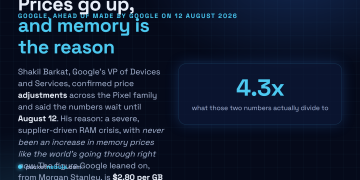
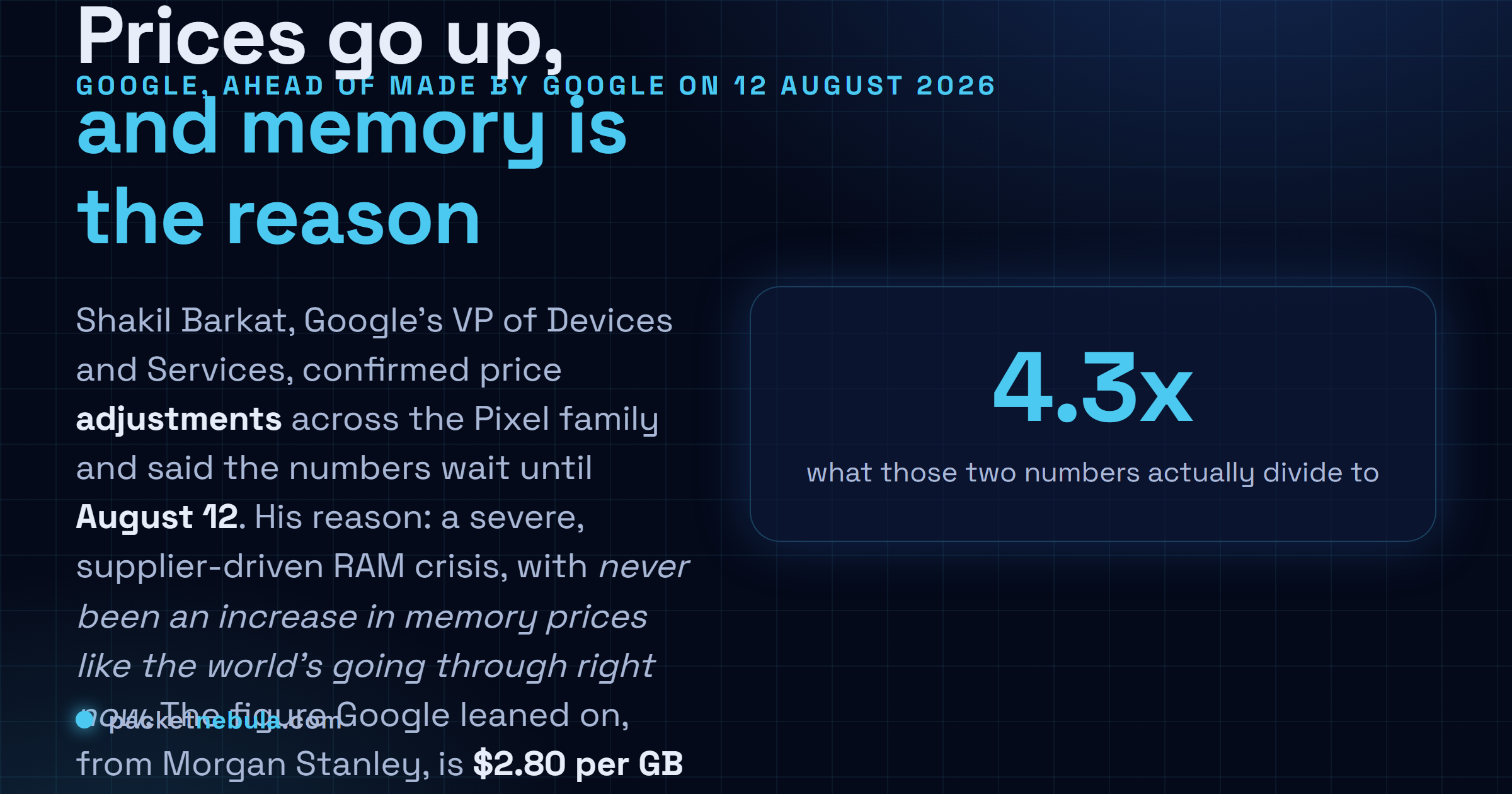
Answer card: Google VP of Devices and Services Shakil Barkat confirmed price adjustments across the Pixel family ahead of the Made by Google event on 12 August 2026, citing a supplier-driven RAM crisis and Morgan Stanley figures of $2.80 per gigabyte in 2025 against $12 in 2026, which is 4.3 times.

The Pixel 11 price rise is 4.3x on RAM, not sixfold

3 September 2026
Answer card stating that OpenAI released the Agents API in public beta on 10 September 2026 with no separate fee, billed through model tokens, tool calls and hosted sandbox time, with a choice of OpenAI hosted, self hosted or partner sandboxes, US only data residency and no Zero Data Retention support.

OpenAI’s Agents API has no fee, no ZDR and a one hour sandbox clock

14 September 2026
Answer card: Sakana Fugu Max at $2 and $6 per million tokens, Fugu Ultra v2 unchanged at $5 and $30, and Sakana saying Ultra v2 scores without Fable 5 or GPT-6 Astra in its pool.

Fugu Max costs $2 and $6 while Fugu Ultra v2 runs without Fable 5

13 September 2026
Answer card stating that DeepSeek released DeepSeek-V4.1-Flash on 10 September 2026 as a 552 billion parameter mixture of experts model with a new causal encoder decoder architecture that activates 8 billion parameters on input and 16 billion on output, with native vision, a one million token context and MIT licensed weights, that the API model name is now deepseek-flash at 0.15 dollars per million input tokens and 0.60 dollars per million output tokens off peak, and that DeepSeek announced V4 Pro would be routed to V4.1-Flash from 14 September and reversed that on 11 September.

DeepSeek V4.1-Flash arrived, and the V4 Pro retirement lasted a day

12 September 2026
Answer card stating that Cognition released SWE-2 on 10 September 2026, a coding model post-trained from Kimi K3, scoring 50.0 percent on FrontierCode 1.1 Main against 50.9 percent for Claude Fable 5.1 and 27.3 percent on Terminal-Bench 4 against 55.8 percent, available only inside Devin.

SWE-2 trails Fable 5.1 by one point, and by 28 on Terminal-Bench 4

11 September 2026
Answer card for Meta Muse, free to 100 million tokens a week then $20 a month, launched 8 September 2026 for United States adults only, running in a dedicated per user virtual machine.

Does Meta Muse do enough to earn your inbox and a card on file?

9 September 2026
Answer card stating that the public download pages for the VMware Virtual Disk Development Kit on developer.broadcom.com began returning 404 errors on 25 August 2026 with no announcement or deprecation notice, that Broadcom support tells customers the kit is no longer available for use or download, and that release lines 7.0.3.1, 8.x and 9.x are all affected.

Broadcom pulled VDDK 8.0 and 9.0, and the 404 is the only notice

8 September 2026
Answer card stating that OpenAI published its research acceleration measurements on 6 September 2026, that as of mid August 2026 its research organisation logged 3.1 agent workdays of coding agent runtime for every workday of human labour normalised to a standard eight hour day, and that OpenAI states this should not be read as a 3.1 times productivity gain because it measures runtime rather than delivered output.

OpenAI’s 3.1 agent-workdays per human day is not a 3.1x gain

7 September 2026
Answer card stating that Mullvad announced on 3 September 2026 that it is shutting down its public encrypted domain name system servers on 2 November 2026 and sponsoring the Quad9 Foundation instead, with 194.242.2.2 and its five sibling addresses all going away, and virtual private network customers unaffected.

Mullvad’s DNS servers go dark on 2 November, and Quad9 blocks no ads

5 September 2026
OpenAI announcement image for GPT-6 Astra, a spiral galaxy of white, blue and amber points of light curling around a bright core on a near black star field.

GPT-6 Astra lists at $10 and $50, 2.5x what GPT-5.6 Sol costs

6 September 2026
Google's official announcement image for the release, reading Introducing Gemini 3.8 Flash and 3.8 Flash Cyber in black type over a pale blue background with a blurred white chevron and the four colour Gemini spark below.

Gemini 3.8 Flash keeps the price and the 1 January cliff

3 September 2026
Answer card stating that Anthropic announced Enterprise Frontier Safeguards on 1 September 2026, that activity data used for misuse monitoring moves into cloud storage the customer controls under the customer own encryption keys, that Anthropic charges nothing for the feature while the cloud provider bills storage and egress, and that the phased rollout starts later in autumn 2026 with interim zero data retention on Fable 5 and Fable 5.1 for eligible customers.

Anthropic moves retention into your own cloud, for 30 days

3 September 2026
Official Google diagram of a client connection in three numbered steps: a DNS lookup with a query and an address, a TLS ClientHello and ServerHello, then a content exchange with a website. A callout on the DNS step reads 25% of global web traffic is now protected by encrypted DNS, and a callout beside an Android phone on the ClientHello step reads Android 17 supports ECH GREASE by default.

Android 17 hides the SNI, not your DNS or destination

3 September 2026
  • About
  • Contact
  • Privacy
  • Legal
Tuesday, September 15, 2026
  • Login
Packet Nebula
  • Home
  • Articles
    • Security
    • Network
    • Dev
    • Sysadmin
    • SEO
    • Email & DNS
  • Tools
    • Network tools: free, fast, no signup
    • Security tools: free, fast, no signup
    • Developer tools: free, fast, no signup
    • Sysadmin tools: free, fast, no signup
    • SEO tools: free, fast, no signup
    • Email & DNS tools: free, fast, no signup
  • Download
  • About
No Result
View All Result
Packet Nebula
No Result
View All Result
Home Dev

The Pixel 11 price rise is 4.3x on RAM, not sixfold

by stephane
3 September 2026
in Dev
0
Answer card: Google VP of Devices and Services Shakil Barkat confirmed price adjustments across the Pixel family ahead of the Made by Google event on 12 August 2026, citing a supplier-driven RAM crisis and Morgan Stanley figures of $2.80 per gigabyte in 2025 against $12 in 2026, which is 4.3 times.
491
SHARES
1.4k
VIEWS
Share on FacebookShare on Twitter

You go to re-quote a laptop refresh you scoped in January, and the same machine comes back a fifth dearer. That is the crunch Google just used, on the record, to explain why the Pixel 11 will cost more than the Pixel 10 did, with the actual prices held back until the Made by Google event on August 12. Shakil Barkat, its VP of Devices and Services, called it a severe supplier-driven memory crisis and leaned on one figure: Morgan Stanley has a gigabyte of RAM going from $2.80 in 2025 to $12 this year. Half the coverage then called that sixfold. It isn't. It's 4.3, and both numbers were sitting in the same sentence.

The short answer

Google confirmed the Pixel 11 line will cost more and named the cause: a supplier-driven memory crisis driven by AI demand. The specifics land on August 12. The number doing the rounds, a sixfold rise in RAM cost, does not match the two prices it was drawn from. What matters for your own hardware budget is that this is not a phone story.
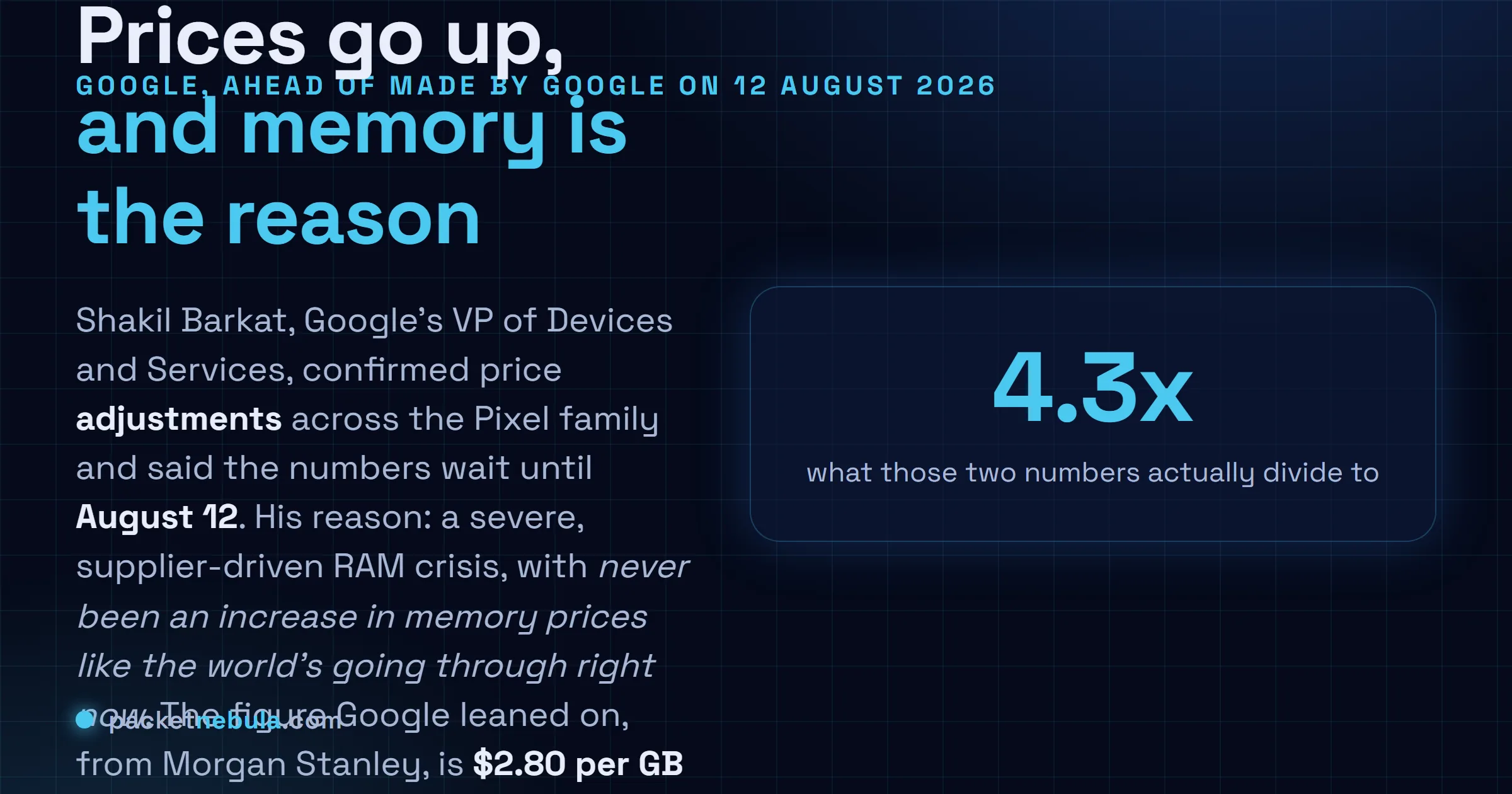
Aug 12when Google names prices
4.3xRAM per GB, 2025 to 2026
13 to 18%DRAM again in Q3, per TrendForce
Answer card: Google VP of Devices and Services Shakil Barkat confirmed price adjustments across the Pixel family ahead of the Made by Google event on 12 August 2026, citing a supplier-driven RAM crisis and Morgan Stanley figures of $2.80 per gigabyte in 2025 against $12 in 2026, which is 4.3 times.
A named executive, a confirmed direction, and no number until the twelfth.

What Google actually said

Barkat’s line, the one every outlet picked up: “there’s never been an increase in memory prices like the world’s going through right now.” He confirmed price adjustments across the Pixel family and was clear that Google won’t share specifics before the August 12 event.

He also described a dedicated effort to pull memory requirements down across Android and its app ecosystem, so devices can ship with less RAM without feeling worse. Honestly, that’s the more interesting half of the interview. A platform owner publicly optimising for less memory is a reversal of roughly fifteen years of Android direction, and it’s a concession that the component curve isn’t bending back any time soon.

Everything past that is leaked. The $100 increase, the base model at $899 against the Pixel 10’s $799, the 128 GB tier disappearing in favour of a 256 GB entry point, a Pro shipping with 12 GB of RAM instead of 16. All of it is plausible. None of it came from Google, and we’d rather you knew which is which before the twelfth.
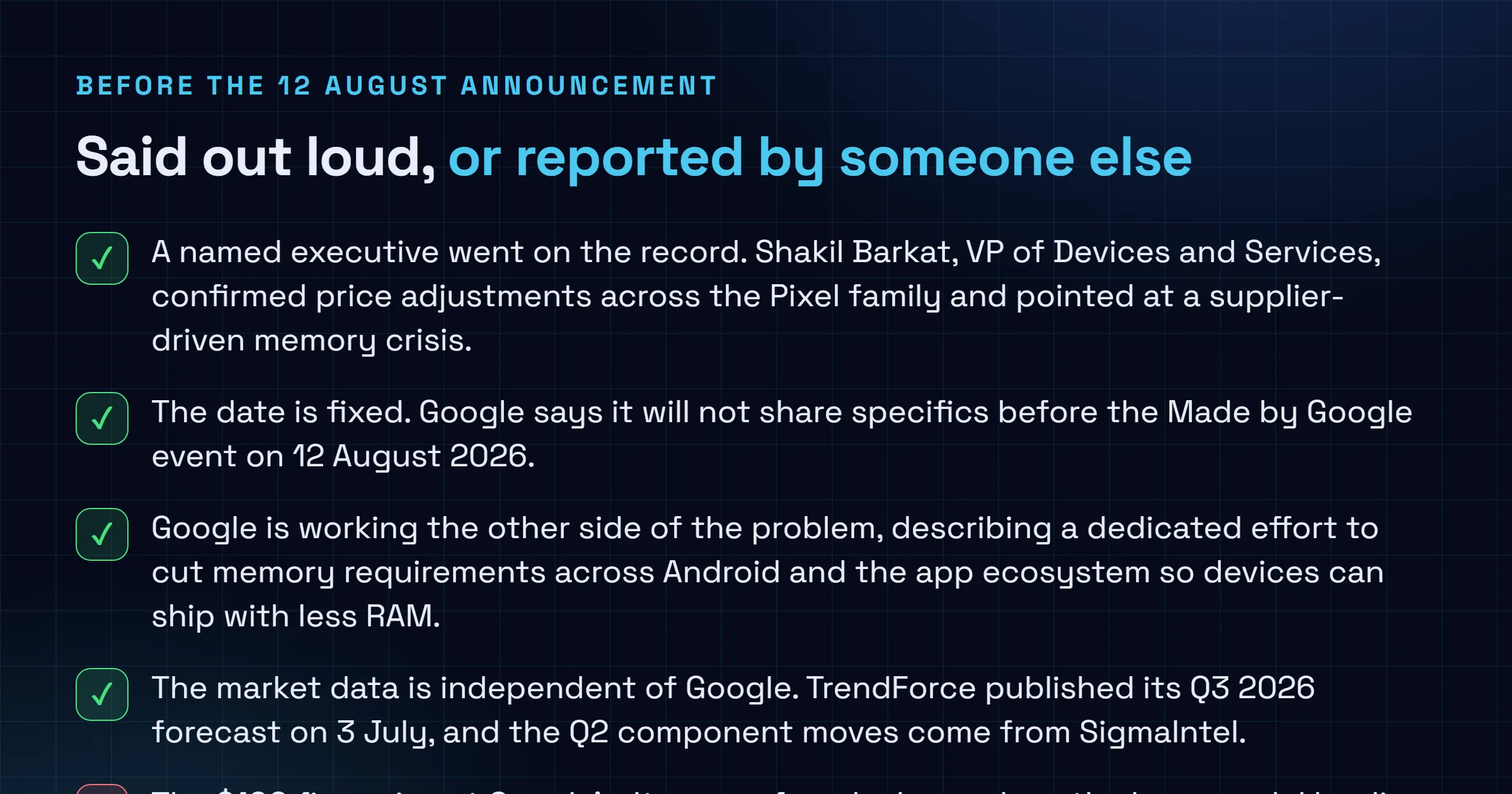
Checklist separating what Google confirmed about Pixel 11 pricing, including the price adjustments, the 12 August date and the Android memory efficiency work, from what is only leaked, including the $100 increase, the $899 entry price and the storage tier changes.
Four things on the record. Three that a leak told you.

The sixfold that isn’t

Here’s the bit that made us go and check.

Morgan Stanley put a gigabyte of RAM at $2.80 in 2025 and $12 in 2026. That is the pair of numbers Google’s coverage cited, and it’s a genuinely ugly move: a 329 percent rise inside a year, on a component that sits in everything. Then headline after headline called it a sixfold surge, printed directly above the two figures that don’t support it. Twelve over 2.80 is 4.29. Sixfold would be $16.80.

Small thing. It’s also the thing that decides whether your CFO believes the next number you put in front of them.
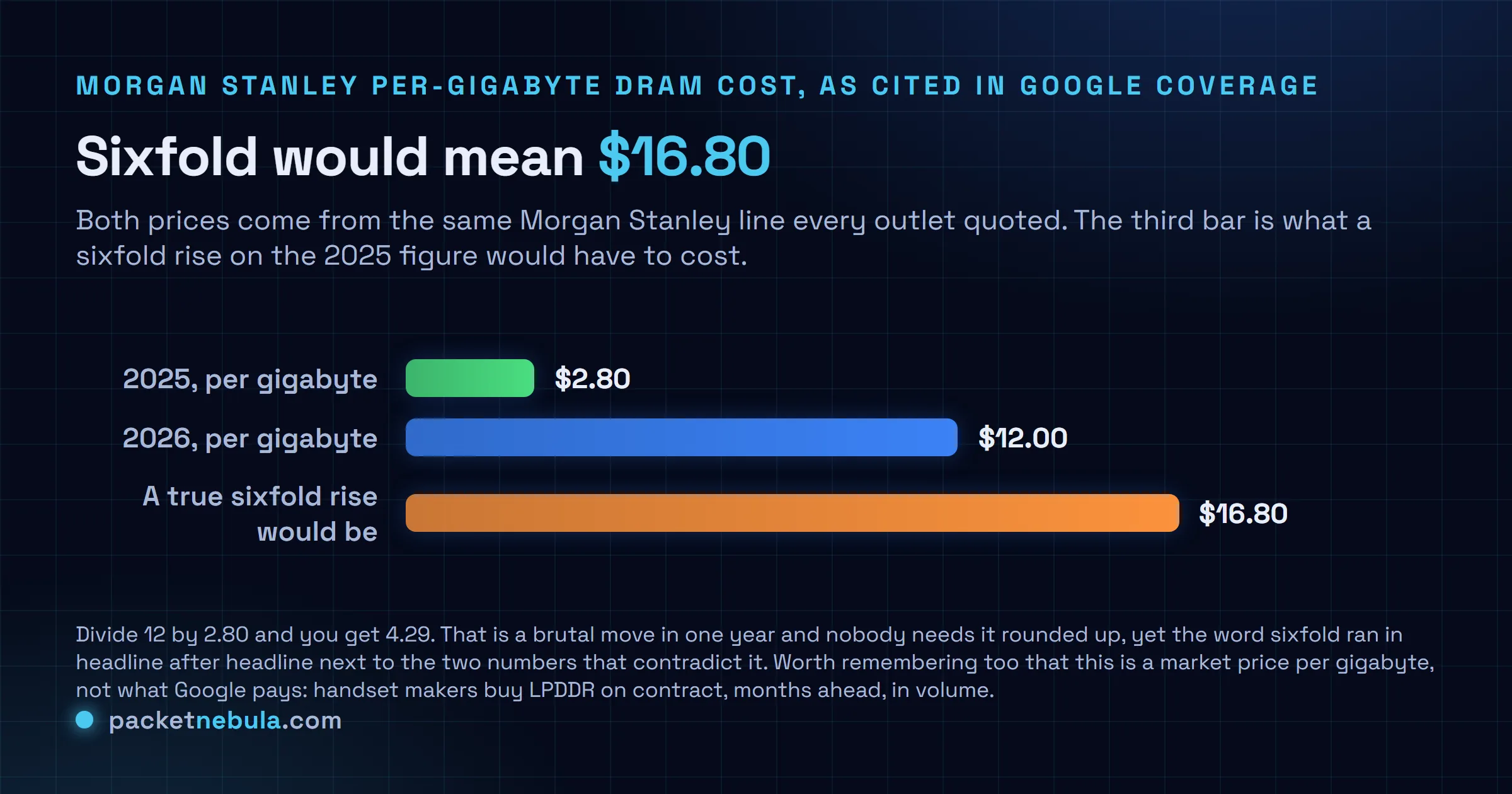
Comparison chart of Morgan Stanley per-gigabyte DRAM cost: $2.80 in 2025, $12.00 in 2026, and $16.80 which is what a genuine sixfold rise on the 2025 price would cost.
Two of these bars were published. The third is what the word sixfold would require.

There’s a second caveat nobody attached to it. That per-gigabyte figure is a market price, and Google is not buying at market. Handset makers commit to LPDDR volumes on contract, often months out, which is exactly why Barkat can say the economics shifted without saying by how much for a Pixel. The $12 tells you the direction of the pain. It does not tell you the bill of materials.

It isn’t just phone RAM, and it isn’t just this quarter

Strip the Pixel out and the picture gets more useful to anyone who buys hardware for a living.

In Q2 2026 alone, SigmaIntel has a 96 Gb LPDDR5X module going from $77.10 to $145.90, a 16 GB DDR4 module from $137 to $207.10, and a 512 GB NVMe Gen4 SSD landing at $126.30 after a 54 percent quarter. UFS storage more than doubled. These are contract prices, quarter on quarter, on parts that were already expensive going in.
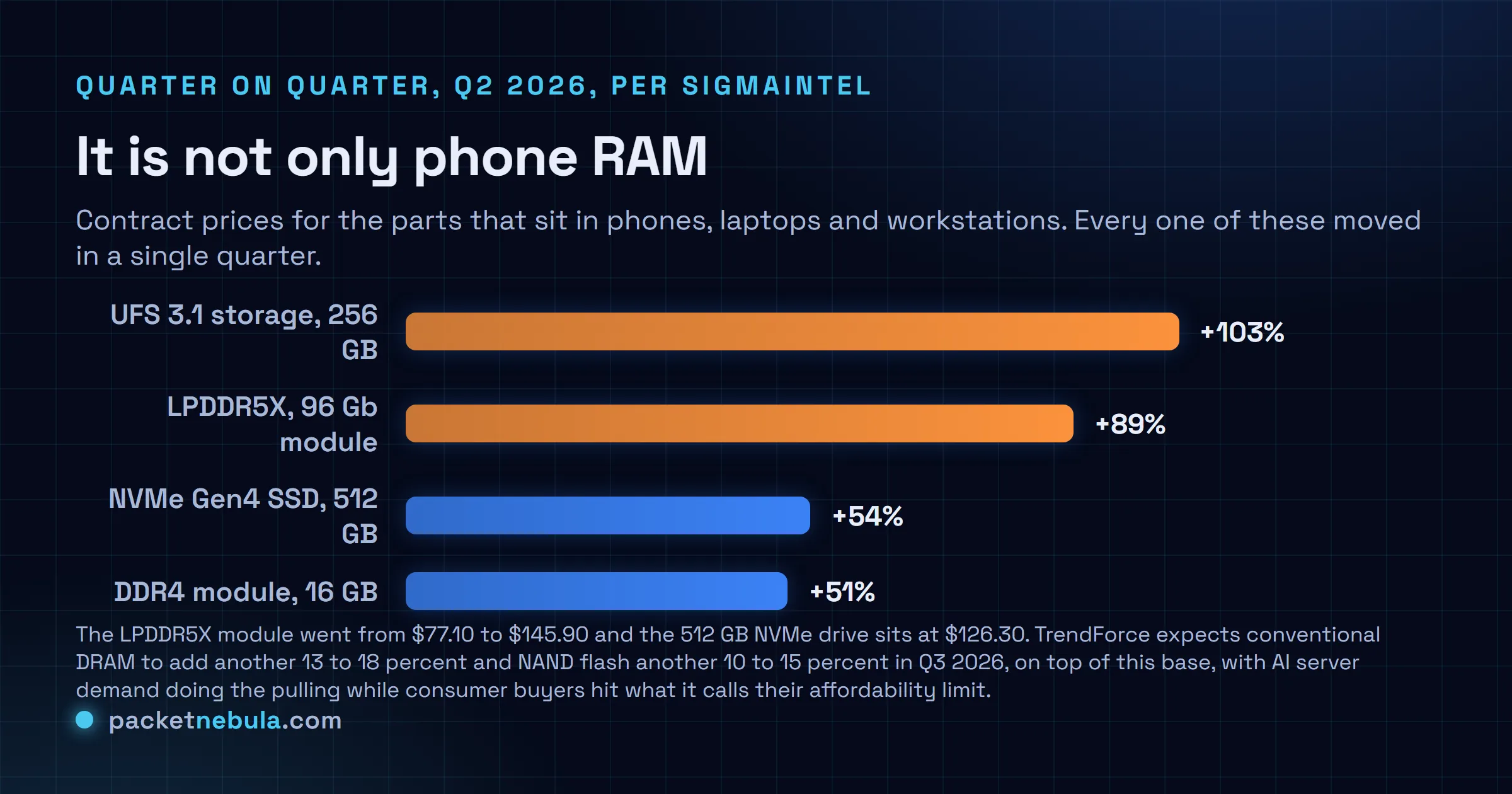
Comparison chart of Q2 2026 quarter-on-quarter contract price increases per SigmaIntel: UFS 3.1 256 GB up 103 percent, LPDDR5X 96 Gb up 89 percent, NVMe Gen4 512 GB SSD up 54 percent, DDR4 16 GB module up 51 percent.
One quarter. The parts that sit in phones, laptops and the workstation under your desk.

TrendForce’s July 3 forecast then puts conventional DRAM up another 13 to 18 percent and NAND flash up another 10 to 15 percent in Q3, compounding on that base. Its framing is worth reading twice: the increases are moderating not because supply recovered, but because consumer buyers are “reaching their affordability limit” while AI server demand keeps pulling. IDC models the consequence as a PC market contracting 4.9 percent this year, 8.9 percent in its pessimistic case, with average selling prices up 4 to 8 percent depending which scenario you believe.

The cause runs straight back through everything we’ve been covering. Memory makers moved capacity to high-bandwidth memory because an HBM stack for an accelerator earns more per wafer than the LPDDR in a mid-range handset. When SK and NVIDIA signed letters of intent for a 2 gigawatt AI factory on SK hynix HBM4, that capacity came from somewhere. It came from here.

What we’d do about a 2026 refresh

Buy earlier rather than later, where the money is already approved. That’s not a prediction so much as an admission that nobody credible is forecasting a fall this year, and both Samsung and SK hynix have pointed at 2027 and beyond. If you were going to spend it in November, spending it in August is the cheaper half of a bet you’re making either way.

Spec storage honestly and stop over-provisioning RAM out of habit. That habit was free when a gigabyte cost $2.80. On the flip side, watch out for the reverse trap in consumer kit: if the 128 GB Pixel really does vanish, you’re paying for storage you didn’t choose, and the same repackaging is happening across laptop lines where a “price hold” quietly comes with less memory.

And if you were budgeting a machine to run models locally, redo that arithmetic now. The whole appeal of running Qwen 3.7 offline on your own hardware was that the hardware was a one-off cost against a per-token bill. That comparison just moved, and not in local’s favour. I still think local wins for anything touching data you can’t send out. It’s a much closer call than it was in January.

One last note, mostly because it amused us. Google’s answer to memory costing too much is to make Android need less of it. Which is what everyone said the platform should have done back when RAM was cheap and nobody was listening.

Sources

The Barkat interview and quotes come from 9to5Google, with the confirmed-versus-leaked breakdown cross-checked against TechRepublic. The Q3 2026 contract price forecast is TrendForce’s own press release of July 3, 2026. Q2 component prices are SigmaIntel data as reported by TweakTown, and the market scenarios are from IDC. The Morgan Stanley per-gigabyte figures are quoted as reproduced by that coverage.

Frequently asked questions

How much will the Pixel 11 cost?

Google hasn't said. Shakil Barkat confirmed there will be price adjustments across the Pixel family and stated that specifics wait until the Made by Google event on 12 August 2026. The $100 increase and the $899 entry price being quoted come from leaks, not from Google.

Why are RAM prices rising so fast in 2026?

AI datacentre demand. Memory makers have shifted wafer capacity toward high-bandwidth memory for accelerators, which carries far better margins than the LPDDR that goes in a phone or the DDR5 that goes in a laptop. SK hynix told investors at its Q3 2025 results that DRAM, NAND and HBM were sold out for the following year. Every wafer committed to an HBM stack is one not making consumer parts.

Did RAM prices really go up sixfold?

No. The Morgan Stanley figure Google's coverage cites is $2.80 per gigabyte in 2025 against $12 in 2026, which is 4.3 times, or a 329 percent rise. It is a savage increase either way, but sixfold would mean $16.80 and nobody has published that number. Treat the per-gigabyte figure as a market price too, since handset makers buy on volume contracts months ahead.

Should I buy RAM and SSDs now or wait?

If a refresh is already funded and scoped for this year, buying earlier is the cheaper side of the bet. TrendForce forecasts conventional DRAM up another 13 to 18 percent and NAND flash up 10 to 15 percent quarter on quarter in Q3 2026, on an already elevated base. Nobody credible is forecasting a fall in 2026, and Samsung and SK hynix have both pointed past 2027.

Does this affect servers and workstations too?

Yes, and often worse, because server DRAM sits closest to the demand that caused the shortage. IDC models PC average selling prices rising 4 to 6 percent in its moderate scenario and 6 to 8 percent in its pessimistic one, and OEM price rises reported in the 15 to 20 percent range for whole systems tell you how much of a machine is now memory and storage.

Tags: googlehardwarememorynewspricing
Share196Tweet123
stephane

stephane

  • Trending
  • Comments
  • Latest
Answer card: Proton Lumo 2.0 is private by policy, not by locality. Saved history is locked so even Proton cannot read it, but the prompt is decrypted on a Proton EU server to answer it, then forgotten.

Proton Lumo 2.0 review: how private is it, really?

3 September 2026
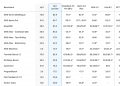
The Agentic Coding section of the official Hy4 preview benchmark appendix published by Tencent, a table comparing Hy3 and Hy4 preview against DeepSeek V4 Pro 0813, Qwen 3.8 Max, GLM 5.3, Kimi K3, GPT 5.6 Sol and Claude Opus 5 across SWE-bench Multilingual, SWE-bench Pro, DeepSWE, three SWE Atlas tasks, SWE-Marathon, Terminal-Bench 2.1, NL2Repo-Bench, CyberGym, ProgramBench, PostTrainBench and Harbor-Index.

Tencent’s 770B Hy4 tops one benchmark row in 46

3 September 2026
Answer card: Qwen 3.7 Max is API-only and cannot run locally yet; the open Qwen models (Qwen 3.6 27B, qwen3:8b to 32b) run offline via Ollama.

Qwen 3.7 local: what you can actually run offline

22 June 2026
Answer card: JWTs are not encrypted, anyone can read them; the signature proves who issued the token, not who may read it.

Are JWTs encrypted? No, and the difference will bite you

0
Answer card: a random 8 character password falls in under 2 hours offline, while 16 random characters hold for 1.4 trillion years at the same speed.

How long does it take to crack a password in 2026?

0
Answer card: three DNS records decide if your mail lands or bounces; SPF lists allowed senders, DKIM signs messages, DMARC sets the failure policy.

SPF, DKIM and DMARC explained: the records your email needs

0
Answer card stating that OpenAI released the Agents API in public beta on 10 September 2026 with no separate fee, billed through model tokens, tool calls and hosted sandbox time, with a choice of OpenAI hosted, self hosted or partner sandboxes, US only data residency and no Zero Data Retention support.

OpenAI’s Agents API has no fee, no ZDR and a one hour sandbox clock

14 September 2026
Answer card: Sakana Fugu Max at $2 and $6 per million tokens, Fugu Ultra v2 unchanged at $5 and $30, and Sakana saying Ultra v2 scores without Fable 5 or GPT-6 Astra in its pool.

Fugu Max costs $2 and $6 while Fugu Ultra v2 runs without Fable 5

13 September 2026
Answer card stating that DeepSeek released DeepSeek-V4.1-Flash on 10 September 2026 as a 552 billion parameter mixture of experts model with a new causal encoder decoder architecture that activates 8 billion parameters on input and 16 billion on output, with native vision, a one million token context and MIT licensed weights, that the API model name is now deepseek-flash at 0.15 dollars per million input tokens and 0.60 dollars per million output tokens off peak, and that DeepSeek announced V4 Pro would be routed to V4.1-Flash from 14 September and reversed that on 11 September.

DeepSeek V4.1-Flash arrived, and the V4 Pro retirement lasted a day

12 September 2026
  • About
  • Contact
  • Privacy
  • Legal

Copyright © 2026 Stephane Cardon.

Welcome Back!

Login to your account below

Forgotten Password?

Retrieve your password

Please enter your username or email address to reset your password.

Log In
No Result
View All Result
  • Home
  • Articles
    • Security
    • Network
    • Dev
    • Sysadmin
    • SEO
    • Email & DNS
  • Tools
    • Network tools: free, fast, no signup
    • Security tools: free, fast, no signup
    • Developer tools: free, fast, no signup
    • Sysadmin tools: free, fast, no signup
    • SEO tools: free, fast, no signup
    • Email & DNS tools: free, fast, no signup
  • Download
  • About

Copyright © 2026 Stephane Cardon.