
• Latest
  • Trending
  • All
Answer card: Apple sued OpenAI, its hardware chief Tang Tan and former engineer Chang Liu in a California federal court on July 10, alleging trade secret theft at every level. OpenAI denies it and nothing is proven.

Apple sued OpenAI over trade secrets on 10 July

3 September 2026
The official xAI announcement card for Grok 4.7, white type on a dark grey and navy gradient.

Grok 4.7 keeps $2 and $6, and its gains over 4.6 are xhigh versus high

22 September 2026
Answer card stating that Qwen-Image-2.1, released on 20 September 2026, ships open weights with a 7 billion parameter diffusion transformer, a Qwen3-VL 8B text encoder and an RGBA VAE totalling about 33 gigabytes in BF16, under the Qwen Research License that limits use to research or evaluation and requires a separate commercial licence, unlike the Apache 2.0 licence of Qwen-Image 1.0.

Qwen-Image-2.1 brings the weights back, but not the Apache licence

21 September 2026
Answer card stating that Ternary Bonsai 2 27B, released by PrismML on 17 September 2026 under Apache 2.0, packs Qwen3.8 27B into 5.95 gigabytes at 1.72 bits per weight, keeps 98.2 percent of the 14-benchmark average, about 75 percent on SWE-bench Verified and Terminal-Bench 2.1, and needs PrismML's llama.cpp fork to run.

Does Bonsai 2 27B really keep 98% of Qwen3.8 in 5.95 GB?

20 September 2026
Answer card stating that Jev 1.13 from TypeSafe AI is a decision model in early access since 15 September 2026 that returns typed probabilities instead of text, priced at 42 dollars per billion input tokens with output tokens free, answering in 70 to 500 milliseconds, with a 64K token request budget, text input only, and a documented list of things it does badly, including counting and dates.

Jev 1.13 bills $42 a billion tokens, and it can’t count

19 September 2026
Answer card stating that Qwen3.8-Omni-Flash launched on 17 September 2026 as an API only model on Alibaba Cloud Model Studio, taking text, images, audio and video in a 1M token context and returning text only, priced at 0.15 dollars per million input tokens for every modality and 0.47 dollars per million output tokens in the international regions, with no open weights published and the Qwen-Live Harness GitHub repository returning 404.

Qwen3.8-Omni-Flash bills audio at $0.15 and ships no weights

18 September 2026
Answer card stating that on 15 September 2026 AWS said it is unable to restore access to resources and data hosted exclusively in the Middle East Bahrain region me-south-1 and in the mec1-az2 zone of the UAE region, because the damage spanned multiple Availability Zones and exceeded what multi-AZ services are designed to withstand.

AWS can’t restore me-south-1, six months after the drone strikes

17 September 2026
Answer card stating that Google released Gemini 3.8 Live and Gemini 3.8 Live Extended Thinking on 15 September 2026 at 3 dollars per million audio input tokens and 12 dollars out, that the thinking model requires asynchronous tools, and that Artificial Analysis scores it 82.6 on its Speech to Speech Quality Index.

Gemini 3.8 Live Extended Thinking rejects any tool that blocks

16 September 2026
Answer card summarising the Atria Dawn Preview release: 744B GLM-5.2 base, MIT licence, 1.5 TB BF16 and 756 GB FP8 checkpoints, 256K context, top on five of sixteen benchmark rows and trailing on SWE-bench Pro.

Atria Dawn Preview is 744B under MIT, and the BF16 weighs 1.5 TB

15 September 2026
Answer card stating that OpenAI released the Agents API in public beta on 10 September 2026 with no separate fee, billed through model tokens, tool calls and hosted sandbox time, with a choice of OpenAI hosted, self hosted or partner sandboxes, US only data residency and no Zero Data Retention support.

OpenAI’s Agents API has no fee, no ZDR and a one hour sandbox clock

14 September 2026
Answer card: Sakana Fugu Max at $2 and $6 per million tokens, Fugu Ultra v2 unchanged at $5 and $30, and Sakana saying Ultra v2 scores without Fable 5 or GPT-6 Astra in its pool.

Fugu Max costs $2 and $6 while Fugu Ultra v2 runs without Fable 5

13 September 2026
Answer card stating that DeepSeek released DeepSeek-V4.1-Flash on 10 September 2026 as a 552 billion parameter mixture of experts model with a new causal encoder decoder architecture that activates 8 billion parameters on input and 16 billion on output, with native vision, a one million token context and MIT licensed weights, that the API model name is now deepseek-flash at 0.15 dollars per million input tokens and 0.60 dollars per million output tokens off peak, and that DeepSeek announced V4 Pro would be routed to V4.1-Flash from 14 September and reversed that on 11 September.

DeepSeek V4.1-Flash arrived, and the V4 Pro retirement lasted a day

12 September 2026
Answer card stating that Cognition released SWE-2 on 10 September 2026, a coding model post-trained from Kimi K3, scoring 50.0 percent on FrontierCode 1.1 Main against 50.9 percent for Claude Fable 5.1 and 27.3 percent on Terminal-Bench 4 against 55.8 percent, available only inside Devin.

SWE-2 trails Fable 5.1 by one point, and by 28 on Terminal-Bench 4

11 September 2026
  • About
  • Contact
  • Privacy
  • Legal
Tuesday, September 22, 2026
  • Login
Packet Nebula
  • Home
  • Articles
    • Security
    • Network
    • Dev
    • Sysadmin
    • SEO
    • Email & DNS
  • Tools
    • Network tools: free, fast, no signup
    • Security tools: free, fast, no signup
    • Developer tools: free, fast, no signup
    • Sysadmin tools: free, fast, no signup
    • SEO tools: free, fast, no signup
    • Email & DNS tools: free, fast, no signup
  • Download
  • About
No Result
View All Result
Packet Nebula
No Result
View All Result
Home Dev

Apple sued OpenAI over trade secrets on 10 July

by stephane
3 September 2026
in Dev
0
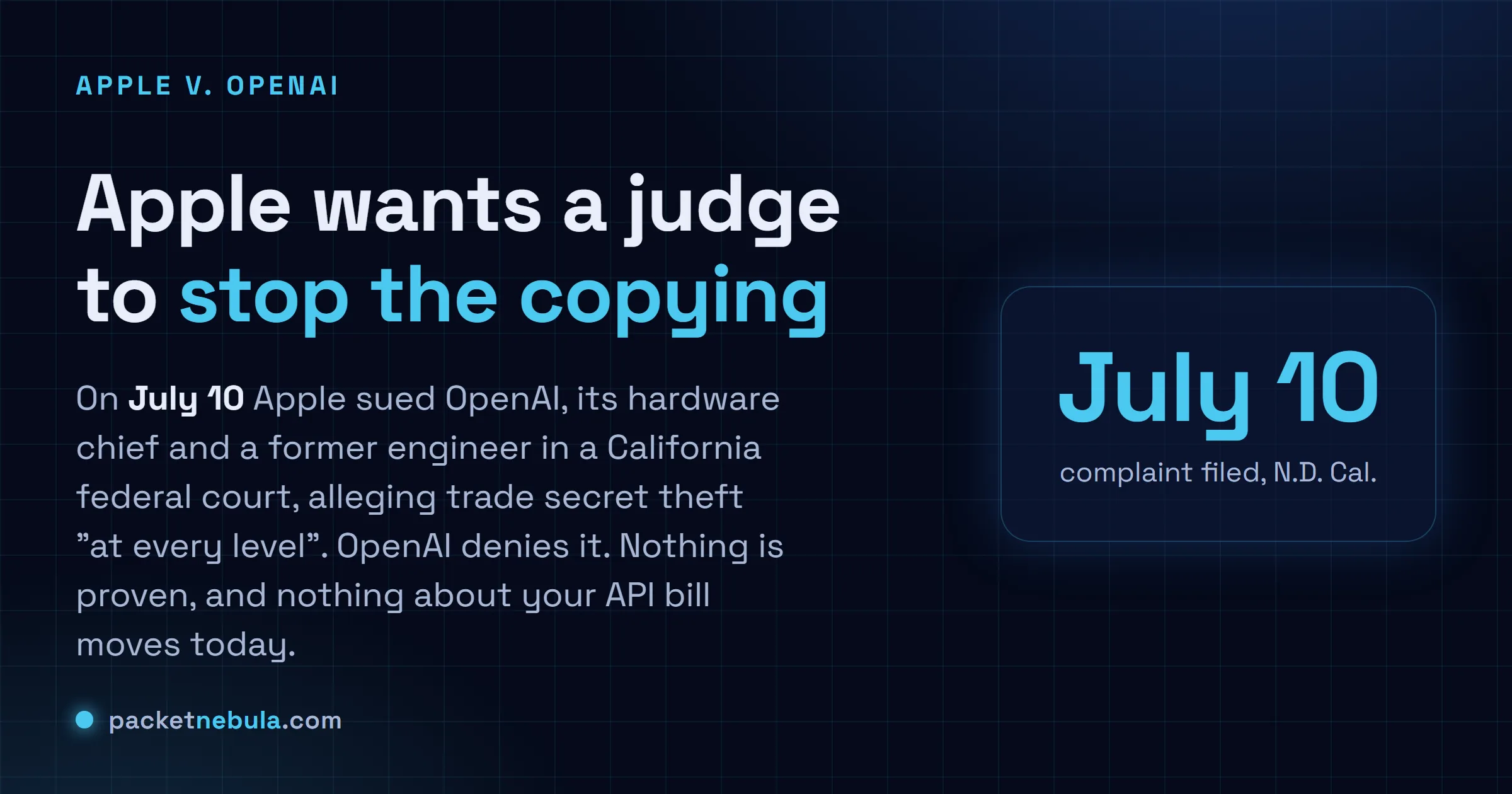
Answer card: Apple sued OpenAI, its hardware chief Tang Tan and former engineer Chang Liu in a California federal court on July 10, alleging trade secret theft at every level. OpenAI denies it and nothing is proven.
491
SHARES
1.4k
VIEWS
Share on FacebookShare on Twitter

Two years ago Apple put ChatGPT inside the iPhone. On July 10 its lawyers filed a complaint against OpenAI in a federal court in California, accusing it of taking Apple's confidential work "at every level". That's the news. Apple names two former employees, hardware chief Tang Tan and engineer Chang Liu, and it wants a judge to make the copying stop. None of it is proven. OpenAI says it has no interest in other companies' trade secrets. So what does it change for you, today, if you ship software for a living? Close to nothing. No API moves, no price moves, no model goes away. Honestly, the useful part isn't the courtroom drama. It's one mundane offboarding detail buried in the filing.

The short answer

Apple sued OpenAI, its hardware chief and a former engineer over alleged trade secret theft. It’s a hardware fight, not a model fight, so your ChatGPT access and your API pricing are untouched. Everything in the complaint is an allegation and OpenAI denies it. The one part worth stealing for your own shop is the offboarding hygiene.
July 10filed, N.D. California
400+ex-Apple staff at OpenAI, per Apple
$0change to your API bill
Answer card: Apple sued OpenAI, its hardware chief Tang Tan and former engineer Chang Liu in a California federal court on July 10, alleging trade secret theft at every level. OpenAI denies it and nothing is proven.
The one-card version. A hardware fight dressed as an AI story.

What Apple actually filed

A complaint, on July 10, in the U.S. District Court for the Northern District of California. The defendants are OpenAI, io Products, Tang Tan and Chang Liu. Tan is OpenAI’s chief hardware officer and used to be Apple’s VP of product design for the iPhone and Apple Watch. Liu was a senior systems electrical engineer who spent about eight years there.

Apple’s framing is deliberately broad. It says that “at every level, from members of its Technical Staff to its Chief Hardware Officer”, OpenAI has been taking its confidential information. Apple wants four things: an order barring OpenAI from using or disclosing the material, the material handed back, evidence preserved, and damages.

OpenAI’s answer is one sentence long. It has no interest in other companies’ trade secrets, and it’s focused on building its own technology.

Hold onto this while you read the next section. It’s a complaint. Apple wrote every word of it, OpenAI disputes it, and no judge has weighed in.

The allegations, and which ones actually bite

The recruiting claims are the loud ones. Apple says Tan used internal project codenames in interviews to get candidates talking about work they shouldn’t have been discussing, and told candidates still on Apple’s payroll to bring “actual parts” to show-and-tell sessions. CAD files and prototypes too. One candidate apparently didn’t know you could carry that stuff out of the building. Apple also claims OpenAI coached departing staff on dodging the walkout procedure and told them not to sign exit paperwork without checking in first.

Then there’s the supply chain claim, which is the one that would sting a jury. Apple says io used its proprietary metal finishing technique, and that OpenAI told Apple’s own manufacturing partner it had permission it didn’t have.

And Liu. Apple says that after he left in January 2026, he found an authentication bug that still let him reach Apple’s network storage, and pulled down more than 1,000 pages of engineering documents. He didn’t report it. He texted a colleague still inside: “LOL, I found out I can access the [network storage], so funny.” Later, per the filing, “I still have another computer”. His laptop allegedly never came back either.

The weakest number in the whole thing is the headline one: 400+ former Apple employees now work at OpenAI. Apple leans on it. I might be wrong, but that’s atmosphere, not evidence. People move between big companies. Four hundred out of a workforce Apple’s size is a rounding error, and a headcount doesn’t prove anyone took a file.
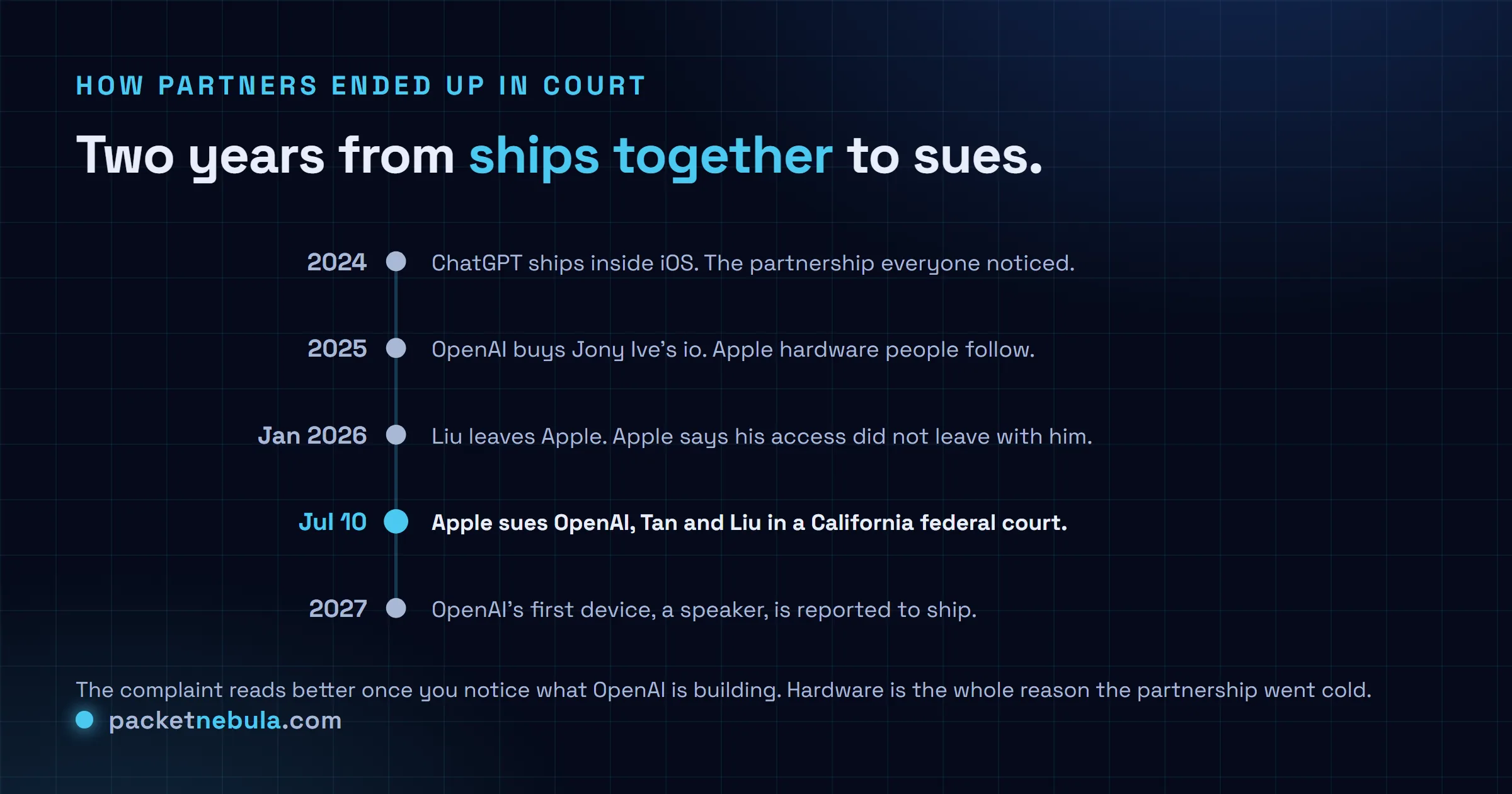
Timeline: 2024 ChatGPT ships inside iOS, 2025 OpenAI buys Jony Ive's io, January 2026 Chang Liu leaves Apple, July 10 2026 Apple sues OpenAI and two former employees, 2027 OpenAI's first device is reported to ship.
Read it bottom-up and the suit makes more sense. The speaker is the point.

Why this landed now

Because OpenAI builds hardware now. That’s the whole story.

The 2024 deal made the two companies partners. Then OpenAI bought Jony Ive’s design shop io in 2025, reported at roughly $6.4 billion to $6.5 billion depending on which outlet you read, and started hiring the people who designed Apple’s products. Bloomberg reported on July 14 that the first device is a portable, screenless speaker with a camera and sensors, meant to sit in your home as a companion, with an unveiling targeted for this year and a market launch in 2027. It’s one of about five products in the pipeline.

So a partner became a competitor in the one category Apple actually defends properly. Pair it with the custom inference chip OpenAI is building with Broadcom and the direction is obvious: OpenAI wants its own silicon and its own boxes. Nobody sues this hard over a hobby.

What it changes for you
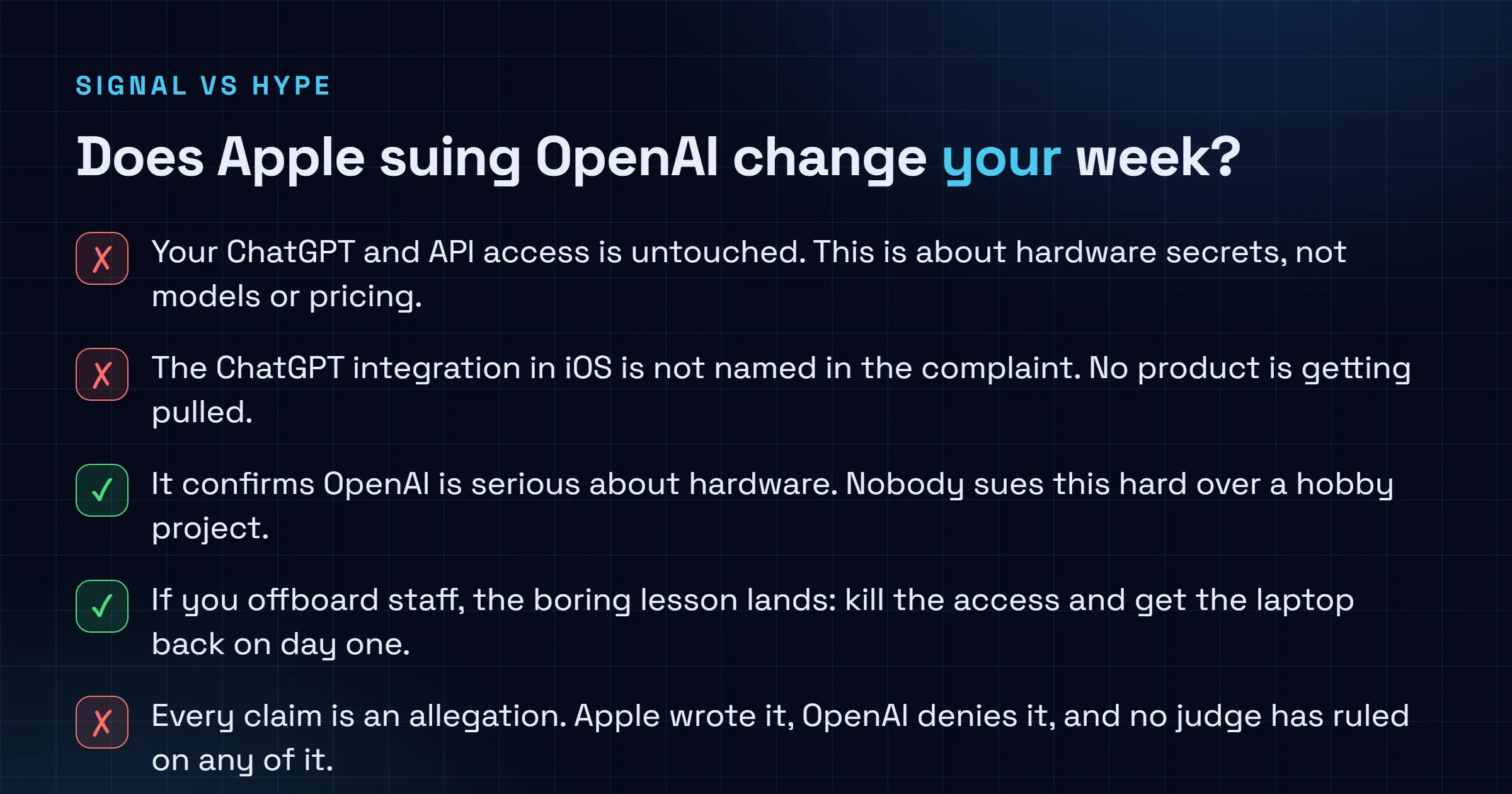
Checklist: your ChatGPT and API access is untouched, the iOS integration is not named, the suit confirms OpenAI is serious about hardware, the offboarding lesson is real, and every claim is still an allegation.
Five honest lines. Four of them are about restraint.

Nothing, this week. Your keys work. The GPT-5.6 tiers you’re budgeting cost what they cost. The ChatGPT integration inside iOS isn’t named in the complaint, and no one has asked a court to unwind it.

Trade secret suits like this one rarely kill a product. They extract a settlement, they slow down hiring for a while, and they make general counsel nervous about who you interview. If OpenAI’s speaker slips, it’ll be because hardware is hard, not because of a docket in San Jose.

The part that isn’t gossip

Strip out the codenames and the show-and-tell theatre and you’re left with something dull that applies to everyone reading this. An engineer left in January. Apple says his access to network storage worked anyway, for long enough to pull a thousand pages. His laptop never came back.

That’s not exotic tradecraft. That’s an offboarding checklist nobody ran.

We’ve seen the same shape in small shops plenty of times: the account gets disabled in the identity provider, and the storage box that authenticates separately just keeps saying yes. If a departure at your place doesn’t end with someone confirming the access is actually dead, not merely marked dead in a ticket, this whole story is a free rehearsal.

Sources

The complaint and its allegations as reported by TechCrunch, with further detail in its follow-up on the filing and 9to5Mac. OpenAI’s hardware plans reported by Bloomberg on July 14. Every allegation above is Apple’s claim, disputed by OpenAI and untested in court.

Frequently asked questions

What is Apple suing OpenAI over?

Apple filed a trade secrets and breach of contract complaint on July 10, 2026, in the U.S. District Court for the Northern District of California. It alleges OpenAI recruited Apple staff to extract confidential hardware information, and it names OpenAI, io Products, chief hardware officer Tang Tan and former engineer Chang Liu. Apple asks the court to bar OpenAI from using or disclosing the material, order it returned, and preserve evidence. It also seeks damages.

Does this affect the ChatGPT integration in iOS?

Not so far. The complaint is about hardware design information, not the 2024 deal that put ChatGPT into Apple's operating system. No filing asks to unwind that integration, and neither company has announced a change to it.

Does the lawsuit change the OpenAI API or its pricing?

No. Nothing in the complaint touches model availability, API endpoints or token prices. If you build on OpenAI, this suit gives you nothing to do this week.

Has OpenAI responded to the allegations?

Yes, briefly. OpenAI said it has no interest in other companies' trade secrets and that it remains focused on building its own technology. Every claim in Apple's complaint is an allegation that OpenAI disputes, and no court has ruled on any of it.

Why is Apple suing now, in 2026?

The likeliest reason is hardware. OpenAI bought Jony Ive's design company io in 2025 and is now building its own devices, which turns a partner into a competitor. Bloomberg reported on July 14 that OpenAI's first device is a portable screenless speaker with a camera and sensors, with a market launch planned for 2027.

Tags: aiapplebig-techhardwarenewsopenai
Share196Tweet123
stephane

stephane

  • Trending
  • Comments
  • Latest
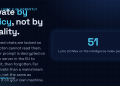
Answer card: Proton Lumo 2.0 is private by policy, not by locality. Saved history is locked so even Proton cannot read it, but the prompt is decrypted on a Proton EU server to answer it, then forgotten.

Proton Lumo 2.0 review: how private is it, really?

3 September 2026
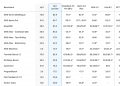
The Agentic Coding section of the official Hy4 preview benchmark appendix published by Tencent, a table comparing Hy3 and Hy4 preview against DeepSeek V4 Pro 0813, Qwen 3.8 Max, GLM 5.3, Kimi K3, GPT 5.6 Sol and Claude Opus 5 across SWE-bench Multilingual, SWE-bench Pro, DeepSWE, three SWE Atlas tasks, SWE-Marathon, Terminal-Bench 2.1, NL2Repo-Bench, CyberGym, ProgramBench, PostTrainBench and Harbor-Index.

Tencent’s 770B Hy4 tops one benchmark row in 46

3 September 2026
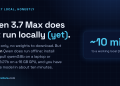
Answer card: Qwen 3.7 Max is API-only and cannot run locally yet; the open Qwen models (Qwen 3.6 27B, qwen3:8b to 32b) run offline via Ollama.

Qwen 3.7 local: what you can actually run offline

22 June 2026
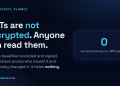
Answer card: JWTs are not encrypted, anyone can read them; the signature proves who issued the token, not who may read it.

Are JWTs encrypted? No, and the difference will bite you

0
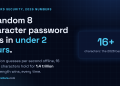
Answer card: a random 8 character password falls in under 2 hours offline, while 16 random characters hold for 1.4 trillion years at the same speed.

How long does it take to crack a password in 2026?

0
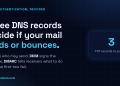
Answer card: three DNS records decide if your mail lands or bounces; SPF lists allowed senders, DKIM signs messages, DMARC sets the failure policy.

SPF, DKIM and DMARC explained: the records your email needs

0
The official xAI announcement card for Grok 4.7, white type on a dark grey and navy gradient.

Grok 4.7 keeps $2 and $6, and its gains over 4.6 are xhigh versus high

22 September 2026
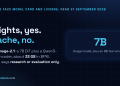
Answer card stating that Qwen-Image-2.1, released on 20 September 2026, ships open weights with a 7 billion parameter diffusion transformer, a Qwen3-VL 8B text encoder and an RGBA VAE totalling about 33 gigabytes in BF16, under the Qwen Research License that limits use to research or evaluation and requires a separate commercial licence, unlike the Apache 2.0 licence of Qwen-Image 1.0.

Qwen-Image-2.1 brings the weights back, but not the Apache licence

21 September 2026
Answer card stating that Ternary Bonsai 2 27B, released by PrismML on 17 September 2026 under Apache 2.0, packs Qwen3.8 27B into 5.95 gigabytes at 1.72 bits per weight, keeps 98.2 percent of the 14-benchmark average, about 75 percent on SWE-bench Verified and Terminal-Bench 2.1, and needs PrismML's llama.cpp fork to run.

Does Bonsai 2 27B really keep 98% of Qwen3.8 in 5.95 GB?

20 September 2026
  • About
  • Contact
  • Privacy
  • Legal

Copyright © 2026 Stephane Cardon.

Welcome Back!

Login to your account below

Forgotten Password?

Retrieve your password

Please enter your username or email address to reset your password.

Log In
No Result
View All Result
  • Home
  • Articles
    • Security
    • Network
    • Dev
    • Sysadmin
    • SEO
    • Email & DNS
  • Tools
    • Network tools: free, fast, no signup
    • Security tools: free, fast, no signup
    • Developer tools: free, fast, no signup
    • Sysadmin tools: free, fast, no signup
    • SEO tools: free, fast, no signup
    • Email & DNS tools: free, fast, no signup
  • Download
  • About

Copyright © 2026 Stephane Cardon.