
• Latest
  • Trending
  • All
Answer card: Google Suncatcher MVP satellite, four Trillium TPUs on about one kilowatt, launching on SpaceX Transporter-18, reported for 1 October 2026.

Google’s first Suncatcher satellite flies four TPUs on 1 kW

25 September 2026
Answer card: Xiaomi retrained MiMo-V2.6 to stop repeating tool calls, API swapped on 25 September 2026, MIT weights on 27 September, same model names.

MiMo-V2.6-Pro was quietly retrained to stop looping on tool calls

28 September 2026
Answer card: Anthropic committed $11.6 billion over seven years to Akamai Cloud for CPU workloads only, with revenue from the second half of 2027.

Anthropic’s $11.6B Akamai deal buys CPUs, not GPUs

27 September 2026
Answer card for Claude Opus 5.5: 4 dollars in and 20 dollars out per million tokens, down from 5 and 25, with cache reads at 20 cents.

Claude Opus 5.5 drops to $4 and $20, and breaks four Opus 5 habits

23 September 2026
The official xAI announcement card for Grok 4.7, white type on a dark grey and navy gradient.

Grok 4.7 keeps $2 and $6, and its gains over 4.6 are xhigh versus high

22 September 2026
Answer card stating that Qwen-Image-2.1, released on 20 September 2026, ships open weights with a 7 billion parameter diffusion transformer, a Qwen3-VL 8B text encoder and an RGBA VAE totalling about 33 gigabytes in BF16, under the Qwen Research License that limits use to research or evaluation and requires a separate commercial licence, unlike the Apache 2.0 licence of Qwen-Image 1.0.

Qwen-Image-2.1 brings the weights back, but not the Apache licence

21 September 2026
Answer card stating that Ternary Bonsai 2 27B, released by PrismML on 17 September 2026 under Apache 2.0, packs Qwen3.8 27B into 5.95 gigabytes at 1.72 bits per weight, keeps 98.2 percent of the 14-benchmark average, about 75 percent on SWE-bench Verified and Terminal-Bench 2.1, and needs PrismML's llama.cpp fork to run.

Does Bonsai 2 27B really keep 98% of Qwen3.8 in 5.95 GB?

20 September 2026
Answer card stating that Jev 1.13 from TypeSafe AI is a decision model in early access since 15 September 2026 that returns typed probabilities instead of text, priced at 42 dollars per billion input tokens with output tokens free, answering in 70 to 500 milliseconds, with a 64K token request budget, text input only, and a documented list of things it does badly, including counting and dates.

Jev 1.13 bills $42 a billion tokens, and it can’t count

19 September 2026
Answer card stating that Qwen3.8-Omni-Flash launched on 17 September 2026 as an API only model on Alibaba Cloud Model Studio, taking text, images, audio and video in a 1M token context and returning text only, priced at 0.15 dollars per million input tokens for every modality and 0.47 dollars per million output tokens in the international regions, with no open weights published and the Qwen-Live Harness GitHub repository returning 404.

Qwen3.8-Omni-Flash bills audio at $0.15 and ships no weights

18 September 2026
Answer card stating that on 15 September 2026 AWS said it is unable to restore access to resources and data hosted exclusively in the Middle East Bahrain region me-south-1 and in the mec1-az2 zone of the UAE region, because the damage spanned multiple Availability Zones and exceeded what multi-AZ services are designed to withstand.

AWS can’t restore me-south-1, six months after the drone strikes

17 September 2026
Answer card stating that Google released Gemini 3.8 Live and Gemini 3.8 Live Extended Thinking on 15 September 2026 at 3 dollars per million audio input tokens and 12 dollars out, that the thinking model requires asynchronous tools, and that Artificial Analysis scores it 82.6 on its Speech to Speech Quality Index.

Gemini 3.8 Live Extended Thinking rejects any tool that blocks

16 September 2026
Answer card summarising the Atria Dawn Preview release: 744B GLM-5.2 base, MIT licence, 1.5 TB BF16 and 756 GB FP8 checkpoints, 256K context, top on five of sixteen benchmark rows and trailing on SWE-bench Pro.

Atria Dawn Preview is 744B under MIT, and the BF16 weighs 1.5 TB

15 September 2026
Answer card stating that OpenAI released the Agents API in public beta on 10 September 2026 with no separate fee, billed through model tokens, tool calls and hosted sandbox time, with a choice of OpenAI hosted, self hosted or partner sandboxes, US only data residency and no Zero Data Retention support.

OpenAI’s Agents API has no fee, no ZDR and a one hour sandbox clock

14 September 2026
  • About
  • Contact
  • Privacy
  • Legal
Monday, September 28, 2026
  • Login
Packet Nebula
  • Home
  • Articles
    • Security
    • Network
    • Dev
    • Sysadmin
    • SEO
    • Email & DNS
  • Tools
    • Network tools: free, fast, no signup
    • Security tools: free, fast, no signup
    • Developer tools: free, fast, no signup
    • Sysadmin tools: free, fast, no signup
    • SEO tools: free, fast, no signup
    • Email & DNS tools: free, fast, no signup
  • Download
  • About
No Result
View All Result
Packet Nebula
No Result
View All Result
Home Dev

Google’s first Suncatcher satellite flies four TPUs on 1 kW

by stephane
25 September 2026
in Dev
0
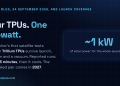
Answer card: Google Suncatcher MVP satellite, four Trillium TPUs on about one kilowatt, launching on SpaceX Transporter-18, reported for 1 October 2026.
494
SHARES
1.4k
VIEWS
Share on FacebookShare on Twitter

A fridge-sized box, four TPUs, and roughly the power budget of a hair dryer. That's Google's first Project Suncatcher satellite, called MVP, and it's due up on SpaceX's Transporter-18 rideshare, reported for 1 October 2026. It won't serve anyone. It's there to find out whether data-centre AI chips survive the ride up, and then a vacuum where fans do nothing. We've read Google's post, the November 2025 paper behind it and the launch coverage, and the interesting number isn't the TPU count. It's how long they can run before they have to stop and cool.

The short answer

Google's Suncatcher MVP satellite, built with Planet, carries four Trillium TPUs on about 1 kW of solar power and is scheduled to fly on SpaceX Transporter-18, reported for 1 October 2026. Google's own post (24 September) says the mission gathers data on how the chips cope with launch stress and with space itself. Coverage quoting Google's Travis Beals says the chips will answer short Gemini queries and can run for about 15 minutes before shutting down to cool. Laser links between satellites wait for a two-satellite test in 2027. Nothing here is a service you can use, and the cost case still depends on launch prices Google itself dates to the mid 2030s.
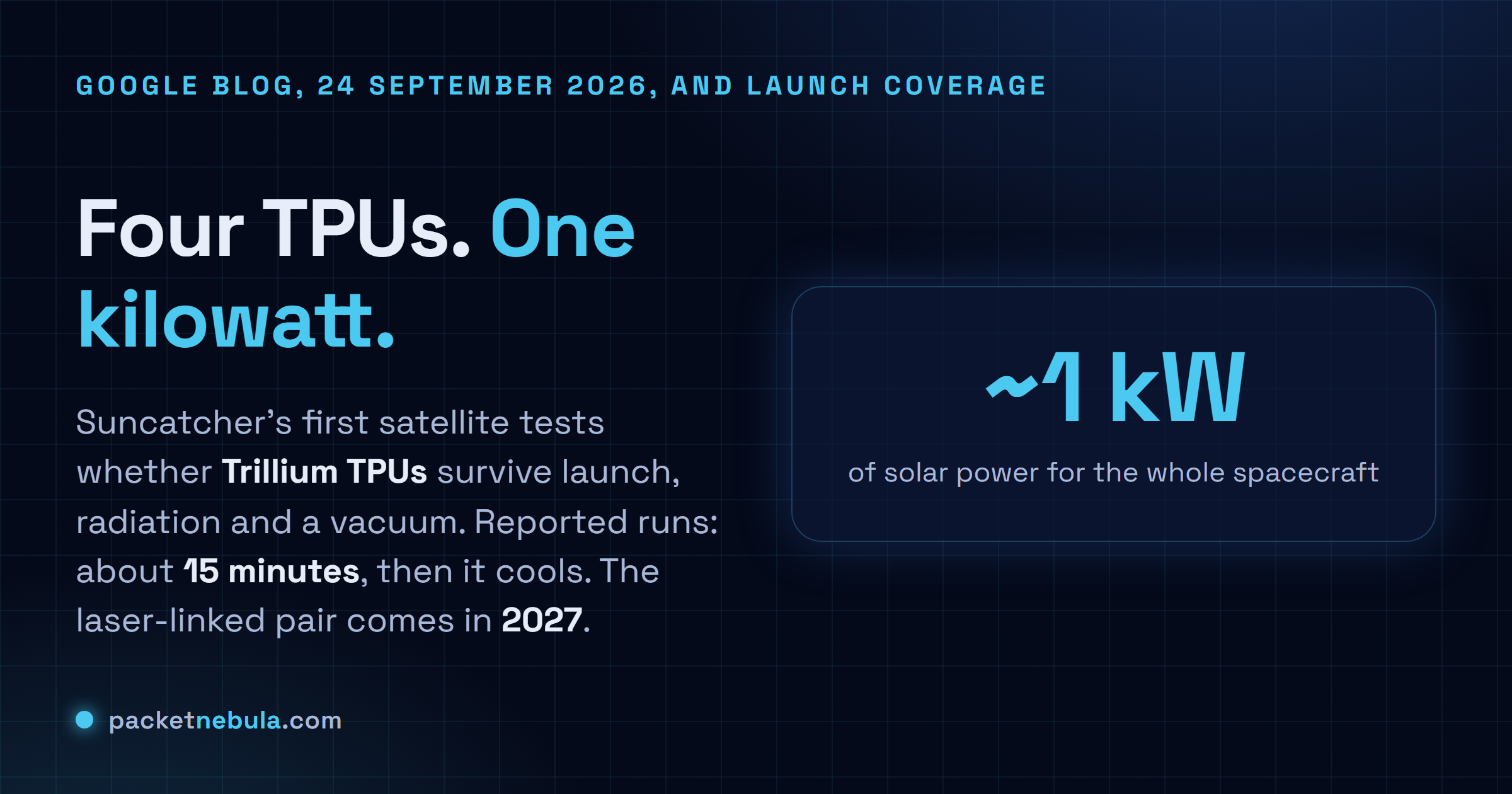
4 TPUsTrillium generation, on one Planet-built satellite
~1 kWof solar power for the whole spacecraft, as reported
~15 minof compute before the chips pause to cool, per Google
Answer card stating that Google's first Project Suncatcher satellite, called MVP and built with Planet, is due to launch on SpaceX's Transporter-18 rideshare, reported for 1 October 2026, carrying four Trillium TPUs on about one kilowatt of solar power, running Gemini queries in bursts of about 15 minutes, ahead of a two-satellite laser link test in 2027.
One satellite, four chips, a kilowatt. It's a survival test, and Google says as much.

What actually goes up on Transporter-18

Google's post, written by Travis Beals, doesn't give a chip count or a wattage. It says the mission rides "the upcoming Transporter-18 rideshare mission with SpaceX", that it was developed with Planet, and that it's meant to gather in-orbit data on how the TPUs handle spaceflight. The specifics come from the reporting around it. SiliconANGLE and Converge Digest both put four TPUs on board and about a kilowatt of solar generation. Beals told The New York Times, as relayed by several outlets, that the chips can run for about 15 minutes before they need to shut down and cool, and that they'll answer simple Gemini queries. The 1 October date is the press's, not Google's. Google's post just says "upcoming". Rideshare manifests slip all the time, so we wouldn't set a calendar alert.

A kilowatt. For comparison, a single current eight-GPU server can pull more than ten times that on its own, and the 460 MW Anthropic bought from Nscale is 460,000 of them. So nobody's offloading inference to orbit next year. The hard part is heat. There's no air, so nothing convects. Google says it's using heat pipes and radiators to move heat from the chips into space, and the 15-minute figure tells you where that stands: the radiators can't keep up with four TPUs at full tilt, so the thing works in bursts. Honestly, that's the most useful data point in the whole story, because it's the one the paper couldn't settle on a bench.

Launch is the other test. Google's post says individual components like the TPU chips "can experience even greater forces up to 50 to 100 g". Some coverage quotes a lower figure for the rocket as a whole, which is the overall load, not what a board-mounted chip sees. We'd trust Google's number here, it's their hardware.

The radiation result, and why the memory's the weak spot

This part's older than the launch. In November 2025 Google Research put a Trillium v6e Cloud TPU in a 67 MeV proton beam at UC Davis. The paper's numbers are specific. A five-year mission in a shielded low Earth orbit should add up to about 750 rad(Si). The chip logic took up to 15 krad(Si) on a single chip with no hard failures, which is twenty times that. The HBM didn't do as well: irregularities started at 2 krad(Si). That's still about 2.7 times the five-year dose. It's the tightest margin in the design, though, and it's the memory, not the compute.
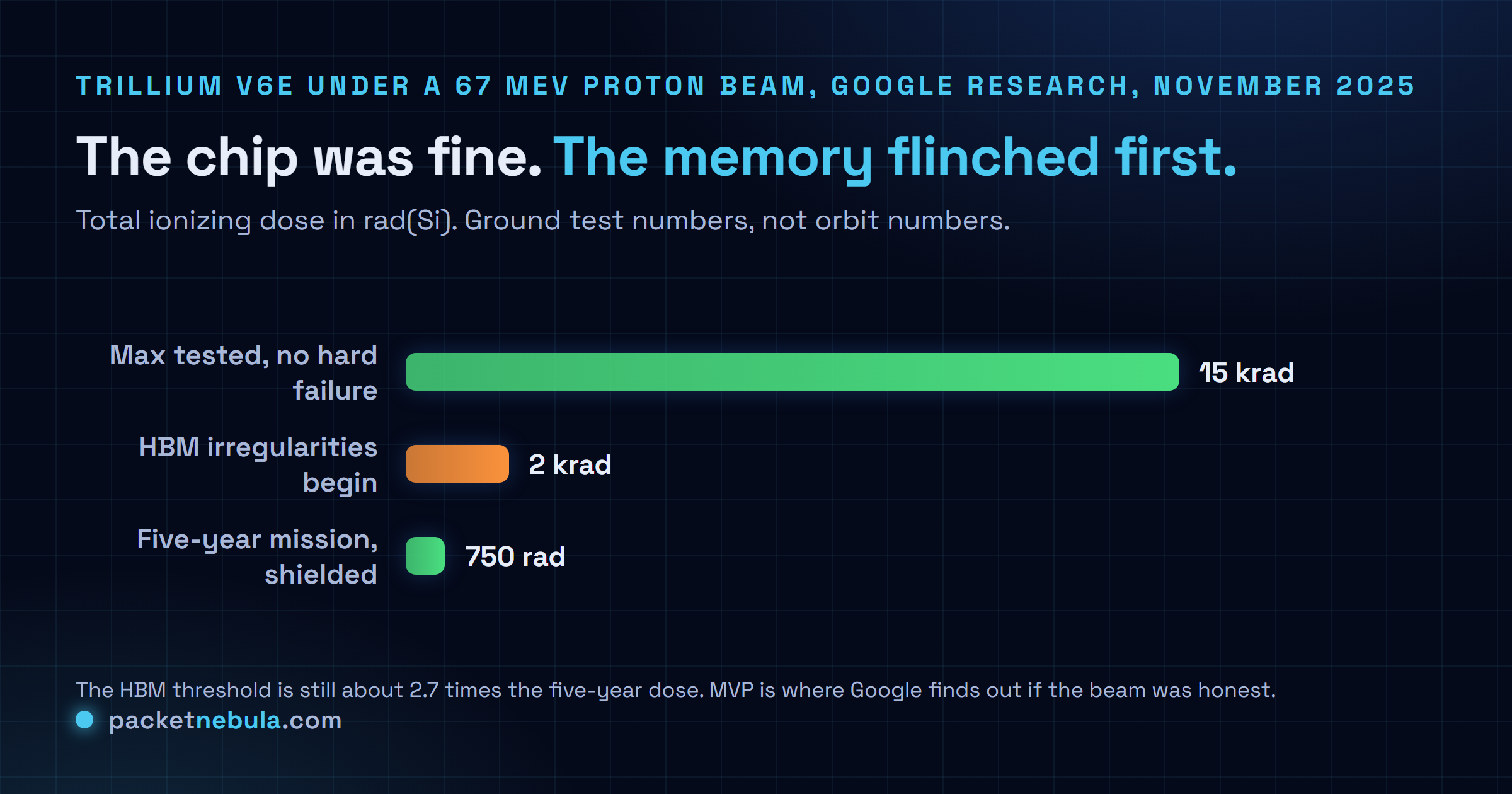
Horizontal bar chart of radiation doses from Google's November 2025 Suncatcher paper for a Trillium v6e TPU under a 67 MeV proton beam: 750 rad(Si) expected over a five-year shielded mission, 2,000 rad(Si) where high bandwidth memory irregularities began, and 15,000 rad(Si) maximum tested with no hard failures.
Twenty times the five-year dose for the logic, 2.7 times for the HBM. Ground numbers, which is why MVP exists.

A beam isn't orbit, though. A proton accelerator gives you a clean, fast dose of one particle type at one energy. Orbit gives you a slow mix, with the occasional heavy ion, over months. Google's September post only says the Trillium chips "hold up remarkably well" and can survive a dose greater than a five-year mission's. That's the beam result restated. The orbital data is what MVP's for. If HBM errors show up early in flight, the design needs more shielding or a different memory strategy, and both cost mass, which costs launch money. I might be wrong, but we'd bet the memory telemetry is the first thing Google's engineers look at every pass.

From one satellite to 81, and the dates that moved

The long-term picture in the 2025 paper is a cluster of 81 satellites flying within a 1 km radius, 100 to 200 metres apart, at about 650 km in a sun-synchronous orbit where the panels see near-constant sun and can be up to eight times more productive than on the ground. They'd talk over free-space optical links. Google's bench demo managed 800 Gbps each way, 1.6 Tbps total, with one transceiver pair. The economics lean on launch prices falling below $200 per kilogram by the mid 2030s. That's Google's projection, not a quote from any launch provider.

What's changed is the order. Back then the plan was "two prototype satellites by early 2027", with Planet. Now there's a single survival test first, in 2026, and the two-satellite laser link experiment is still pencilled for 2027. We read that as caution, and it's sensible: why fly an expensive optical pair before you know the chips live? For anyone running infrastructure today, none of this changes a procurement plan. It's worth watching for one reason. If HBM holds and the 15 minutes stretch, the argument that power, not chips, caps AI build-outs gets a strange new answer. If they don't, this stays a research line for a good while.
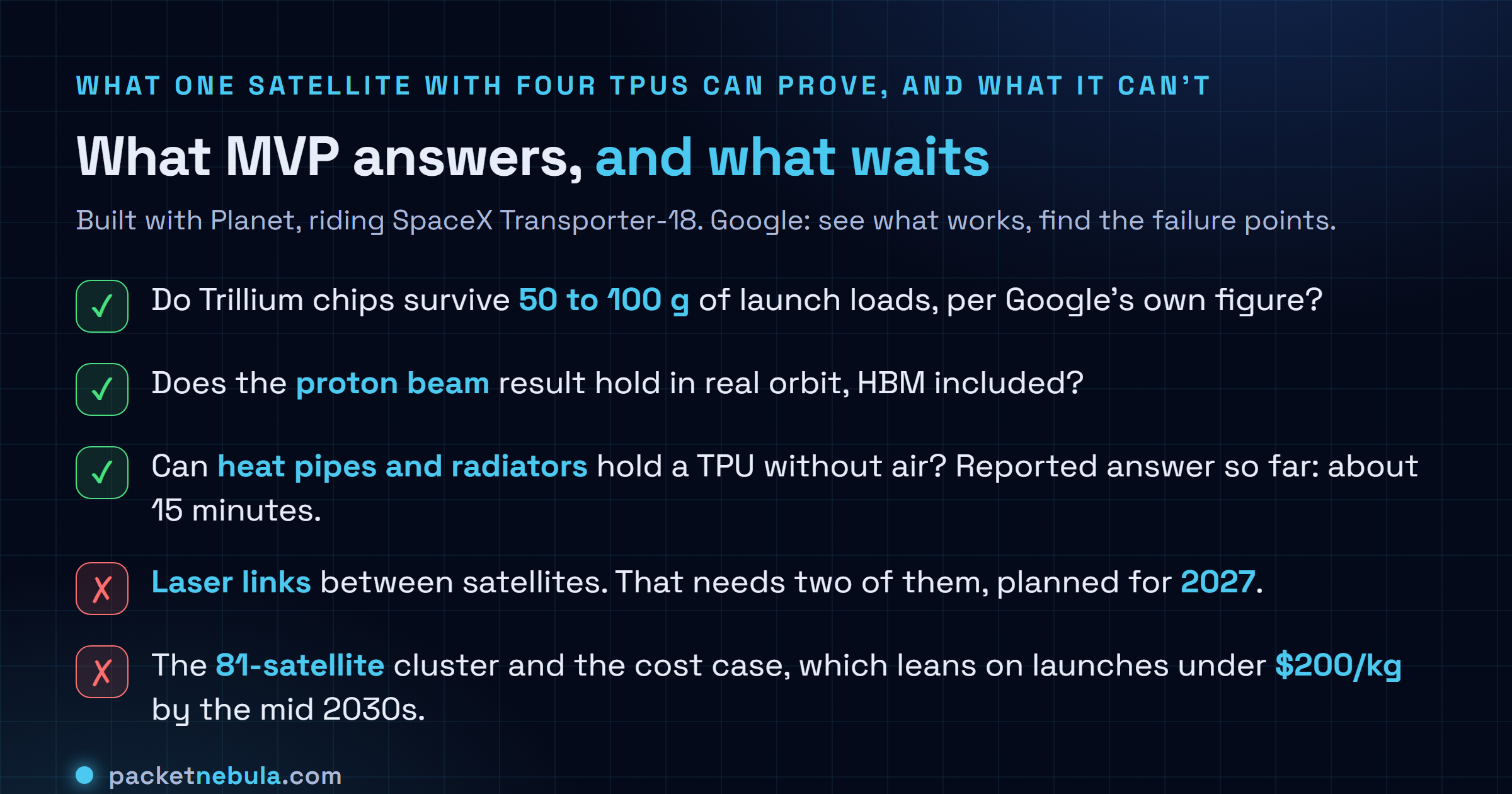
Checklist of what Google's Suncatcher MVP satellite can answer, namely survival of 50 to 100 g launch loads on the chips, whether the proton beam radiation result holds in orbit including high bandwidth memory, and whether heat pipes and radiators can cool a TPU in vacuum, and what waits, namely laser links between satellites planned with two satellites in 2027 and the 81-satellite cluster whose cost case needs launches under 200 dollars per kilogram by the mid 2030s.
Three questions one satellite can answer. Two it can't, by design.

Sources

Travis Beals, Google, Behind Project Suncatcher, our moonshot to put AI in space, 24 September 2026 (Transporter-18, Planet, the 50 to 100 g figure, heat pipes and radiators, the Trillium radiation line, two satellites in 2027). Google Research, Exploring a space-based, scalable AI infrastructure system design, 4 November 2025 (81 satellites, 1 km, 650 km, 1.6 Tbps, the 67 MeV test with 750 rad, 2 krad and 15 krad, the $200/kg projection, the original early 2027 prototype plan). SiliconANGLE, Google's first Project Suncatcher AI satellite set to blast off into orbit next week, 24 September 2026 (four TPUs, about 1 kW, 15-minute bursts, the 1 October date). Converge Digest, Google accelerates Project Suncatcher with first orbital TPU test, September 2026 (Falcon 9 from Vandenberg, Gemini workloads).

Frequently asked questions

When does Google's first Suncatcher satellite launch?

Coverage published on 24 September 2026 gives 1 October 2026, on SpaceX's Transporter-18 rideshare from Vandenberg. Google's own post only says "the upcoming Transporter-18 rideshare mission". Rideshare dates often move by days or weeks, so treat 1 October as the current target, not a fixed date.

How many TPUs are on the MVP satellite, and which ones?

Four, according to SiliconANGLE, Converge Digest and the New York Times reporting they cite. Google's post doesn't give the count. The radiation testing Google describes was done on Trillium, its sixth-generation TPU (v6e in the 2025 paper).

Can you run anything on it?

No. It's an experiment, not a cloud region. Reporting says the chips will answer short Gemini queries in bursts of about 15 minutes before shutting down to cool, which is enough to measure behaviour, not to serve users.

What's the next Suncatcher milestone?

Two satellites in orbit in 2027 to test laser communication between them, per Google's September 2026 post. The 81-satellite cluster described in the 2025 paper has no date, and its cost case assumes launches under $200 per kilogram by the mid 2030s.

Tags: data-centersgooglenewsplanetproject-suncatcherspacextputrillium
Share198Tweet124
stephane

stephane

  • Trending
  • Comments
  • Latest
Answer card: Proton Lumo 2.0 is private by policy, not by locality. Saved history is locked so even Proton cannot read it, but the prompt is decrypted on a Proton EU server to answer it, then forgotten.

Proton Lumo 2.0 review: how private is it, really?

3 September 2026
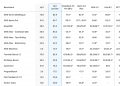
The Agentic Coding section of the official Hy4 preview benchmark appendix published by Tencent, a table comparing Hy3 and Hy4 preview against DeepSeek V4 Pro 0813, Qwen 3.8 Max, GLM 5.3, Kimi K3, GPT 5.6 Sol and Claude Opus 5 across SWE-bench Multilingual, SWE-bench Pro, DeepSWE, three SWE Atlas tasks, SWE-Marathon, Terminal-Bench 2.1, NL2Repo-Bench, CyberGym, ProgramBench, PostTrainBench and Harbor-Index.

Tencent’s 770B Hy4 tops one benchmark row in 46

3 September 2026
Answer card: Qwen 3.7 Max is API-only and cannot run locally yet; the open Qwen models (Qwen 3.6 27B, qwen3:8b to 32b) run offline via Ollama.

Qwen 3.7 local: what you can actually run offline

22 June 2026
Answer card: JWTs are not encrypted, anyone can read them; the signature proves who issued the token, not who may read it.

Are JWTs encrypted? No, and the difference will bite you

0
Answer card: a random 8 character password falls in under 2 hours offline, while 16 random characters hold for 1.4 trillion years at the same speed.

How long does it take to crack a password in 2026?

0
Answer card: three DNS records decide if your mail lands or bounces; SPF lists allowed senders, DKIM signs messages, DMARC sets the failure policy.

SPF, DKIM and DMARC explained: the records your email needs

0
Answer card: Xiaomi retrained MiMo-V2.6 to stop repeating tool calls, API swapped on 25 September 2026, MIT weights on 27 September, same model names.

MiMo-V2.6-Pro was quietly retrained to stop looping on tool calls

28 September 2026
Answer card: Anthropic committed $11.6 billion over seven years to Akamai Cloud for CPU workloads only, with revenue from the second half of 2027.

Anthropic’s $11.6B Akamai deal buys CPUs, not GPUs

27 September 2026
Answer card: Google Suncatcher MVP satellite, four Trillium TPUs on about one kilowatt, launching on SpaceX Transporter-18, reported for 1 October 2026.

Google’s first Suncatcher satellite flies four TPUs on 1 kW

25 September 2026
  • About
  • Contact
  • Privacy
  • Legal

Copyright © 2026 Stephane Cardon.

Welcome Back!

Login to your account below

Forgotten Password?

Retrieve your password

Please enter your username or email address to reset your password.

Log In
No Result
View All Result
  • Home
  • Articles
    • Security
    • Network
    • Dev
    • Sysadmin
    • SEO
    • Email & DNS
  • Tools
    • Network tools: free, fast, no signup
    • Security tools: free, fast, no signup
    • Developer tools: free, fast, no signup
    • Sysadmin tools: free, fast, no signup
    • SEO tools: free, fast, no signup
    • Email & DNS tools: free, fast, no signup
  • Download
  • About

Copyright © 2026 Stephane Cardon.