




We've got a folder of meeting recordings nobody transcribes because the audio tariff on every omni model made it a budget line. Late on 17 September 2026 the Qwen team published Qwen3.8-Omni-Flash, and the Model Studio pricing page now lists it at $0.15 per million input tokens whether the tokens came from text, an image, a video or an hour of audio. That's the same rate as the text-only qwen3.8-flash. So we read the launch post, the pricing table and the API docs, then went looking for the parts of the announcement you can actually download. Some of them you can't.
The short answer
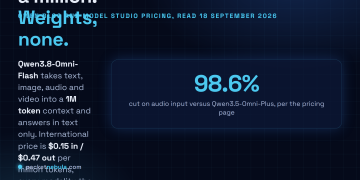
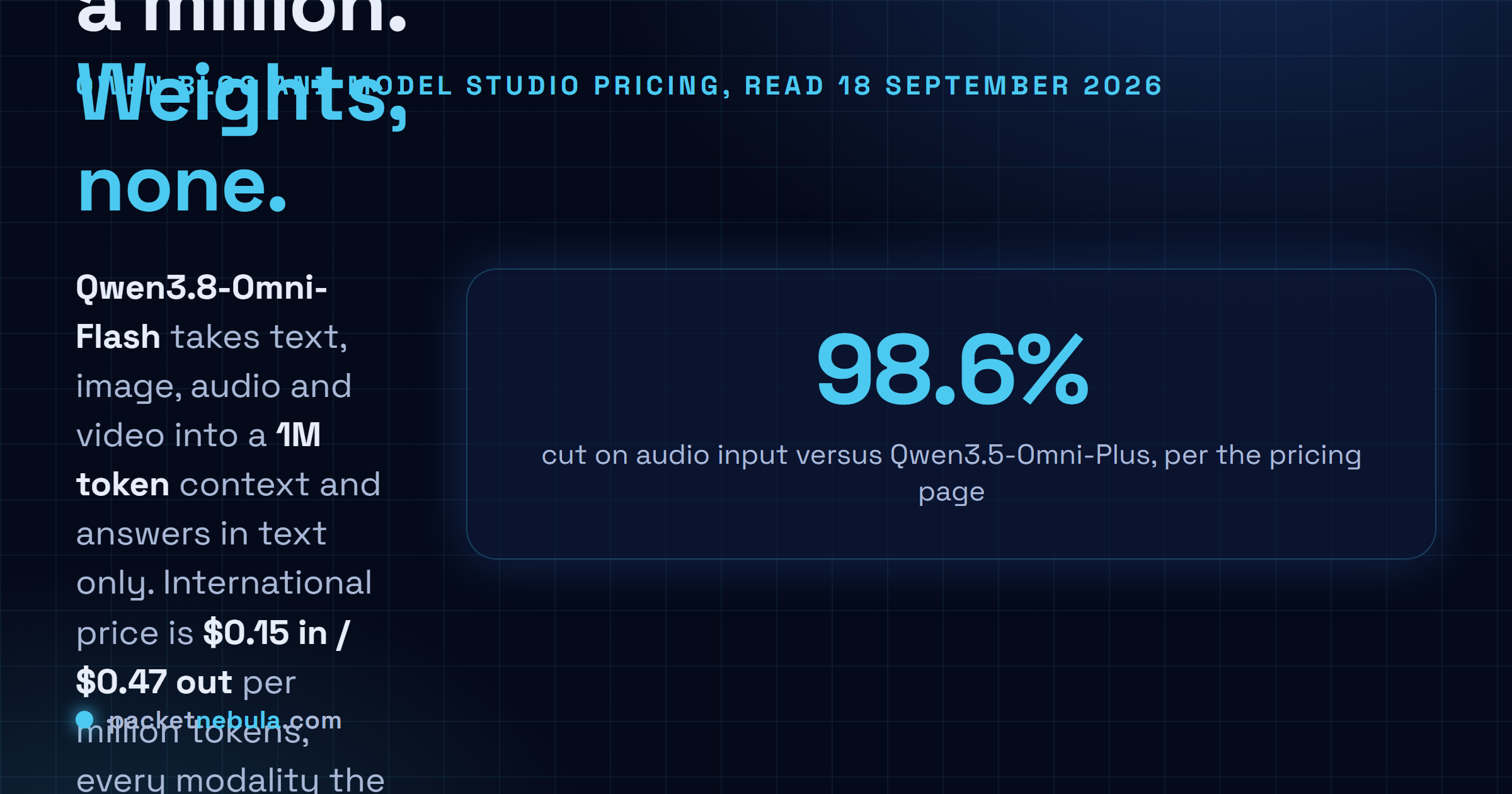
Qwen3.8-Omni-Flash is an API model on Alibaba Cloud Model Studio. It accepts text, images, audio and video in a 1M-token context and returns text only. International regions bill $0.15 per million input tokens for every modality, $0.016 on a cache hit and $0.47 per million output. The previous Omni-Plus charged $11 for audio input, so the cut is 98.6% on that line. There are no open weights, the Qwen-Live Harness repository the post links to returns 404, and the Realtime variant has no row on the pricing page yet. The benchmark table is the lab's own, and it loses three of the four agentic rows to Gemini 3.8 Flash.
What $0.15 a million actually buys
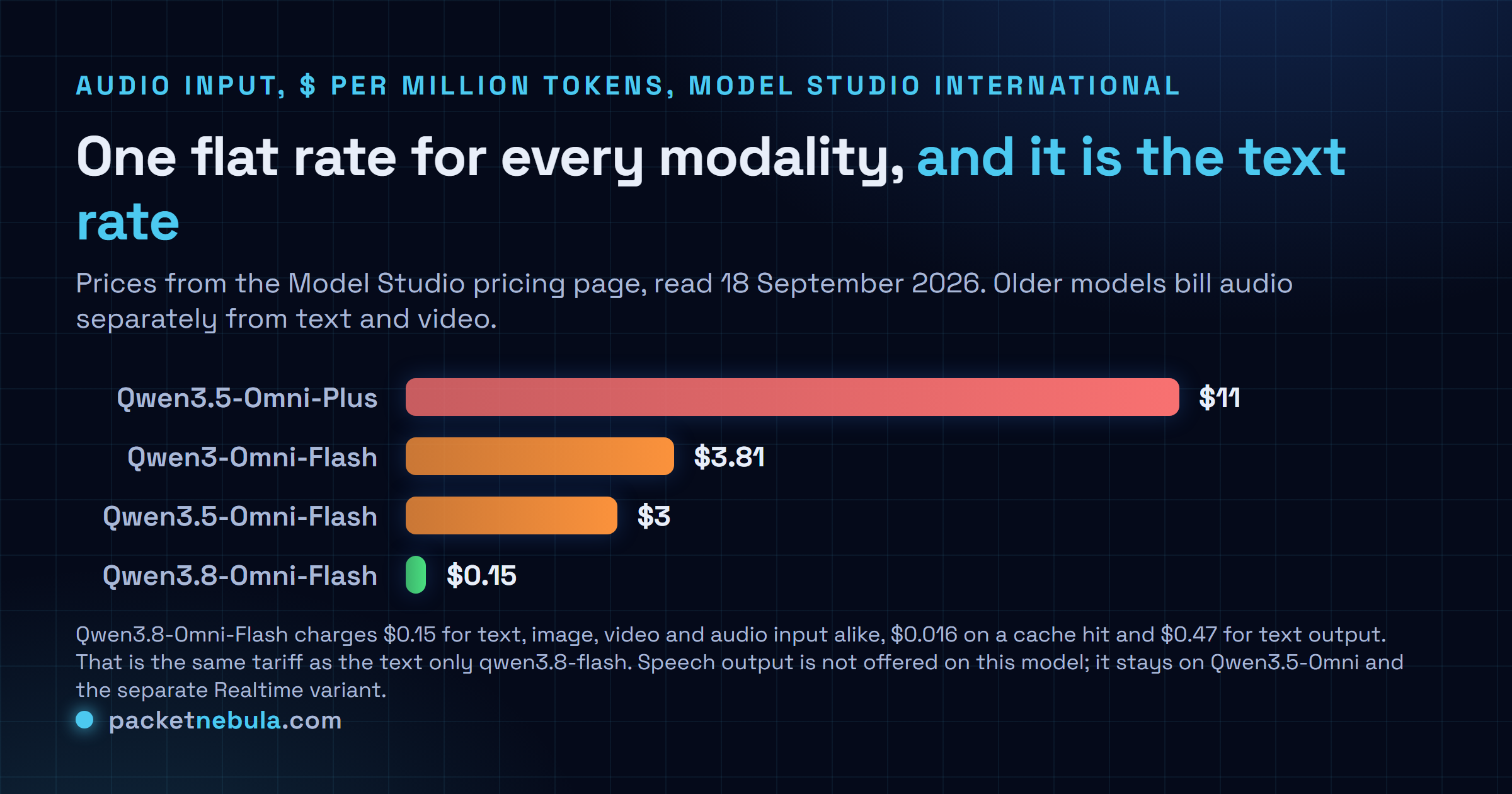
Start with the table, because the launch post talks in percentages and the pricing page talks in dollars. In the international regions (Singapore, Hong Kong, Tokyo, Frankfurt, Virginia) qwen3.8-omni-flash has one input column: USD 0.15 per million tokens. No separate audio rate, no separate video rate. Cache hits are $0.016 and text output is $0.47. Compare that with qwen3.5-omni-plus on the same page, still listed at $1.4 for text, image and video input, $11 for audio input and $8.3 for text output. The post claims an audio-input cut "of more than 98%" per hour; $11 to $0.15 per million tokens is 98.6%, so the claim checks out against the lab's own tariff. The older qwen3.5-omni-flash sat at $3 for audio. Even that is twenty times what the new model charges.
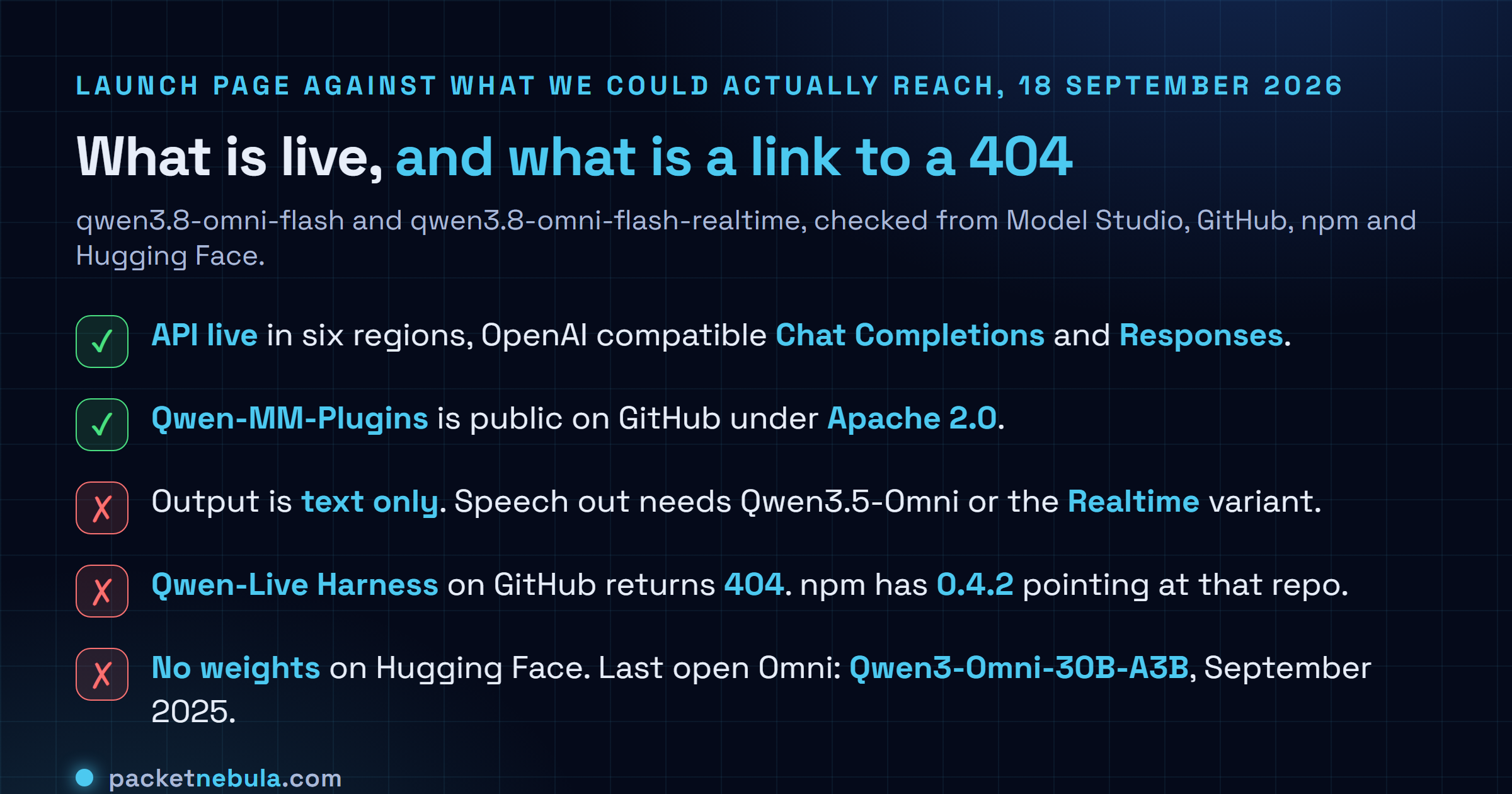
Two things the price doesn't include. Speech output, first. The docs are explicit that this model returns text, and that generated speech stays on Qwen3.5-Omni or on qwen3.8-omni-flash-realtime, the WebSocket and WebRTC variant. The Realtime model is in the launch post with latency numbers (about 591 ms to first token and 978 ms to the first audio packet on a six-second clip) but when we read the pricing page on 18 September there was no row for it. Second, the free quota. Model Studio's note says the Omni free tiers exist only in Singapore, and the 3.8 row we saw had no quota column at all. Budget for pay-as-you-go from the first call.
What you do get is a 1M-token window (the post says an hour of audio-visual input is handled natively, and the docs cap a Base64 upload at 10 MB), 113 recognised languages and dialects, stereo and four-channel spatial audio, function calling, and an OpenAI-compatible surface on both Chat Completions and Responses. The only built-in Responses tool is web search. Reasoning is on by default at reasoning_effort="xhigh", with medium, low and none below it, and preserve_thinking is enabled out of the box, which means prior reasoning rides along in the next turn and gets billed as input. Turn it down before you point it at a two-hour recording, or the context fills faster than you'd expect.
curl https://dashscope-intl.aliyuncs.com/compatible-mode/v1/chat/completions -H "Authorization: Bearer $DASHSCOPE_API_KEY" -H "Content-Type: application/json" -d '{"model":"qwen3.8-omni-flash","reasoning_effort":"low","messages":[{"role":"user","content":[{"type":"input_audio","input_audio":{"data":"https://example.com/meeting.wav","format":"wav"}},{"type":"text","text":"List the action items with who owns each."}]}]}'
The lab's table, read row by row
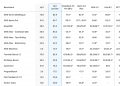
The headline claim is an average gain of more than 25% over Qwen3.5-Omni-Plus across 29 evaluations, and audio-visual performance "close to" Gemini 3.8 Flash. Read the rows and it's more uneven than that, in both directions. On the four agentic rows, the new model wins WildClawBench-MM at 71.0 against 58.9 and edges UniClawBench 69.6 to 69.0, then loses AgenticVBench 36.8 to 45.0 and OmniGAIA 74.0 to 78.6. On plain speech recognition it's behind its own predecessor: FLEURS multilingual WER is 9.3 against 7.2 for Omni-Plus and 7.9 for the Gemini model, and VoiceBench slips from 92.9 to 91.6. Honestly, for a model marketed on audio, a worse WER than the model it replaces is the number we'd want explained.
The row that is genuinely new is multi-speaker meetings. On AliMeeting the diarisation error rate goes from 88.1 to 3.4 and the concatenated WER from 89.6 to 17.2. Those old numbers are so bad they say the previous model simply couldn't separate speakers, so this is a capability arriving rather than improving. Same pattern on AISHELL-4 and MagicData-RAMC. If your use case is "who said what in an hour-long call", that's the row to care about, and it's the one where the Gemini and Muse Spark 1.2 columns look worst too.
One more number we liked. In agent mode (the post uses its own Qwen Code harness) the model scores 67.8 on OmniVideoBench instead of 63.4, while spending 79,117 tokens per query instead of 145,736. Watching less of the video and answering better is the interesting result, more than any single score. The text rows, including a 63.3 on SWE-bench Pro, were run on a version of the benchmark the lab says it corrected and re-ran itself, so we wouldn't line those up against anyone else's published score. Nobody outside the lab had rerun any of this when we checked on 18 September, which is normal for day one and worth remembering all the same.
What you can't download yet
The launch post links two open-source companions. Qwen-MM-Plugins is real: a public GitHub repository under Apache 2.0, pushed again on the morning of the launch, with a video-to-notes plugin, a film commentary one, and a skill creator that turns a screen recording into an agent skill file, among others. The other one, Qwen-Live Harness, is described as "open-sourced" with an npm install -g qwen-live-harness one-liner. The package exists on the npm registry (0.4.2, published 15 September) and its repository field points at github.com/QwenLM/Qwen-Live-Harness. That URL returned 404 every time we tried it on 18 September, and people in the Hacker News thread hit the same wall. I might be wrong about why; a private repo waiting on a flip is the boring explanation. But as of today the harness is a package you can install without any source you can read, which isn't what open-sourced means.
Then the weights. Nothing under the Qwen organisation on Hugging Face for 3.8-Omni. The last Omni checkpoints the team published were the Qwen3-Omni-30B-A3B family in September 2025, a full year ago. Since then the omni line has been API-only, while the text side kept shipping: Qwen3.8-Flash-Next landed with weights three weeks ago and the 27B is Apache 2.0. Our read is that omni is where the team has decided to keep the moat. The post doesn't mention weights at all, which for a lab that usually says "coming" when they're coming is its own kind of answer.
So who is this for? Anyone whose audio bill was the reason they didn't build the thing. At $0.15 a million the audio line stops being the reason not to build it, and you're not paying a modality premium for the video track either. Against Gemini 3.8 Flash it isn't a clean win on the lab's own table, and if you need the model to talk back, the honest comparison is with the Gemini 3.8 Live models on the one side and an unpriced Realtime endpoint on the other. We'd run the meeting folder through it this week. We wouldn't plan a product on the harness until the repository loads.
Sources
Qwen team, Qwen3.8-Omni-Flash: Omni Senses. Agentic Delivery., September 2026 (the 1M context, the 29-evaluation average, the benchmark tables, the OmniVideoBench token counts, the Realtime latency figures, the reasoning_effort levels, the harness and plugin links). Alibaba Cloud, Model Studio model inference pricing, read 18 September 2026 (the $0.15, $0.016 and $0.47 rows, the Qwen3.5-Omni-Plus and Omni-Flash rows, the free quota note). Alibaba Cloud, Qwen-Omni documentation, read 18 September 2026 (text-only output, the six regions, the 10 MB Base64 limit, the spatial audio support, the 113 languages, the Responses tool scope). GitHub, QwenLM/Qwen-MM-Plugins (Apache 2.0, last push 18 September 2026) and the 404 at QwenLM/Qwen-Live-Harness, both checked 18 September 2026. npm registry, qwen-live-harness, versions 0.4.1 and 0.4.2 published 14 and 15 September 2026. Hugging Face, the Qwen organisation, checked 18 September 2026 (no Qwen3.8-Omni repository; Qwen3-Omni-30B-A3B dated September 2025). Hacker News, Qwen 3.8 Omni Flash, 17 September 2026 (the harness 404 reports).
Frequently asked questions
How much does Qwen3.8-Omni-Flash cost?
In Alibaba Cloud Model Studio's international regions it's USD 0.15 per million input tokens for text, image, video and audio alike, USD 0.016 per million on a cache hit and USD 0.47 per million output tokens. The Beijing region is priced separately. The Realtime variant had no price on the page when we read it on 18 September 2026.
Are Qwen3.8-Omni-Flash weights available on Hugging Face?
No. As of 18 September 2026 there's no Qwen3.8-Omni repository under the Qwen organisation, and the launch post doesn't mention open weights. The most recent Omni checkpoints the team published are the Qwen3-Omni-30B-A3B models from September 2025.
Can Qwen3.8-Omni-Flash generate speech?
Not this model. The docs list its output as text only. For spoken responses you use Qwen3.5-Omni over HTTP or qwen3.8-omni-flash-realtime over WebSocket or WebRTC, which the launch post describes but which isn't yet on the pricing page.
Is Qwen3.8-Omni-Flash better than Gemini 3.8 Flash?
On the lab's own table it wins some rows and loses others. It leads WildClawBench-MM 71.0 to 58.9 and most of the multi-speaker meeting rows, and trails on AgenticVBench, OmniGAIA and multilingual speech recognition. Nobody independent had rerun the numbers on launch day.
Does the Qwen-Live Harness work?
The npm package qwen-live-harness exists at version 0.4.2, but the GitHub repository it points to returned 404 on 18 September 2026, so there's no readable source yet. Qwen-MM-Plugins, the other companion project, is public under Apache 2.0.