
• Latest
  • Trending
  • All
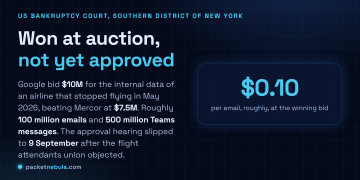
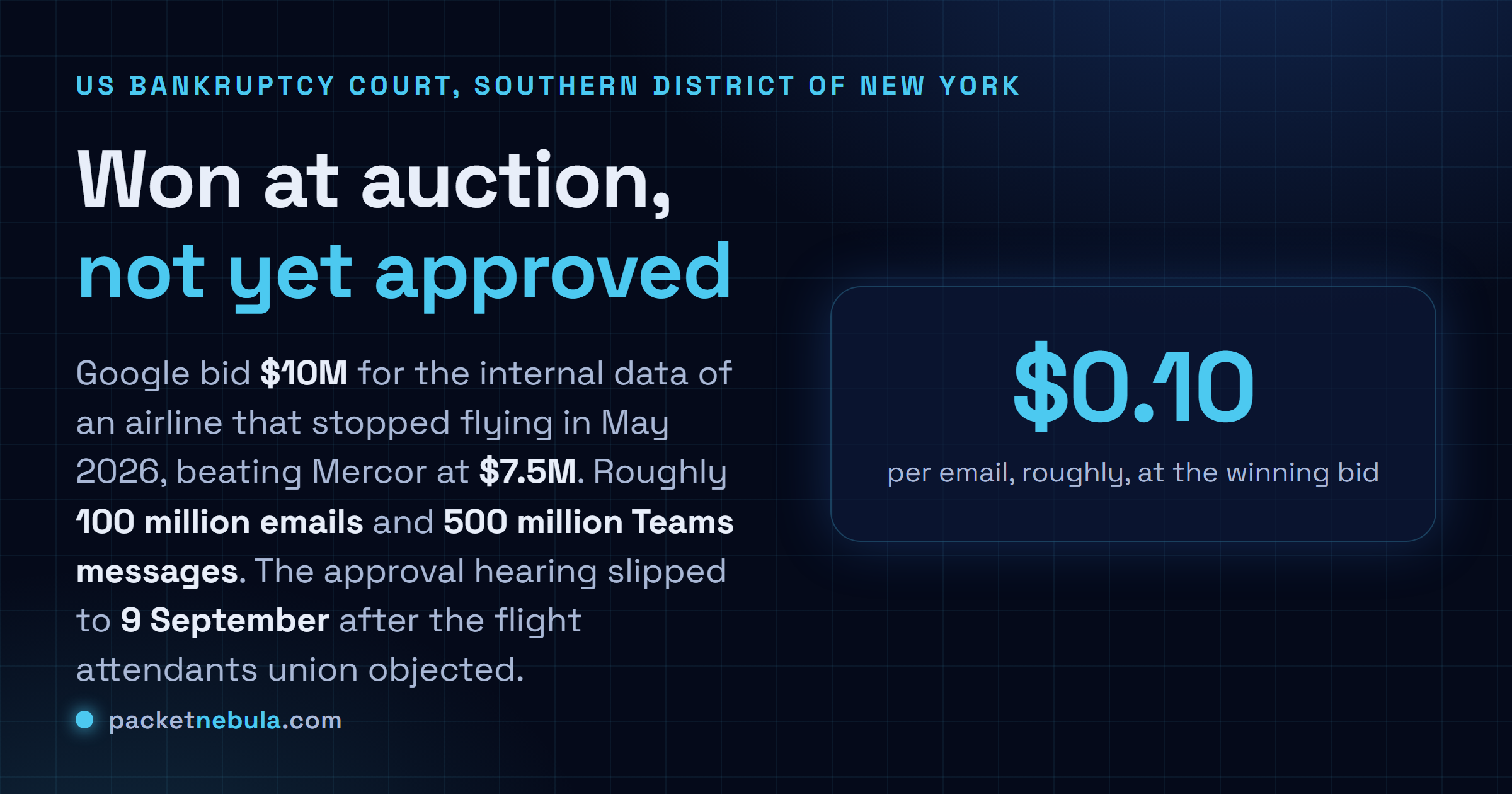
Answer card stating that Google won a bankruptcy auction for the internal enterprise data of the defunct Spirit Airlines with a 10 million dollar bid, beating a 7.5 million dollar bid from Mercor, that the package covers about 100 million employee emails and 500 million Microsoft Teams messages, and that the approval hearing in the Southern District of New York moved to 9 September 2026 after the flight attendants union objected.

Google’s $10M Spirit Airlines Data Buy Slips to September 9

19 August 2026
Answer card stating that Ternary Bonsai 2 27B, released by PrismML on 17 September 2026 under Apache 2.0, packs Qwen3.8 27B into 5.95 gigabytes at 1.72 bits per weight, keeps 98.2 percent of the 14-benchmark average, about 75 percent on SWE-bench Verified and Terminal-Bench 2.1, and needs PrismML's llama.cpp fork to run.

Does Bonsai 2 27B really keep 98% of Qwen3.8 in 5.95 GB?

20 September 2026
Answer card stating that Jev 1.13 from TypeSafe AI is a decision model in early access since 15 September 2026 that returns typed probabilities instead of text, priced at 42 dollars per billion input tokens with output tokens free, answering in 70 to 500 milliseconds, with a 64K token request budget, text input only, and a documented list of things it does badly, including counting and dates.

Jev 1.13 bills $42 a billion tokens, and it can’t count

19 September 2026
Answer card stating that Qwen3.8-Omni-Flash launched on 17 September 2026 as an API only model on Alibaba Cloud Model Studio, taking text, images, audio and video in a 1M token context and returning text only, priced at 0.15 dollars per million input tokens for every modality and 0.47 dollars per million output tokens in the international regions, with no open weights published and the Qwen-Live Harness GitHub repository returning 404.

Qwen3.8-Omni-Flash bills audio at $0.15 and ships no weights

18 September 2026
Answer card stating that on 15 September 2026 AWS said it is unable to restore access to resources and data hosted exclusively in the Middle East Bahrain region me-south-1 and in the mec1-az2 zone of the UAE region, because the damage spanned multiple Availability Zones and exceeded what multi-AZ services are designed to withstand.

AWS can’t restore me-south-1, six months after the drone strikes

17 September 2026
Answer card stating that Google released Gemini 3.8 Live and Gemini 3.8 Live Extended Thinking on 15 September 2026 at 3 dollars per million audio input tokens and 12 dollars out, that the thinking model requires asynchronous tools, and that Artificial Analysis scores it 82.6 on its Speech to Speech Quality Index.

Gemini 3.8 Live Extended Thinking rejects any tool that blocks

16 September 2026
Answer card summarising the Atria Dawn Preview release: 744B GLM-5.2 base, MIT licence, 1.5 TB BF16 and 756 GB FP8 checkpoints, 256K context, top on five of sixteen benchmark rows and trailing on SWE-bench Pro.

Atria Dawn Preview is 744B under MIT, and the BF16 weighs 1.5 TB

15 September 2026
Answer card stating that OpenAI released the Agents API in public beta on 10 September 2026 with no separate fee, billed through model tokens, tool calls and hosted sandbox time, with a choice of OpenAI hosted, self hosted or partner sandboxes, US only data residency and no Zero Data Retention support.

OpenAI’s Agents API has no fee, no ZDR and a one hour sandbox clock

14 September 2026
Answer card: Sakana Fugu Max at $2 and $6 per million tokens, Fugu Ultra v2 unchanged at $5 and $30, and Sakana saying Ultra v2 scores without Fable 5 or GPT-6 Astra in its pool.

Fugu Max costs $2 and $6 while Fugu Ultra v2 runs without Fable 5

13 September 2026
Answer card stating that DeepSeek released DeepSeek-V4.1-Flash on 10 September 2026 as a 552 billion parameter mixture of experts model with a new causal encoder decoder architecture that activates 8 billion parameters on input and 16 billion on output, with native vision, a one million token context and MIT licensed weights, that the API model name is now deepseek-flash at 0.15 dollars per million input tokens and 0.60 dollars per million output tokens off peak, and that DeepSeek announced V4 Pro would be routed to V4.1-Flash from 14 September and reversed that on 11 September.

DeepSeek V4.1-Flash arrived, and the V4 Pro retirement lasted a day

12 September 2026
Answer card stating that Cognition released SWE-2 on 10 September 2026, a coding model post-trained from Kimi K3, scoring 50.0 percent on FrontierCode 1.1 Main against 50.9 percent for Claude Fable 5.1 and 27.3 percent on Terminal-Bench 4 against 55.8 percent, available only inside Devin.

SWE-2 trails Fable 5.1 by one point, and by 28 on Terminal-Bench 4

11 September 2026
Answer card for Meta Muse, free to 100 million tokens a week then $20 a month, launched 8 September 2026 for United States adults only, running in a dedicated per user virtual machine.

Does Meta Muse do enough to earn your inbox and a card on file?

9 September 2026
Answer card stating that the public download pages for the VMware Virtual Disk Development Kit on developer.broadcom.com began returning 404 errors on 25 August 2026 with no announcement or deprecation notice, that Broadcom support tells customers the kit is no longer available for use or download, and that release lines 7.0.3.1, 8.x and 9.x are all affected.

Broadcom pulled VDDK 8.0 and 9.0, and the 404 is the only notice

8 September 2026
  • About
  • Contact
  • Privacy
  • Legal
Sunday, September 20, 2026
  • Login
Packet Nebula
  • Home
  • Articles
    • Security
    • Network
    • Dev
    • Sysadmin
    • SEO
    • Email & DNS
  • Tools
    • Network tools: free, fast, no signup
    • Security tools: free, fast, no signup
    • Developer tools: free, fast, no signup
    • Sysadmin tools: free, fast, no signup
    • SEO tools: free, fast, no signup
    • Email & DNS tools: free, fast, no signup
  • Download
  • About
No Result
View All Result
Packet Nebula
No Result
View All Result
Home Dev

Google’s $10M Spirit Airlines Data Buy Slips to September 9

by stephane
19 August 2026
in Dev
0
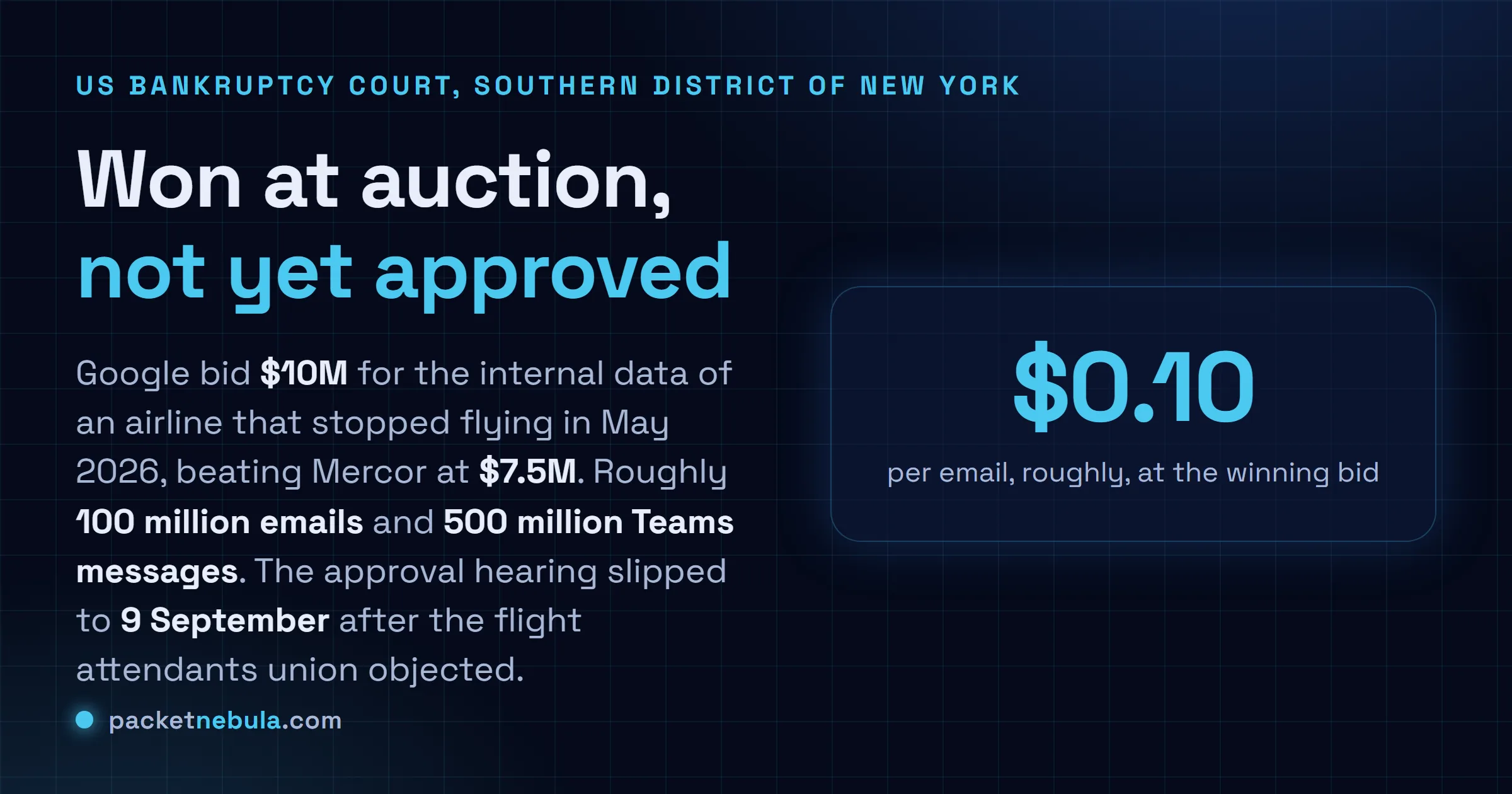
Answer card stating that Google won a bankruptcy auction for the internal enterprise data of the defunct Spirit Airlines with a 10 million dollar bid, beating a 7.5 million dollar bid from Mercor, that the package covers about 100 million employee emails and 500 million Microsoft Teams messages, and that the approval hearing in the Southern District of New York moved to 9 September 2026 after the flight attendants union objected.
492
SHARES
1.4k
VIEWS
Share on FacebookShare on Twitter

An airline that stopped flying in May just sold its Slack-equivalent. Google won a bankruptcy auction for Spirit Airlines' internal enterprise data with a $10 million bid, roughly 100 million employee emails and 500 million Microsoft Teams messages, and it says the material will help train its AI models. Then the sale hit a wall. The flight attendants union objected, and the approval hearing in the Southern District of New York moved to 9 September. So nothing has changed hands yet. What has changed is that we all now have a public number for what a dead company's mailbox is worth.

The short answer

Google won the bankruptcy auction for Spirit Airlines’ internal enterprise data at $10 million, ahead of Mercor.io Corp. at $7.5 million. The package runs to roughly 100 million employee emails, 500 million Microsoft Teams messages, source code, operations and audit records, and about 176,000 employee records going back to 1986. Passenger profiles, the loyalty database and cardholder records are carved out, and a third party is meant to strip identifiers before handover. The sale is not final: the flight attendants union objected and the hearing moved to 9 September 2026.
$10Mwinning bid, beating $7.5M
500MTeams messages included
9 Sepapproval hearing, delayed
Answer card stating that Google won a bankruptcy auction for the internal enterprise data of the defunct Spirit Airlines with a 10 million dollar bid, beating a 7.5 million dollar bid from Mercor which was named backup buyer, that the package covers about 100 million employee emails and 500 million Microsoft Teams messages, and that the sale is not final because the approval hearing moved to 9 September 2026 after the flight attendants union objected.
Won at auction. Not yet signed off.

What actually got sold

Spirit stopped flying in May 2026. The estate has creditors, the creditors want money, and it turns out the most liquid thing left in the building was the archive.

Google bid $10 million and won. Mercor.io Corp., an AI data and recruiting outfit, came in at $7.5 million and got named backup buyer, which is the court’s way of keeping a spare bidder on the hook in case the first deal falls apart. Reporting on the earlier rounds has Google opening around $5 million, so the price doubled in the room.

The inventory is the interesting part, and it is bigger than the headlines suggest. About 100 million employee emails. 500 million Microsoft Teams messages and collaboration records. Roughly 7.5 billion passenger transaction records going back to 2008, and 7.2 billion competitor flight pricing records, which for a discount airline is basically the entire strategy department written down. 30 million lines of code with the development metadata attached. Around 176,000 employee records reaching back to 1986, which predates most of the people in them having a work email at all.

Calendars, spreadsheets, marketing, HR, strategy, project management. The boring stuff.
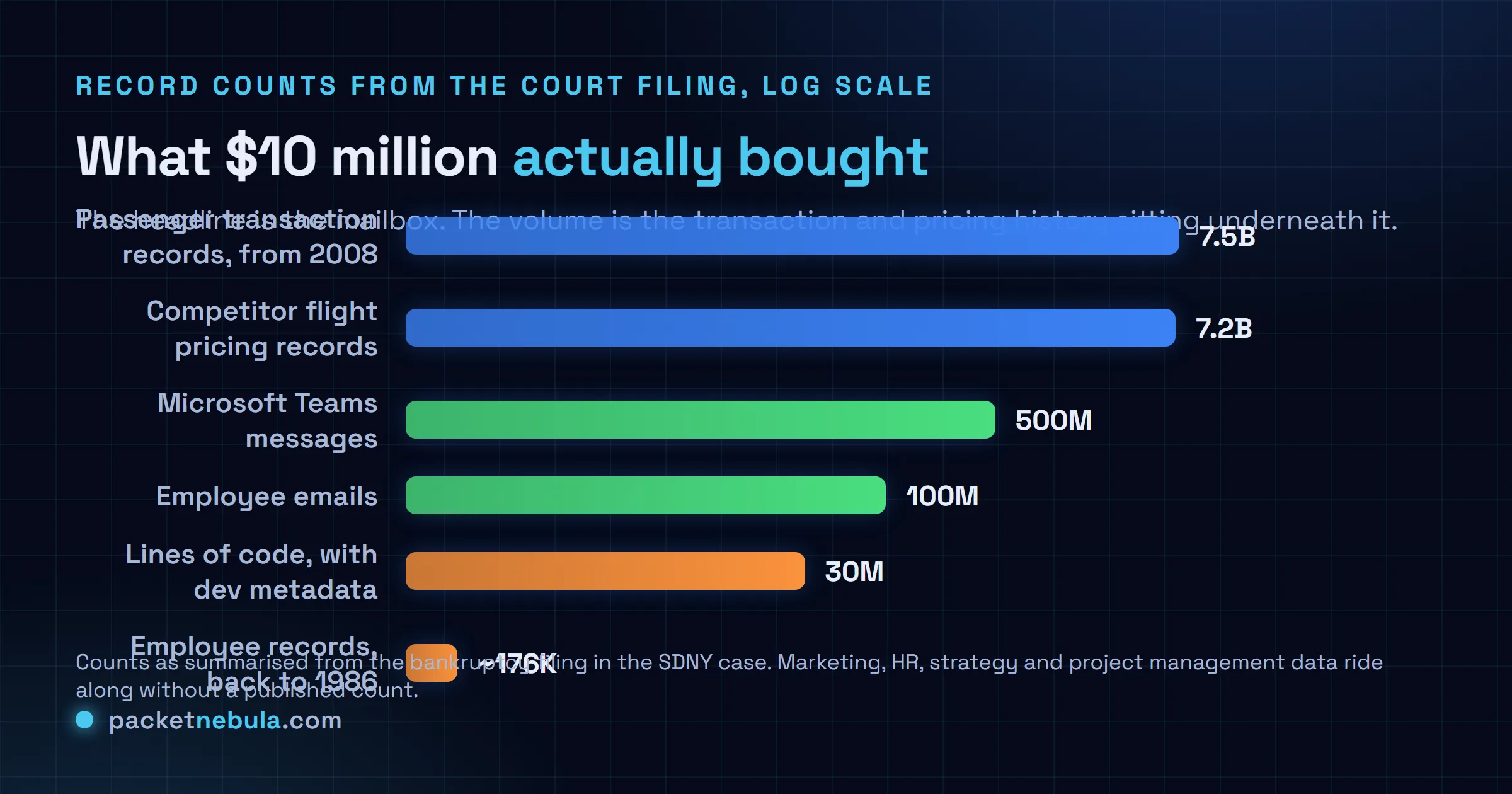
Comparison of the record counts listed in the Spirit Airlines data package sold to Google, showing 7.5 billion passenger transaction records dating to 2008, 7.2 billion competitor flight pricing records, 500 million Microsoft Teams messages, 100 million employee emails, 30 million lines of code with development metadata and about 176,000 employee records dating back to 1986.
Log scale, because the mailbox is the small number here.

The boring stuff is the point

Here is why a hyperscaler pays real money for a defunct airline’s Teams export instead of scraping another few terabytes of the open web.

Public data tells a model what an organisation does. It almost never shows how one works. The half-finished spreadsheet, the thread where somebody escalates the wrong thing to the wrong VP, the code review that goes nowhere, the calendar invite with eleven people and no agenda: none of that is on the public internet, and all of it is what an agent needs to model if it is ever going to do a job inside a company rather than answer questions about one.

One line in the coverage put it about as well as it can be put, that this kind of material shows how a large organisation actually operates rather than simply supplying information about what it does.

That is the whole thesis of the current agent push, compressed into a bankruptcy filing. And it prices at ten cents an email.

Honestly, I think the price is the story more than the buyer is. Ten million dollars is a rounding error at Alphabet. It is not a rounding error to a bankruptcy estate, which means this trade clears easily and will clear again the next time a mid-size company with twenty years of Microsoft 365 history goes under. There is no shortage of those.

The carve-outs, and the gap in them

Google is not buying the passengers. The exclusions are written down: 97.5 million passenger profiles, the Free Spirit loyalty database, every cardholder record. Google’s statement is that the data will be rigorously scrubbed of any personally identifiable information by a third party before receipt, and Spirit’s filing describes the records as de-identified, containing no customer information or PII.

Read that carefully, because there are two different sets being described.

The raw archive and the delivered archive are not the same thing. Court documents summarising what Spirit holds still describe passenger names in the tens of millions and roughly 13 million active email addresses. Those live in the estate. The claim is that they get stripped on the way out, by somebody who is not Google, before the files land. Fine, and that is a meaningfully better structure than a straight handover.

But the scrub is now the entire safeguard, and nobody outside the deal gets to audit it.
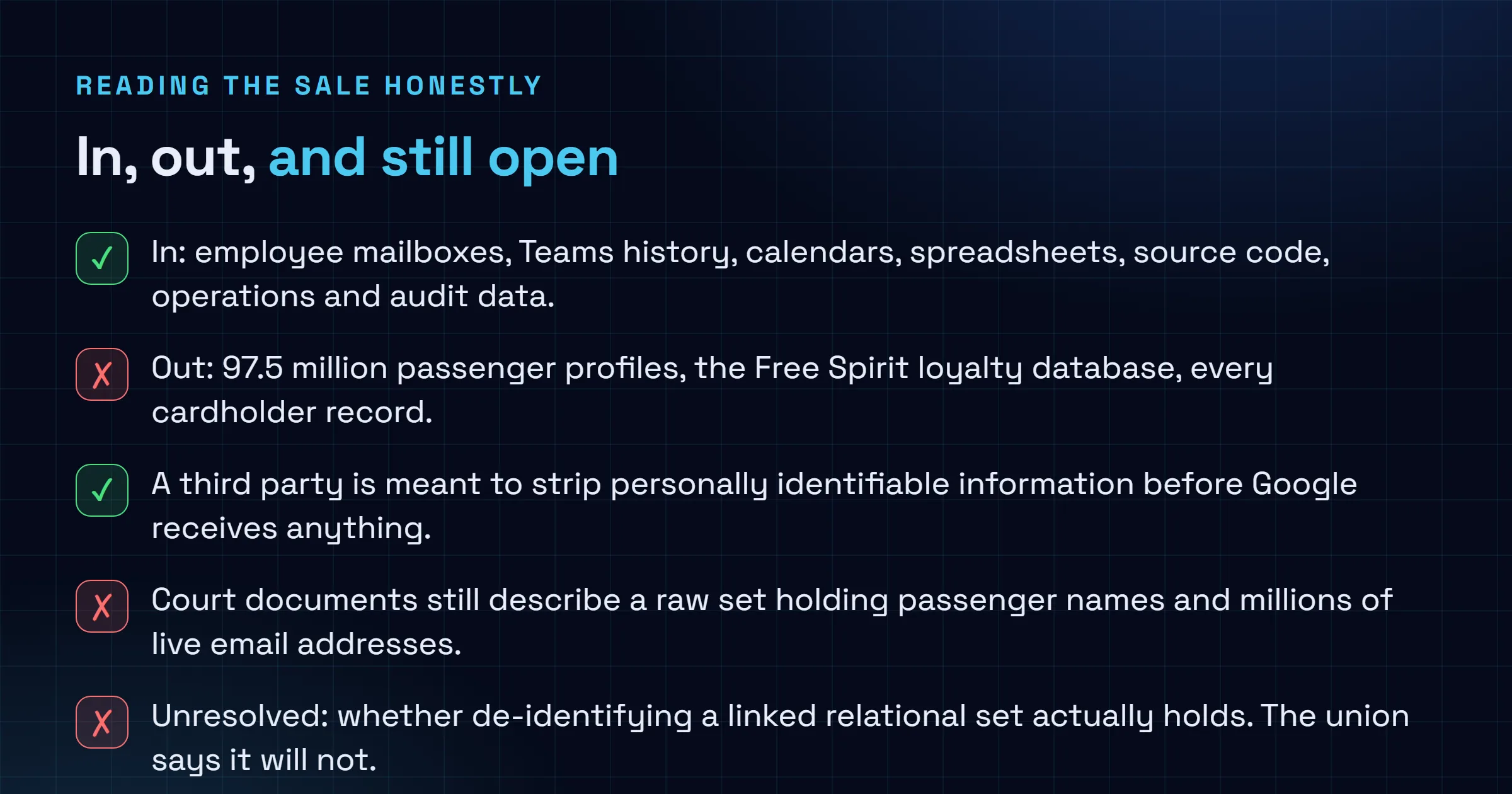
Checklist separating what is in the Spirit Airlines data sale to Google from what is carved out and what remains unresolved, noting that employee mailboxes Teams history code and operational data are in, that 97.5 million passenger profiles the Free Spirit loyalty database and all cardholder records are excluded, that a third party is meant to strip personally identifiable information before Google receives the files, and that the flight attendants union objection over re-identification is unresolved.
Three columns of fact and one column of trust.

Why the hearing slipped

The Association of Flight Attendants-CWA filed an objection, and the hearing that was set for this week is now 9 September 2026.

The union wants restrictions on the sale of flight attendant employee data, plus further protections for employees if it is approved anyway. Their technical argument is the one worth repeating: because the links inside the dataset are preserved, information about individuals or small groups could potentially be reconstructed even after de-identification.

They are right that this is hard. Take names off a mail archive and you still have the graph. Who mailed whom, at what hour, in which department, in what volume, and how that changed the week before a furlough. A crew of six on a specific route in a specific month is a very small group, and small groups are where de-identification quietly stops working. This is the same re-identification problem that has embarrassed every organisation that ever released an anonymised dataset and watched a researcher unpick it.

Whether the judge finds that persuasive is a separate question. Bankruptcy courts weigh creditor recovery heavily, and $2.5 million of extra recovery is a concrete number in a way that a re-identification risk is not. I would not bet on the sale being blocked. I would expect conditions.

What to take from this if you run infrastructure

Your retention policy is a valuation input now. That is the practical shift.

Most IT shops keep mail and chat forever because storage is cheap and legal hold is annoying, and the implicit assumption is that the archive stays inside the company. That assumption just got tested in public. In a US Chapter 11, corporate data is an asset of the estate, and assets get sold. The thing protecting your 2014 Teams history is not a policy. It is that nobody had bid on it before.

Two things worth doing this quarter. Find out what your actual retention is on mail and chat, as configured, not as documented, because those differ more often than anyone admits. Then check whether your own vendor and partner contracts say anything about what happens to shared data in an insolvency, since most standard DPAs handle breach and subprocessors carefully and go quiet on bankruptcy.

We have watched the consent question land the same way in a very different venue, when Twitch switched genAI training on by default and one broadcaster’s toggle answered for everyone in the chat. Different company, same structure: the people in the data were not the people making the decision. The $1.5B Anthropic copyright settlement put a price on training material that was taken. This puts one on training material that was bought, legally, at auction, from a seller who no longer has employees to object.

The union does, though. That is why there is a hearing.

Sources

Auction result, bid amounts, the record inventory and the case details (US Bankruptcy Court for the Southern District of New York, Judge Sean Lane, No. 25-11897) from Bloomberg Law, including Google’s statement on the acquisition and the third-party PII scrub. The delayed hearing, the AFA-CWA objection and the raw-set figures from court documents were reported by Reuters, carried here. Bidding sequence and exclusions cross-checked against Simple Flying, with the data categories confirmed independently by Tom’s Hardware and The Register. Google published no blog post about the purchase, so the filing and the company’s statement to press are the record.

Frequently asked questions

Has Google actually got the Spirit Airlines data yet?

No. Google won the auction, but a bankruptcy sale needs the judge to sign it off, and that hearing was pushed to 9 September 2026 after the flight attendants union filed an objection. Until the court approves it, nothing transfers. Mercor.io Corp., the underbidder at $7.5 million, is named as backup buyer if the Google deal collapses.

Is passenger data included in the sale?

Not in what Google is buying. The carve-outs are explicit: 97.5 million passenger profiles, the Free Spirit loyalty database and every cardholder record stay out. The complication is that court documents describing the raw set still reference passenger names and millions of live email addresses, which is why a third party is supposed to strip identifiers before Google receives any files.

What is Google planning to do with it?

Improve products and train models. Google's own line is that it acquired part of an enterprise dataset from Spirit Airlines that can help improve its products and AI models. The value is not aviation trivia. It is a complete record of how a real company of that size actually operated day to day, which is exactly the thing web scraping cannot give you.

Why did the flight attendants union object?

Re-identification. The AFA-CWA is asking for restrictions on the sale of flight attendant employee data and further protections if the sale goes through, arguing that because the links inside the dataset are preserved, information about individuals or small groups could be reconstructed even after de-identification. That is a real technical concern, not a procedural one.

Can my employer sell my work email if it goes bankrupt?

In a US Chapter 11 liquidation, corporate data is an asset of the estate like any other, and assets get sold to pay creditors. Your mailbox is company property in most jurisdictions and most employment contracts. Privacy law can constrain what happens to personal data inside it, and the EU makes that constraint much sharper than the US does, but the default direction of travel is that the data has a price.

Does de-identification actually protect the employees?

Partly, and less than the word suggests. Stripping names and addresses from a set whose internal relationships stay intact is a known-hard problem, because the pattern of who mailed whom, when, from which department is itself identifying. We would not call it worthless. We would not call it a solved problem either, and the union is objecting on exactly that point.

Tags: aibig-techgooglenewspolicyprivacy
Share197Tweet123
stephane

stephane

  • Trending
  • Comments
  • Latest
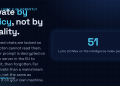
Answer card: Proton Lumo 2.0 is private by policy, not by locality. Saved history is locked so even Proton cannot read it, but the prompt is decrypted on a Proton EU server to answer it, then forgotten.

Proton Lumo 2.0 review: how private is it, really?

3 September 2026
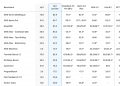
The Agentic Coding section of the official Hy4 preview benchmark appendix published by Tencent, a table comparing Hy3 and Hy4 preview against DeepSeek V4 Pro 0813, Qwen 3.8 Max, GLM 5.3, Kimi K3, GPT 5.6 Sol and Claude Opus 5 across SWE-bench Multilingual, SWE-bench Pro, DeepSWE, three SWE Atlas tasks, SWE-Marathon, Terminal-Bench 2.1, NL2Repo-Bench, CyberGym, ProgramBench, PostTrainBench and Harbor-Index.

Tencent’s 770B Hy4 tops one benchmark row in 46

3 September 2026
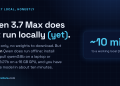
Answer card: Qwen 3.7 Max is API-only and cannot run locally yet; the open Qwen models (Qwen 3.6 27B, qwen3:8b to 32b) run offline via Ollama.

Qwen 3.7 local: what you can actually run offline

22 June 2026
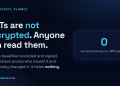
Answer card: JWTs are not encrypted, anyone can read them; the signature proves who issued the token, not who may read it.

Are JWTs encrypted? No, and the difference will bite you

0
Answer card: a random 8 character password falls in under 2 hours offline, while 16 random characters hold for 1.4 trillion years at the same speed.

How long does it take to crack a password in 2026?

0
Answer card: three DNS records decide if your mail lands or bounces; SPF lists allowed senders, DKIM signs messages, DMARC sets the failure policy.

SPF, DKIM and DMARC explained: the records your email needs

0
Answer card stating that Ternary Bonsai 2 27B, released by PrismML on 17 September 2026 under Apache 2.0, packs Qwen3.8 27B into 5.95 gigabytes at 1.72 bits per weight, keeps 98.2 percent of the 14-benchmark average, about 75 percent on SWE-bench Verified and Terminal-Bench 2.1, and needs PrismML's llama.cpp fork to run.

Does Bonsai 2 27B really keep 98% of Qwen3.8 in 5.95 GB?

20 September 2026
Answer card stating that Jev 1.13 from TypeSafe AI is a decision model in early access since 15 September 2026 that returns typed probabilities instead of text, priced at 42 dollars per billion input tokens with output tokens free, answering in 70 to 500 milliseconds, with a 64K token request budget, text input only, and a documented list of things it does badly, including counting and dates.

Jev 1.13 bills $42 a billion tokens, and it can’t count

19 September 2026
Answer card stating that Qwen3.8-Omni-Flash launched on 17 September 2026 as an API only model on Alibaba Cloud Model Studio, taking text, images, audio and video in a 1M token context and returning text only, priced at 0.15 dollars per million input tokens for every modality and 0.47 dollars per million output tokens in the international regions, with no open weights published and the Qwen-Live Harness GitHub repository returning 404.

Qwen3.8-Omni-Flash bills audio at $0.15 and ships no weights

18 September 2026
  • About
  • Contact
  • Privacy
  • Legal

Copyright © 2026 Stephane Cardon.

Welcome Back!

Login to your account below

Forgotten Password?

Retrieve your password

Please enter your username or email address to reset your password.

Log In
No Result
View All Result
  • Home
  • Articles
    • Security
    • Network
    • Dev
    • Sysadmin
    • SEO
    • Email & DNS
  • Tools
    • Network tools: free, fast, no signup
    • Security tools: free, fast, no signup
    • Developer tools: free, fast, no signup
    • Sysadmin tools: free, fast, no signup
    • SEO tools: free, fast, no signup
    • Email & DNS tools: free, fast, no signup
  • Download
  • About

Copyright © 2026 Stephane Cardon.