
• Latest
  • Trending
  • All
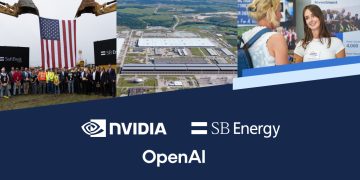
Official joint announcement card from SB Energy showing three photographs across the top, a groundbreaking ceremony with excavators holding a large US flag over a group in hard hats beside SoftBank and SB Energy banners, an aerial view of a large industrial campus, and two women at a community jobs event, above a dark navy panel carrying the NVIDIA, SB Energy and OpenAI logos.

Nvidia’s $105B OpenAI exposure is a lease guarantee

3 September 2026
Answer card for Claude Opus 5.5: 4 dollars in and 20 dollars out per million tokens, down from 5 and 25, with cache reads at 20 cents.

Claude Opus 5.5 drops to $4 and $20, and breaks four Opus 5 habits

23 September 2026
The official xAI announcement card for Grok 4.7, white type on a dark grey and navy gradient.

Grok 4.7 keeps $2 and $6, and its gains over 4.6 are xhigh versus high

22 September 2026
Answer card stating that Qwen-Image-2.1, released on 20 September 2026, ships open weights with a 7 billion parameter diffusion transformer, a Qwen3-VL 8B text encoder and an RGBA VAE totalling about 33 gigabytes in BF16, under the Qwen Research License that limits use to research or evaluation and requires a separate commercial licence, unlike the Apache 2.0 licence of Qwen-Image 1.0.

Qwen-Image-2.1 brings the weights back, but not the Apache licence

21 September 2026
Answer card stating that Ternary Bonsai 2 27B, released by PrismML on 17 September 2026 under Apache 2.0, packs Qwen3.8 27B into 5.95 gigabytes at 1.72 bits per weight, keeps 98.2 percent of the 14-benchmark average, about 75 percent on SWE-bench Verified and Terminal-Bench 2.1, and needs PrismML's llama.cpp fork to run.

Does Bonsai 2 27B really keep 98% of Qwen3.8 in 5.95 GB?

20 September 2026
Answer card stating that Jev 1.13 from TypeSafe AI is a decision model in early access since 15 September 2026 that returns typed probabilities instead of text, priced at 42 dollars per billion input tokens with output tokens free, answering in 70 to 500 milliseconds, with a 64K token request budget, text input only, and a documented list of things it does badly, including counting and dates.

Jev 1.13 bills $42 a billion tokens, and it can’t count

19 September 2026
Answer card stating that Qwen3.8-Omni-Flash launched on 17 September 2026 as an API only model on Alibaba Cloud Model Studio, taking text, images, audio and video in a 1M token context and returning text only, priced at 0.15 dollars per million input tokens for every modality and 0.47 dollars per million output tokens in the international regions, with no open weights published and the Qwen-Live Harness GitHub repository returning 404.

Qwen3.8-Omni-Flash bills audio at $0.15 and ships no weights

18 September 2026
Answer card stating that on 15 September 2026 AWS said it is unable to restore access to resources and data hosted exclusively in the Middle East Bahrain region me-south-1 and in the mec1-az2 zone of the UAE region, because the damage spanned multiple Availability Zones and exceeded what multi-AZ services are designed to withstand.

AWS can’t restore me-south-1, six months after the drone strikes

17 September 2026
Answer card stating that Google released Gemini 3.8 Live and Gemini 3.8 Live Extended Thinking on 15 September 2026 at 3 dollars per million audio input tokens and 12 dollars out, that the thinking model requires asynchronous tools, and that Artificial Analysis scores it 82.6 on its Speech to Speech Quality Index.

Gemini 3.8 Live Extended Thinking rejects any tool that blocks

16 September 2026
Answer card summarising the Atria Dawn Preview release: 744B GLM-5.2 base, MIT licence, 1.5 TB BF16 and 756 GB FP8 checkpoints, 256K context, top on five of sixteen benchmark rows and trailing on SWE-bench Pro.

Atria Dawn Preview is 744B under MIT, and the BF16 weighs 1.5 TB

15 September 2026
Answer card stating that OpenAI released the Agents API in public beta on 10 September 2026 with no separate fee, billed through model tokens, tool calls and hosted sandbox time, with a choice of OpenAI hosted, self hosted or partner sandboxes, US only data residency and no Zero Data Retention support.

OpenAI’s Agents API has no fee, no ZDR and a one hour sandbox clock

14 September 2026
Answer card: Sakana Fugu Max at $2 and $6 per million tokens, Fugu Ultra v2 unchanged at $5 and $30, and Sakana saying Ultra v2 scores without Fable 5 or GPT-6 Astra in its pool.

Fugu Max costs $2 and $6 while Fugu Ultra v2 runs without Fable 5

13 September 2026
Answer card stating that DeepSeek released DeepSeek-V4.1-Flash on 10 September 2026 as a 552 billion parameter mixture of experts model with a new causal encoder decoder architecture that activates 8 billion parameters on input and 16 billion on output, with native vision, a one million token context and MIT licensed weights, that the API model name is now deepseek-flash at 0.15 dollars per million input tokens and 0.60 dollars per million output tokens off peak, and that DeepSeek announced V4 Pro would be routed to V4.1-Flash from 14 September and reversed that on 11 September.

DeepSeek V4.1-Flash arrived, and the V4 Pro retirement lasted a day

12 September 2026
  • About
  • Contact
  • Privacy
  • Legal
Wednesday, September 23, 2026
  • Login
Packet Nebula
  • Home
  • Articles
    • Security
    • Network
    • Dev
    • Sysadmin
    • SEO
    • Email & DNS
  • Tools
    • Network tools: free, fast, no signup
    • Security tools: free, fast, no signup
    • Developer tools: free, fast, no signup
    • Sysadmin tools: free, fast, no signup
    • SEO tools: free, fast, no signup
    • Email & DNS tools: free, fast, no signup
  • Download
  • About
No Result
View All Result
Packet Nebula
No Result
View All Result
Home Dev

Nvidia’s $105B OpenAI exposure is a lease guarantee

by stephane
3 September 2026
in Dev
0
Official joint announcement card from SB Energy showing three photographs across the top, a groundbreaking ceremony with excavators holding a large US flag over a group in hard hats beside SoftBank and SB Energy banners, an aerial view of a large industrial campus, and two women at a community jobs event, above a dark navy panel carrying the NVIDIA, SB Energy and OpenAI logos.
494
SHARES
1.4k
VIEWS
Share on FacebookShare on Twitter

Nvidia published a press release on Monday, and the number everyone repeated was not in it. The $105 billion showed up in the SEC filing. What it buys is not a data center and it is not a loan: these are residual value guaranties, cumulatively capped at $105 billion, standing behind OpenAI's lease and power payments to SB Energy for roughly 4.25 IT-gigawatts at the PORTS-Pike campus in Pike County, Ohio. A promise that if OpenAI stops paying rent, Nvidia pays it. The cash in Monday's announcement is a $1.5 billion equity stake in SB Energy, which is a rounding error next to the thing sitting beside it. We spent a while on the filing summary, because the gap between those two figures is the actual story.

The short answer

On 17 August, Nvidia, SB Energy and OpenAI announced the PORTS-Pike Technology Campus in Pike County, Ohio. SB Energy builds and operates it, OpenAI takes a 20-year lease, and Nvidia is the exclusive compute supplier. The headline number is a guarantee, not a cheque: residual value guaranties capped at $105 billion that go live only as each lease commences from 2028, and that OpenAI has agreed to reimburse. Real exposure, different shape. Nothing here changes what you can buy or rent this year.
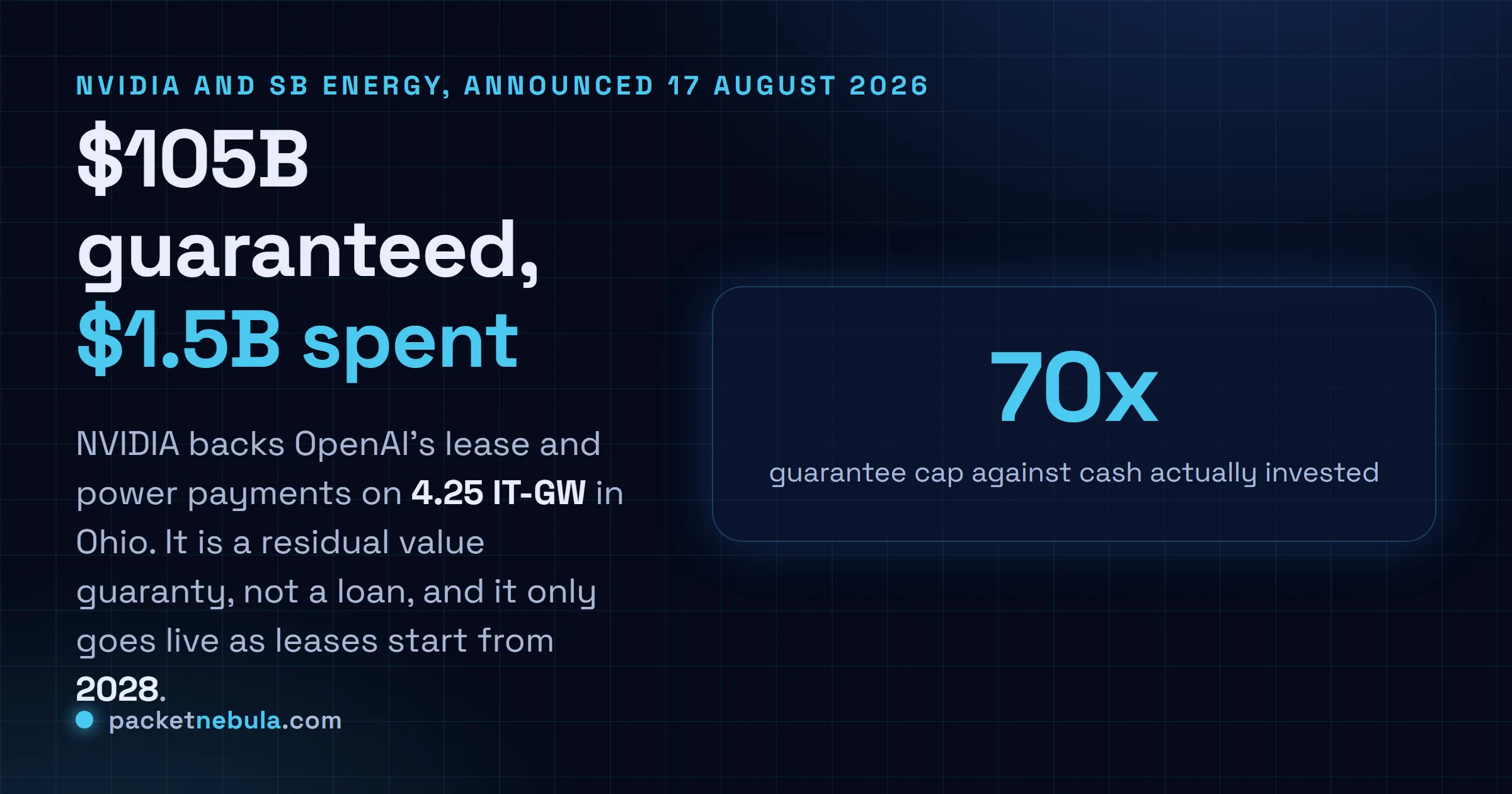
$105Bcumulative cap on the guaranties, contingent
$1.5Bequity Nvidia is actually putting in
2028first phase, nothing lands before then
Answer card: on 17 August 2026 Nvidia disclosed residual value guaranties cumulatively capped at 105 billion dollars backing OpenAI lease and power payment obligations for roughly 4.25 IT-gigawatts at the PORTS-Pike Technology Campus in Ohio, alongside a 1.5 billion dollar equity investment in SB Energy, with the guaranties effective only as individual leases commence from 2028.
Seventy times more guaranteed than invested. That ratio is the news.

The instrument, and why the word matters

A residual value guaranty is a landlord’s comfort blanket. SB Energy is about to sink an enormous amount of capital into buildings and substations on a site in southern Ohio, against a tenant that did not exist ten years ago. Lenders ask an obvious question. Nvidia’s answer is to stand behind the payments.

Read the filing summary and the mechanics are unglamorous. If OpenAI defaults or becomes insolvent, Nvidia covers the shortfall to the guaranteed minimum value. It then gets the options any guarantor would want: assume the lease, relet it, sell it, terminate, or sit on its hands for up to a year while it decides. OpenAI has agreed to reimburse whatever Nvidia pays out. Obligations can end on the twentieth anniversary of each lease commencement.

So the $105 billion is a ceiling on a contingent liability, and it does not arrive in one lump. Each guaranty switches on when its own lease commences, and the first of those is expected in 2028. Nvidia may also extend credit support to roughly 3.8 GW of additional capacity, at its discretion, which is the polite way of saying it has not committed to that part.
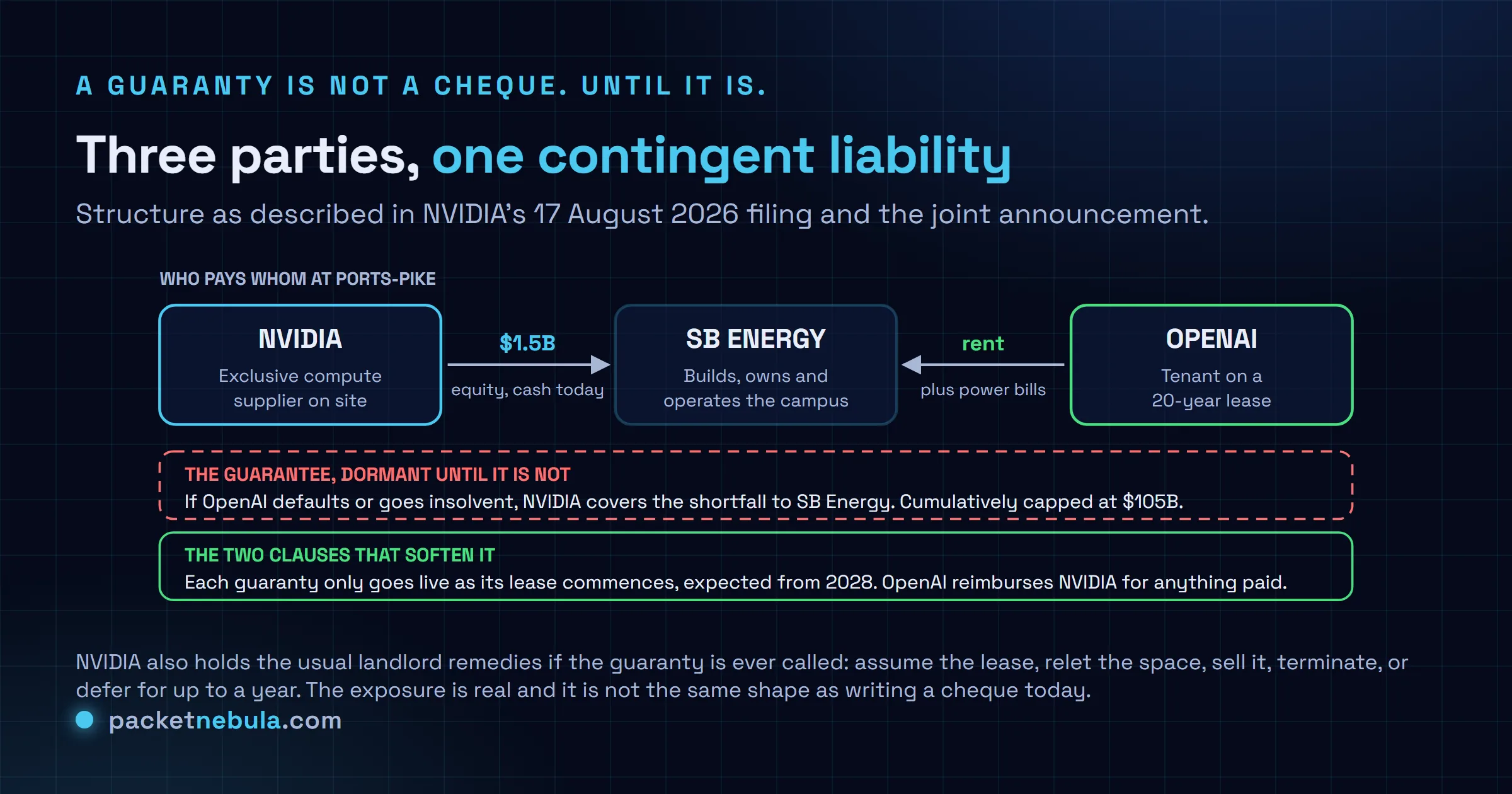
Diagram of the PORTS-Pike money flow: Nvidia puts 1.5 billion dollars of equity into SB Energy, which builds, owns and operates the campus, while OpenAI pays rent and power on a 20-year lease from 2028. A dashed band shows Nvidia covering the shortfall if OpenAI defaults or goes insolvent, capped cumulatively at 105 billion dollars, and a second band notes each guaranty goes live only as its lease commences and that OpenAI reimburses Nvidia for anything paid.
The arrows are cash. The dashed box is the part that only exists on a bad day.

Honestly, I think the reflex to file this as “Nvidia spends $105B” is the wrong instinct, and the opposite reflex is wrong too. It is not nothing. A guarantor with a $105 billion ceiling is exposed to one tenant’s credit for two decades, and that tenant’s ability to pay depends on a market that has to keep growing for the numbers to work. Jensen Huang told reporters OpenAI’s spending on Nvidia chips is expected to amount to around $600 billion of compute capacity through 2030. Those two figures live in the same sentence whether Nvidia likes it or not.

The site, the gigawatts, the 2028 wall

PORTS-Pike sits on and around the decommissioned Portsmouth Gaseous Diffusion Plant, which spent decades enriching uranium. It is being developed with AEP Ohio, the Department of Energy and the Department of Commerce, which tells you how much of this project is permitting rather than servers.

The published capacity is 4.25 IT-GW initially, with an option on the remaining 3.75 IT-GW to reach 8 IT-GW. Behind that, SB Energy and SoftBank say they will build at least 10 GW of new energy generation and put at least $4.2 billion into regional grid infrastructure, under an AEP Ohio arrangement both sides describe as protecting ratepayers. TechCrunch reports the generation includes a large natural gas facility, which the official releases do not spell out.

The community numbers are smaller and worth keeping straight. SB Energy had already announced a $40 million community benefits fund. OpenAI is adding an incremental $40 million, for $80 million total. Reuters and Nikkei put the jobs at roughly 35,000 in construction through 2032 and about 2,500 permanent operating roles.

Divide the cap by the capacity and you get about $24.7 billion of guaranteed exposure per IT-GW. That is our arithmetic, not a published figure, and it is a blunt one, since the guaranties cover rent and power across twenty years rather than anything per-watt. It is still the cleanest way we found to hold the number in your head.
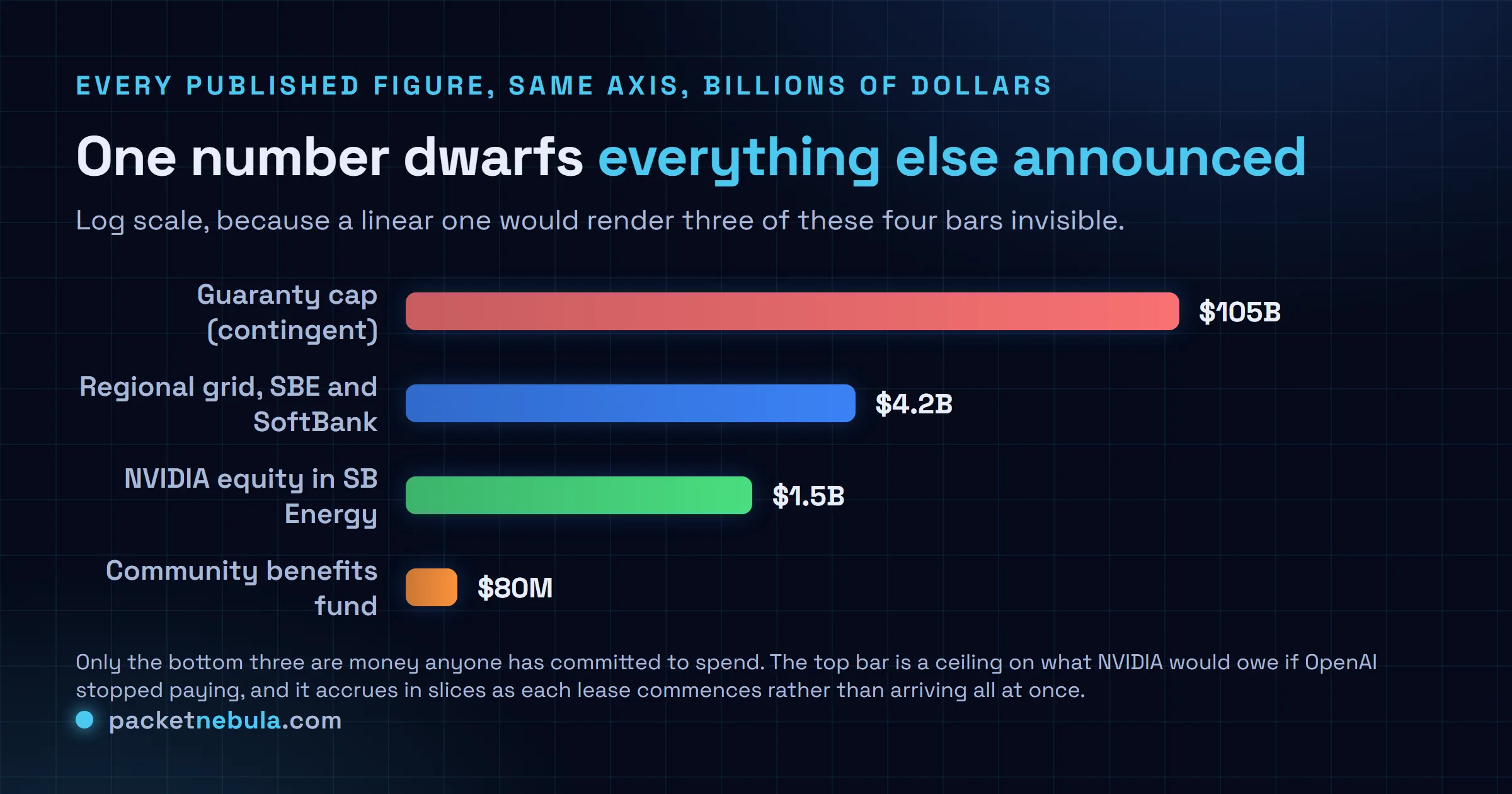
Log-scale bar chart of the figures published for the PORTS-Pike deal on 17 August 2026: a 105 billion dollar cumulative cap on Nvidia residual value guaranties, 4.2 billion dollars of regional grid investment by SB Energy and SoftBank, 1.5 billion dollars of Nvidia equity in SB Energy, and an 80 million dollar community benefits fund.
Three of these are budgets. The red one is a ceiling on a bad outcome.

What actually changes if you buy or rent compute

Nothing this year, and probably nothing next year either. That is the first thing to be clear about, because gigawatt headlines have a way of getting read as supply relief. Phases begin in 2028. No allocation was announced, no lead time, no price.

What does change is a little more interesting. Nvidia secured the capacity at PORTS-Pike to exclusively host its own AI factories, which means one of the largest sites anyone has announced is closed to other silicon before a slab has been poured. If you were hoping the accelerator market broadens through sheer weight of new build, this particular 4.25 IT-GW is not where that happens.

The second change is one nobody puts on a slide. Your hardware vendor now carries twenty years of contingent exposure to your other vendor’s solvency. That belongs in a risk register somewhere, filed next to the observation that this is the second time in eight days Nvidia has used the same instrument. On 10 August it signed memorandums with six asset managers targeting more than $500 billion of third-party capital, with Huang describing residual value support on up to 25% of an opportunity. PORTS-Pike is that idea applied to one named site. Whether the $105 billion here represents 25% of the obligations or something much closer to all of them is not disclosed, and we would not guess.

Worth remembering how little of Nvidia’s strategic position shows up in the usual filings. Its most recent 13F listed eight positions worth $63.44 billion and none of this, because guaranties and private stakes are not 13(f) securities.
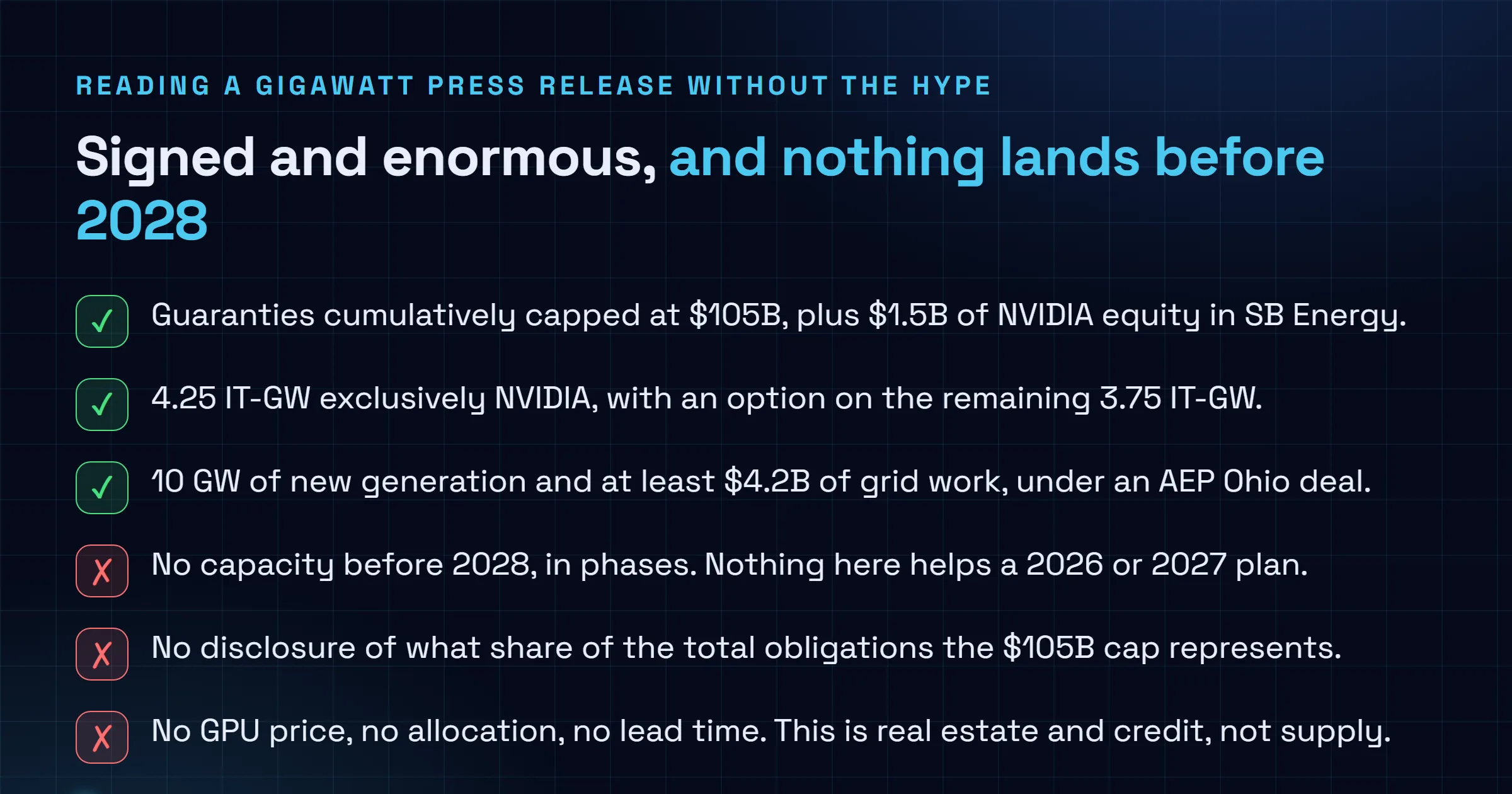
Checklist of what the PORTS-Pike announcement of 17 August 2026 confirms, namely guaranties capped at 105 billion dollars plus 1.5 billion of Nvidia equity, 4.25 IT-gigawatts exclusively Nvidia with an option on 3.75 more, and 10 gigawatts of new generation with 4.2 billion dollars of grid work, set against what it does not say: no capacity before 2028, no disclosure of what share of the obligations the cap represents, and no effect on GPU price, allocation or lead time.
Confirmed on the left of the ledger. Conspicuously absent on the right.

Two things we will be watching. Whether the option on the remaining 3.75 IT-GW gets exercised, and on what terms, since that is where the cap could grow. And how the AEP Ohio ratepayer arrangement holds up once construction is real, because data center power politics in Ohio has already been contested and 10 GW is not a quiet number.
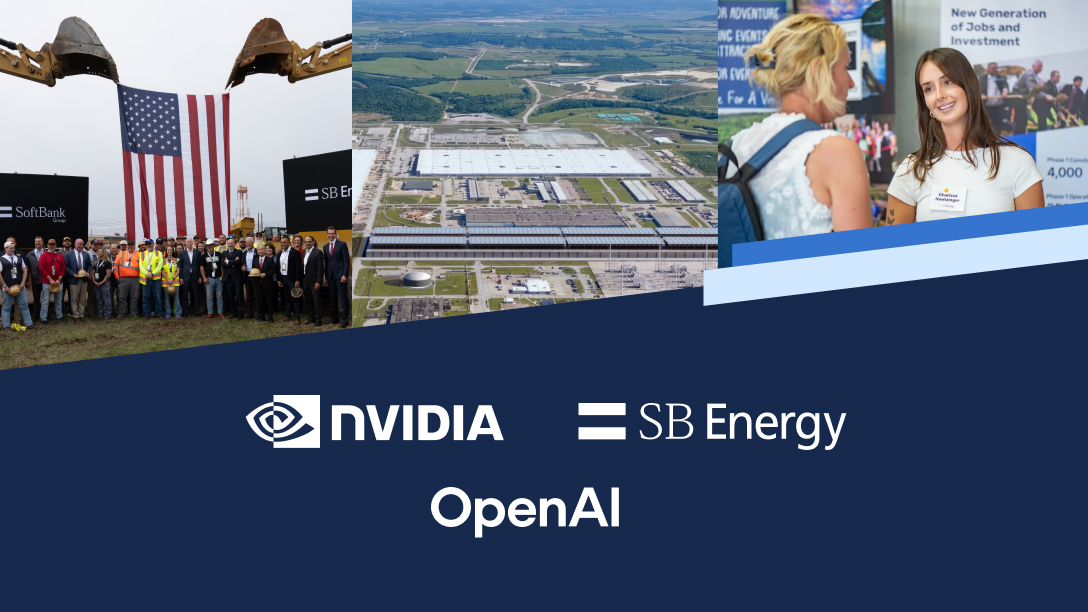
Official joint announcement card from SB Energy showing three photographs across the top, a groundbreaking ceremony with excavators holding a large US flag over a group in hard hats beside SoftBank and SB Energy banners, an aerial view of a large industrial campus, and two women at a community jobs event, above a dark navy panel carrying the NVIDIA, SB Energy and OpenAI logos.

Image: SB Energy, announcement visual from its PORTS-Pike release, 17 August 2026.

Sources

Primary announcement and figures from the NVIDIA newsroom release and SB Energy’s own page on PORTS-Pike, both 17 August 2026. The structure of the residual value guaranties, the $105 billion cumulative cap, the default and insolvency triggers, the remedies and the reimbursement clause come from coverage of Nvidia’s SEC filing, summarised by TradingView and reported by Nikkei Asia, which also carries the jobs figures and the Huang comment on OpenAI’s compute spending through 2030. The site history and the natural gas generation detail are from TechCrunch.

Frequently asked questions

Is Nvidia spending $105 billion on the Ohio data center?

No. The $105 billion is a cumulative cap on residual value guaranties disclosed in Nvidia's 17 August 2026 filing, not money it has committed to spend. Nvidia stands behind OpenAI's lease and power payment obligations to SB Energy, and it only pays if OpenAI defaults or becomes insolvent. The commitments become effective as individual leases commence, expected to begin in 2028. The cash Nvidia announced on the same day is a $1.5 billion equity investment in SB Energy.

What happens if OpenAI cannot pay the rent?

Nvidia covers the shortfall to the guaranteed minimum value, and it then holds the remedies a landlord normally would: assume the lease, relet the space, sell it, terminate, or defer for up to a year. OpenAI has separately agreed to reimburse Nvidia for amounts paid, so the guaranty creates a claim rather than a pure write-off. Obligations can end on the twentieth anniversary of each lease commencement or on other specified events.

How big is PORTS-Pike and when does it come online?

The initial deployment is 4.25 IT-GW of AI factory capacity, with an option on a further 3.75 IT-GW for 8 IT-GW in total, backed by at least 10 GW of new energy generation built by SB Energy and SoftBank. It sits on and around the decommissioned Portsmouth Gaseous Diffusion Plant in Pike County, Ohio, developed with AEP Ohio, the Department of Energy and the Department of Commerce. Capacity is expected to arrive in phases beginning in 2028.

Does this affect GPU supply or pricing in 2026?

Not in any way you can plan around. Nothing at PORTS-Pike is scheduled before 2028, and the announcement contains no allocation, no lead time and no price. What it does settle is the silicon question for that site: Nvidia secured the capacity to exclusively host its own AI factories, so 4.25 IT-GW of future demand is spoken for.

Is this the same thing as the $500 billion financing platform Nvidia announced on 10 August?

Related, and one step further. The 10 August memorandums with six asset managers set up platforms to mobilize third-party capital, with Jensen Huang describing residual value support on up to 25% of an opportunity. PORTS-Pike uses the same instrument on a single named site with a single tenant. Nvidia has not published what share of OpenAI's total obligations the $105 billion cap represents, so the two percentages cannot be compared directly.

Tags: aibig-techinfrastructurenewsnvidiaopenai
Share198Tweet124
stephane

stephane

  • Trending
  • Comments
  • Latest
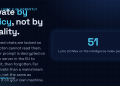
Answer card: Proton Lumo 2.0 is private by policy, not by locality. Saved history is locked so even Proton cannot read it, but the prompt is decrypted on a Proton EU server to answer it, then forgotten.

Proton Lumo 2.0 review: how private is it, really?

3 September 2026
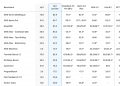
The Agentic Coding section of the official Hy4 preview benchmark appendix published by Tencent, a table comparing Hy3 and Hy4 preview against DeepSeek V4 Pro 0813, Qwen 3.8 Max, GLM 5.3, Kimi K3, GPT 5.6 Sol and Claude Opus 5 across SWE-bench Multilingual, SWE-bench Pro, DeepSWE, three SWE Atlas tasks, SWE-Marathon, Terminal-Bench 2.1, NL2Repo-Bench, CyberGym, ProgramBench, PostTrainBench and Harbor-Index.

Tencent’s 770B Hy4 tops one benchmark row in 46

3 September 2026
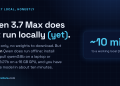
Answer card: Qwen 3.7 Max is API-only and cannot run locally yet; the open Qwen models (Qwen 3.6 27B, qwen3:8b to 32b) run offline via Ollama.

Qwen 3.7 local: what you can actually run offline

22 June 2026
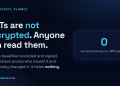
Answer card: JWTs are not encrypted, anyone can read them; the signature proves who issued the token, not who may read it.

Are JWTs encrypted? No, and the difference will bite you

0
Answer card: a random 8 character password falls in under 2 hours offline, while 16 random characters hold for 1.4 trillion years at the same speed.

How long does it take to crack a password in 2026?

0
Answer card: three DNS records decide if your mail lands or bounces; SPF lists allowed senders, DKIM signs messages, DMARC sets the failure policy.

SPF, DKIM and DMARC explained: the records your email needs

0
Answer card for Claude Opus 5.5: 4 dollars in and 20 dollars out per million tokens, down from 5 and 25, with cache reads at 20 cents.

Claude Opus 5.5 drops to $4 and $20, and breaks four Opus 5 habits

23 September 2026
The official xAI announcement card for Grok 4.7, white type on a dark grey and navy gradient.

Grok 4.7 keeps $2 and $6, and its gains over 4.6 are xhigh versus high

22 September 2026
Answer card stating that Qwen-Image-2.1, released on 20 September 2026, ships open weights with a 7 billion parameter diffusion transformer, a Qwen3-VL 8B text encoder and an RGBA VAE totalling about 33 gigabytes in BF16, under the Qwen Research License that limits use to research or evaluation and requires a separate commercial licence, unlike the Apache 2.0 licence of Qwen-Image 1.0.

Qwen-Image-2.1 brings the weights back, but not the Apache licence

21 September 2026
  • About
  • Contact
  • Privacy
  • Legal

Copyright © 2026 Stephane Cardon.

Welcome Back!

Login to your account below

Forgotten Password?

Retrieve your password

Please enter your username or email address to reset your password.

Log In
No Result
View All Result
  • Home
  • Articles
    • Security
    • Network
    • Dev
    • Sysadmin
    • SEO
    • Email & DNS
  • Tools
    • Network tools: free, fast, no signup
    • Security tools: free, fast, no signup
    • Developer tools: free, fast, no signup
    • Sysadmin tools: free, fast, no signup
    • SEO tools: free, fast, no signup
    • Email & DNS tools: free, fast, no signup
  • Download
  • About

Copyright © 2026 Stephane Cardon.