
• Latest
  • Trending
  • All
Official Quantinuum announcement card for the Oracle partnership: the Quantinuum wordmark and logo above the word AND in mint green, with the Oracle logo below, set on a pale mint background with faint wireframe globe arcs in the corners.

Quantinuum is putting 98 qubits inside an Oracle data centre

3 September 2026
Answer card stating that Qwen-Image-2.1, released on 20 September 2026, ships open weights with a 7 billion parameter diffusion transformer, a Qwen3-VL 8B text encoder and an RGBA VAE totalling about 33 gigabytes in BF16, under the Qwen Research License that limits use to research or evaluation and requires a separate commercial licence, unlike the Apache 2.0 licence of Qwen-Image 1.0.

Qwen-Image-2.1 brings the weights back, but not the Apache licence

21 September 2026
Answer card stating that Ternary Bonsai 2 27B, released by PrismML on 17 September 2026 under Apache 2.0, packs Qwen3.8 27B into 5.95 gigabytes at 1.72 bits per weight, keeps 98.2 percent of the 14-benchmark average, about 75 percent on SWE-bench Verified and Terminal-Bench 2.1, and needs PrismML's llama.cpp fork to run.

Does Bonsai 2 27B really keep 98% of Qwen3.8 in 5.95 GB?

20 September 2026
Answer card stating that Jev 1.13 from TypeSafe AI is a decision model in early access since 15 September 2026 that returns typed probabilities instead of text, priced at 42 dollars per billion input tokens with output tokens free, answering in 70 to 500 milliseconds, with a 64K token request budget, text input only, and a documented list of things it does badly, including counting and dates.

Jev 1.13 bills $42 a billion tokens, and it can’t count

19 September 2026
Answer card stating that Qwen3.8-Omni-Flash launched on 17 September 2026 as an API only model on Alibaba Cloud Model Studio, taking text, images, audio and video in a 1M token context and returning text only, priced at 0.15 dollars per million input tokens for every modality and 0.47 dollars per million output tokens in the international regions, with no open weights published and the Qwen-Live Harness GitHub repository returning 404.

Qwen3.8-Omni-Flash bills audio at $0.15 and ships no weights

18 September 2026
Answer card stating that on 15 September 2026 AWS said it is unable to restore access to resources and data hosted exclusively in the Middle East Bahrain region me-south-1 and in the mec1-az2 zone of the UAE region, because the damage spanned multiple Availability Zones and exceeded what multi-AZ services are designed to withstand.

AWS can’t restore me-south-1, six months after the drone strikes

17 September 2026
Answer card stating that Google released Gemini 3.8 Live and Gemini 3.8 Live Extended Thinking on 15 September 2026 at 3 dollars per million audio input tokens and 12 dollars out, that the thinking model requires asynchronous tools, and that Artificial Analysis scores it 82.6 on its Speech to Speech Quality Index.

Gemini 3.8 Live Extended Thinking rejects any tool that blocks

16 September 2026
Answer card summarising the Atria Dawn Preview release: 744B GLM-5.2 base, MIT licence, 1.5 TB BF16 and 756 GB FP8 checkpoints, 256K context, top on five of sixteen benchmark rows and trailing on SWE-bench Pro.

Atria Dawn Preview is 744B under MIT, and the BF16 weighs 1.5 TB

15 September 2026
Answer card stating that OpenAI released the Agents API in public beta on 10 September 2026 with no separate fee, billed through model tokens, tool calls and hosted sandbox time, with a choice of OpenAI hosted, self hosted or partner sandboxes, US only data residency and no Zero Data Retention support.

OpenAI’s Agents API has no fee, no ZDR and a one hour sandbox clock

14 September 2026
Answer card: Sakana Fugu Max at $2 and $6 per million tokens, Fugu Ultra v2 unchanged at $5 and $30, and Sakana saying Ultra v2 scores without Fable 5 or GPT-6 Astra in its pool.

Fugu Max costs $2 and $6 while Fugu Ultra v2 runs without Fable 5

13 September 2026
Answer card stating that DeepSeek released DeepSeek-V4.1-Flash on 10 September 2026 as a 552 billion parameter mixture of experts model with a new causal encoder decoder architecture that activates 8 billion parameters on input and 16 billion on output, with native vision, a one million token context and MIT licensed weights, that the API model name is now deepseek-flash at 0.15 dollars per million input tokens and 0.60 dollars per million output tokens off peak, and that DeepSeek announced V4 Pro would be routed to V4.1-Flash from 14 September and reversed that on 11 September.

DeepSeek V4.1-Flash arrived, and the V4 Pro retirement lasted a day

12 September 2026
Answer card stating that Cognition released SWE-2 on 10 September 2026, a coding model post-trained from Kimi K3, scoring 50.0 percent on FrontierCode 1.1 Main against 50.9 percent for Claude Fable 5.1 and 27.3 percent on Terminal-Bench 4 against 55.8 percent, available only inside Devin.

SWE-2 trails Fable 5.1 by one point, and by 28 on Terminal-Bench 4

11 September 2026
Answer card for Meta Muse, free to 100 million tokens a week then $20 a month, launched 8 September 2026 for United States adults only, running in a dedicated per user virtual machine.

Does Meta Muse do enough to earn your inbox and a card on file?

9 September 2026
  • About
  • Contact
  • Privacy
  • Legal
Tuesday, September 22, 2026
  • Login
Packet Nebula
  • Home
  • Articles
    • Security
    • Network
    • Dev
    • Sysadmin
    • SEO
    • Email & DNS
  • Tools
    • Network tools: free, fast, no signup
    • Security tools: free, fast, no signup
    • Developer tools: free, fast, no signup
    • Sysadmin tools: free, fast, no signup
    • SEO tools: free, fast, no signup
    • Email & DNS tools: free, fast, no signup
  • Download
  • About
No Result
View All Result
Packet Nebula
No Result
View All Result
Home Dev

Quantinuum is putting 98 qubits inside an Oracle data centre

by stephane
3 September 2026
in Dev
0
Official Quantinuum announcement card for the Oracle partnership: the Quantinuum wordmark and logo above the word AND in mint green, with the Oracle logo below, set on a pale mint background with faint wireframe globe arcs in the corners.
497
SHARES
1.4k
VIEWS
Share on FacebookShare on Twitter

Your cloud console is about to grow a tab you can't use yet. On 11 August, Quantinuum and Oracle said they'd install Helios, a 98 qubit trapped ion machine, inside a US based Oracle Cloud AI data center, with an OCI quantum service due to preview in the coming months. That's a real computer in a real room next to the GPUs, not another simulator behind an API, and the hardware numbers are published: 48 logical qubits demonstrated at 99.921% average two qubit gate fidelity. Then there's the part most of the coverage skipped. Quantinuum booked $8.0 million of revenue in the entire second quarter and guides to $28 million to $32 million for the full year. The machine is genuine. The business is small. Both facts matter when you work out how much of your 2027 planning to hand over to this.

The short answer

Quantinuum and Oracle announced on 11 August that a Helios trapped ion quantum computer will sit inside a US based OCI AI data center, reachable through a planned OCI quantum service that previews in the coming months. The hardware is real and the fidelity figures are published. What is not published: any price, any availability date, any named production workload. Useful as a skills and prototyping move. Not something to put in a 2027 capacity plan.
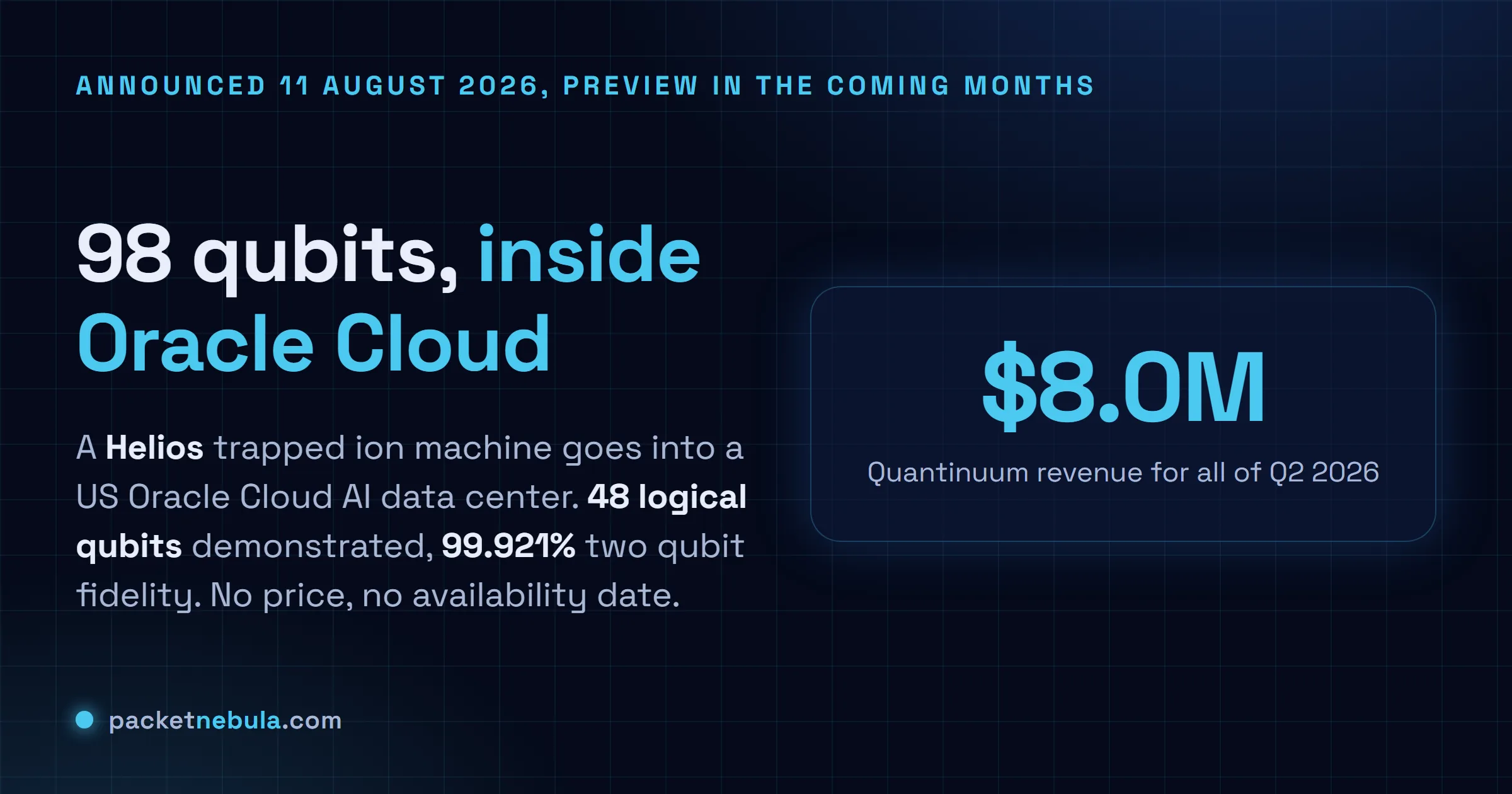
98physical qubits, with 48 logical demonstrated
99.921%average two qubit gate fidelity
$8.0MQuantinuum revenue for the whole of Q2 2026
Answer card: Quantinuum and Oracle announced on 11 August 2026 that a 98 physical qubit Helios trapped ion machine goes into a US Oracle Cloud AI data center, with 48 logical qubits demonstrated at 99.921 percent two qubit gate fidelity, no price and no availability date, against 8.0 million dollars of Quantinuum revenue for all of the second quarter of 2026.
A real machine, a real rack, and a business the size of a mid market SaaS.

A quantum computer moves in next door

The framing here is what’s new, not the hardware. Quantum computers have been reachable over the internet for years, usually as a queue you submit a circuit to and collect results from later. This is different in one specific way: the box goes inside Oracle’s own AI data center, next to the GPU and HPC capacity, behind Oracle identity and access control.

That matters more than it sounds. The awkward part of quantum access has never been the qubits, it’s the plumbing around them. A hybrid job spends most of its life on classical hardware, preparing parameters and processing measurement results, and bouncing that back and forth across the public internet to somebody else’s lab adds latency and a procurement conversation nobody wanted. Putting the machine in the same building as the classical half removes both.
Official Quantinuum announcement card for the Oracle partnership: the Quantinuum wordmark and logo above the word AND in mint green, with the Oracle logo below, set on a pale mint background with faint wireframe globe arcs in the corners.

Image: Quantinuum, announcement visual from its Oracle partnership release, 11 August 2026.

Quantinuum calls the arrangement an industry first. We’d take that lightly, since every vendor’s press release contains one, but the physical colocation is genuinely unusual and the power figure explains why it’s even possible. Quantinuum states roughly 60 kW for Helios. That’s less than one rack of dense AI servers, so a quantum machine is, oddly, one of the easier things to find room for in a data center that’s fighting for megawatts. (Worth a footnote for anyone searching: this Helios has nothing to do with AMD’s Helios rack. Two companies, one name, no relation.)

The published numbers, and the two ratios worth holding on to

Helios is a third generation trapped ion machine that launched commercially in November 2025, running 98 fully connected physical qubits on barium ions. Quantinuum reports 99.921% average two qubit gate fidelity and 99.9975% on single qubit gates. Full connectivity is the quiet advantage of trapped ions: any qubit can interact with any other, so you don’t burn depth on shuffling states around a fixed lattice the way superconducting architectures often do.

Now the ratio. Those 98 physical qubits have been used to demonstrate 48 logical qubits. Roughly two to one, which is remarkable by the standards of a field where the textbook overhead runs to hundreds of physical qubits per logical one. Quantinuum’s next machine, Sol, is targeted at 192 physical and 100 logical for 2027, holding the same ratio while chasing a logical error rate of ten to the minus five. Apollo, the fully fault tolerant design with thousands of physical qubits, is a 2029 target.
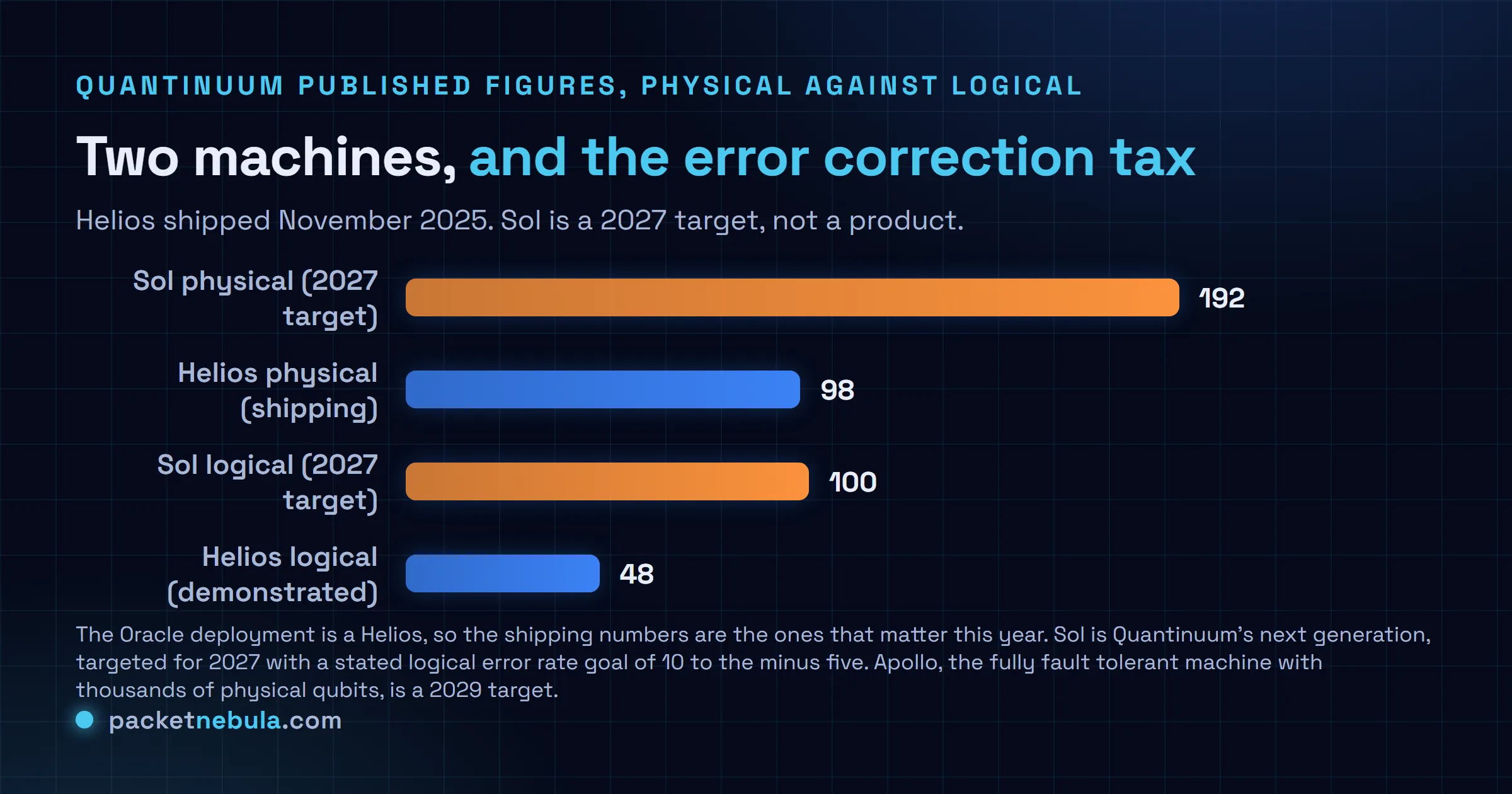
Bar chart of Quantinuum published qubit counts: Sol physical at 192 for a 2027 target, Helios physical at 98 shipping now, Sol logical at 100 for 2027 and Helios logical at 48 demonstrated, showing roughly two physical qubits behind each logical one.
Two physical qubits per logical one, held across a generation. That ratio is the interesting number.

Here’s the honest reading of 48 logical qubits, though. It’s a genuine engineering achievement and it’s still far short of anything commercially decisive. Useful quantum chemistry estimates start in the hundreds of well corrected logical qubits and go up quickly from there. I might be wrong about the exact threshold, nobody really agrees on it, but the gap is orders of magnitude rather than a couple of product cycles.

Eight million dollars, and what you should actually do

Quantinuum reported its second quarter results in the same week. Revenue of $8.0 million, up 279% from $2.11 million a year before. Full year guidance of $28 million to $32 million. GAAP net loss of $596.5 million, most of which ($447.5 million) is a one off stock compensation charge from the June IPO, with an adjusted EBITDA loss of $68.3 million underneath. Cash sits at about $2.11 billion after the $1.7 billion raise, so nobody is running out of money soon.

Put those two stories side by side and the shape becomes clear. This is a well funded research programme selling access to extremely good lab equipment, not a compute business. Annual revenue guidance tops out around what a single large enterprise spends on GPU capacity in a quarter. That’s not a criticism, it’s just the scale, and it should calibrate how you read “quantum is arriving in the cloud” headlines for the next couple of years.

So what do you do with it? If you have a genuine optimisation or simulation problem and a person who can spend real time on it, an OCI quantum preview is a cheap way to build that skill inside normal cloud governance instead of a bespoke research agreement. That’s a real benefit and it’s the whole point of the deal.
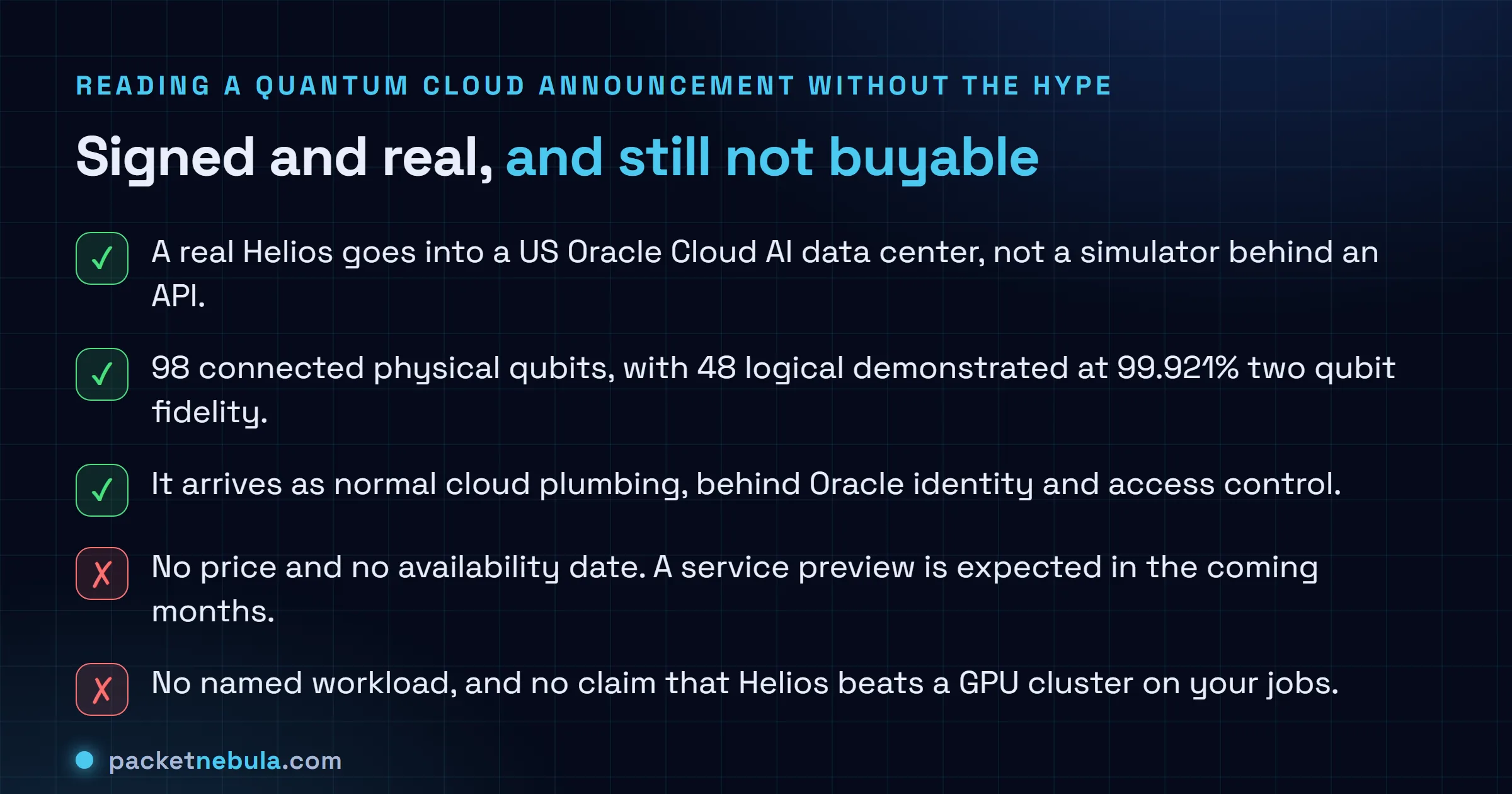
Checklist contrasting what the Quantinuum and Oracle announcement confirms, namely a real Helios inside a US Oracle Cloud AI data center, 98 connected physical qubits with 48 logical demonstrated at 99.921 percent fidelity, and normal Oracle identity and access control, against what it does not give, namely no price, no availability date, no named workload and no comparison against a GPU cluster.
Signed and real. Also not something you can price, schedule or benchmark yet.

If you don’t have that person, do nothing. Genuinely nothing. The quantum item that belongs on your roadmap this year isn’t access to a 98 qubit machine, it’s post quantum cryptography, and that’s true whether Helios ships to twenty clouds or none. Harvest now and decrypt later doesn’t wait for fault tolerance, the migration takes years of certificate and library work, and it’s already landing in production stacks. We wrote up which post quantum signature actually ships in TLS and what turning on ML-DSA-44 to origin looks like in practice. That’s the work. This announcement doesn’t change a line of it.

The interesting long game is which modality wins, and the money still isn’t sure. Trapped ions get fidelity and connectivity but slow gate speeds. Superconducting gets speed and a fab path, which is why IBM bought a silicon spin qubit lab. Photonics has its own backers. Oracle picking a trapped ion partner is a vote, not a verdict.

Sources

Quantinuum’s announcement on the Quantinuum newsroom and Oracle’s matching release, both dated 11 August 2026. Specifications, roadmap dates and caveats from Unite.AI and The Quantum Insider. Second quarter financials from Quantum Computing Report and Quantinuum’s own condensed consolidated statements published alongside the results.

Frequently asked questions

What did Quantinuum and Oracle actually announce?

A multi year strategic partnership, announced 11 August 2026, under which a Quantinuum Helios quantum computer is installed inside a US based Oracle Cloud Infrastructure AI data center. OCI customers would reach it through a planned OCI quantum service, using the same Oracle identity and access controls as the rest of their tenancy, alongside Oracle's GPU and HPC capacity. Oracle says the service will preview in the coming months. No general availability date and no pricing were published.

How many qubits does Helios have, and how good are they?

Helios is a third generation trapped ion system with 98 fully connected physical qubits, running barium ions. Quantinuum reports an average two qubit gate fidelity of 99.921%, which clears the widely quoted "three nines" mark, and single qubit fidelity of 99.9975%. It has been used in demonstrations with 48 logical qubits, meaning error corrected qubits built out of the physical ones. Helios launched commercially in November 2025, so this is a shipping machine rather than a prototype.

Can I run something useful on it today?

Almost certainly not, if "useful" means beating what you already run on classical hardware. Neither company named a production workload or published a benchmark against a GPU cluster. The stated targets are drug discovery, materials science, financial modelling and large scale optimisation, all of which are research programmes rather than shipped results. Treat access as a way to build skills and test circuits, not as capacity you can put in a delivery plan.

Does this change anything for my security roadmap?

No. A 98 qubit machine with 48 logical qubits is nowhere near breaking RSA or elliptic curve cryptography, which needs millions of physical qubits by current estimates. The quantum item that genuinely belongs on your 2026 roadmap is post quantum cryptography, because the migration takes years and the "harvest now, decrypt later" risk starts the day your traffic is captured. That work is independent of anything Quantinuum ships.

How big is Quantinuum as a business?

Small, and losing money fast. Revenue was $8.0 million in the second quarter of 2026, up 279% from $2.11 million a year earlier, with full year guidance of $28 million to $32 million. GAAP net loss for the quarter was $596.5 million, though $447.5 million of that was a one off stock compensation charge triggered by the June IPO. Adjusted EBITDA loss was $68.3 million. The company holds about $2.11 billion in cash after raising $1.7 billion in that IPO, so the runway is long even if the revenue is not.

Tags: cloudnewsoraclequantinuumquantumtrapped-ion
Share199Tweet124
stephane

stephane

  • Trending
  • Comments
  • Latest
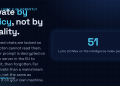
Answer card: Proton Lumo 2.0 is private by policy, not by locality. Saved history is locked so even Proton cannot read it, but the prompt is decrypted on a Proton EU server to answer it, then forgotten.

Proton Lumo 2.0 review: how private is it, really?

3 September 2026
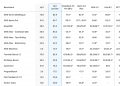
The Agentic Coding section of the official Hy4 preview benchmark appendix published by Tencent, a table comparing Hy3 and Hy4 preview against DeepSeek V4 Pro 0813, Qwen 3.8 Max, GLM 5.3, Kimi K3, GPT 5.6 Sol and Claude Opus 5 across SWE-bench Multilingual, SWE-bench Pro, DeepSWE, three SWE Atlas tasks, SWE-Marathon, Terminal-Bench 2.1, NL2Repo-Bench, CyberGym, ProgramBench, PostTrainBench and Harbor-Index.

Tencent’s 770B Hy4 tops one benchmark row in 46

3 September 2026
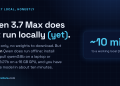
Answer card: Qwen 3.7 Max is API-only and cannot run locally yet; the open Qwen models (Qwen 3.6 27B, qwen3:8b to 32b) run offline via Ollama.

Qwen 3.7 local: what you can actually run offline

22 June 2026
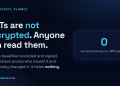
Answer card: JWTs are not encrypted, anyone can read them; the signature proves who issued the token, not who may read it.

Are JWTs encrypted? No, and the difference will bite you

0
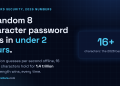
Answer card: a random 8 character password falls in under 2 hours offline, while 16 random characters hold for 1.4 trillion years at the same speed.

How long does it take to crack a password in 2026?

0
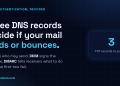
Answer card: three DNS records decide if your mail lands or bounces; SPF lists allowed senders, DKIM signs messages, DMARC sets the failure policy.

SPF, DKIM and DMARC explained: the records your email needs

0
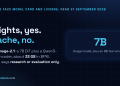
Answer card stating that Qwen-Image-2.1, released on 20 September 2026, ships open weights with a 7 billion parameter diffusion transformer, a Qwen3-VL 8B text encoder and an RGBA VAE totalling about 33 gigabytes in BF16, under the Qwen Research License that limits use to research or evaluation and requires a separate commercial licence, unlike the Apache 2.0 licence of Qwen-Image 1.0.

Qwen-Image-2.1 brings the weights back, but not the Apache licence

21 September 2026
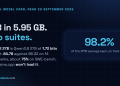
Answer card stating that Ternary Bonsai 2 27B, released by PrismML on 17 September 2026 under Apache 2.0, packs Qwen3.8 27B into 5.95 gigabytes at 1.72 bits per weight, keeps 98.2 percent of the 14-benchmark average, about 75 percent on SWE-bench Verified and Terminal-Bench 2.1, and needs PrismML's llama.cpp fork to run.

Does Bonsai 2 27B really keep 98% of Qwen3.8 in 5.95 GB?

20 September 2026
Answer card stating that Jev 1.13 from TypeSafe AI is a decision model in early access since 15 September 2026 that returns typed probabilities instead of text, priced at 42 dollars per billion input tokens with output tokens free, answering in 70 to 500 milliseconds, with a 64K token request budget, text input only, and a documented list of things it does badly, including counting and dates.

Jev 1.13 bills $42 a billion tokens, and it can’t count

19 September 2026
  • About
  • Contact
  • Privacy
  • Legal

Copyright © 2026 Stephane Cardon.

Welcome Back!

Login to your account below

Forgotten Password?

Retrieve your password

Please enter your username or email address to reset your password.

Log In
No Result
View All Result
  • Home
  • Articles
    • Security
    • Network
    • Dev
    • Sysadmin
    • SEO
    • Email & DNS
  • Tools
    • Network tools: free, fast, no signup
    • Security tools: free, fast, no signup
    • Developer tools: free, fast, no signup
    • Sysadmin tools: free, fast, no signup
    • SEO tools: free, fast, no signup
    • Email & DNS tools: free, fast, no signup
  • Download
  • About

Copyright © 2026 Stephane Cardon.