
• Latest
  • Trending
  • All
NIST physicist Yicheng Shi, lead author of the study, working at the optical bench used to generate and measure the entangled photon pairs sent across 62 km of commercial fiber between Gaithersburg and College Park, Maryland.

Entanglement Ran 62 km of Aerial Fiber at 92.8% Uptime

8 August 2026
Answer card stating that Ternary Bonsai 2 27B, released by PrismML on 17 September 2026 under Apache 2.0, packs Qwen3.8 27B into 5.95 gigabytes at 1.72 bits per weight, keeps 98.2 percent of the 14-benchmark average, about 75 percent on SWE-bench Verified and Terminal-Bench 2.1, and needs PrismML's llama.cpp fork to run.

Does Bonsai 2 27B really keep 98% of Qwen3.8 in 5.95 GB?

20 September 2026
Answer card stating that Jev 1.13 from TypeSafe AI is a decision model in early access since 15 September 2026 that returns typed probabilities instead of text, priced at 42 dollars per billion input tokens with output tokens free, answering in 70 to 500 milliseconds, with a 64K token request budget, text input only, and a documented list of things it does badly, including counting and dates.

Jev 1.13 bills $42 a billion tokens, and it can’t count

19 September 2026
Answer card stating that Qwen3.8-Omni-Flash launched on 17 September 2026 as an API only model on Alibaba Cloud Model Studio, taking text, images, audio and video in a 1M token context and returning text only, priced at 0.15 dollars per million input tokens for every modality and 0.47 dollars per million output tokens in the international regions, with no open weights published and the Qwen-Live Harness GitHub repository returning 404.

Qwen3.8-Omni-Flash bills audio at $0.15 and ships no weights

18 September 2026
Answer card stating that on 15 September 2026 AWS said it is unable to restore access to resources and data hosted exclusively in the Middle East Bahrain region me-south-1 and in the mec1-az2 zone of the UAE region, because the damage spanned multiple Availability Zones and exceeded what multi-AZ services are designed to withstand.

AWS can’t restore me-south-1, six months after the drone strikes

17 September 2026
Answer card stating that Google released Gemini 3.8 Live and Gemini 3.8 Live Extended Thinking on 15 September 2026 at 3 dollars per million audio input tokens and 12 dollars out, that the thinking model requires asynchronous tools, and that Artificial Analysis scores it 82.6 on its Speech to Speech Quality Index.

Gemini 3.8 Live Extended Thinking rejects any tool that blocks

16 September 2026
Answer card summarising the Atria Dawn Preview release: 744B GLM-5.2 base, MIT licence, 1.5 TB BF16 and 756 GB FP8 checkpoints, 256K context, top on five of sixteen benchmark rows and trailing on SWE-bench Pro.

Atria Dawn Preview is 744B under MIT, and the BF16 weighs 1.5 TB

15 September 2026
Answer card stating that OpenAI released the Agents API in public beta on 10 September 2026 with no separate fee, billed through model tokens, tool calls and hosted sandbox time, with a choice of OpenAI hosted, self hosted or partner sandboxes, US only data residency and no Zero Data Retention support.

OpenAI’s Agents API has no fee, no ZDR and a one hour sandbox clock

14 September 2026
Answer card: Sakana Fugu Max at $2 and $6 per million tokens, Fugu Ultra v2 unchanged at $5 and $30, and Sakana saying Ultra v2 scores without Fable 5 or GPT-6 Astra in its pool.

Fugu Max costs $2 and $6 while Fugu Ultra v2 runs without Fable 5

13 September 2026
Answer card stating that DeepSeek released DeepSeek-V4.1-Flash on 10 September 2026 as a 552 billion parameter mixture of experts model with a new causal encoder decoder architecture that activates 8 billion parameters on input and 16 billion on output, with native vision, a one million token context and MIT licensed weights, that the API model name is now deepseek-flash at 0.15 dollars per million input tokens and 0.60 dollars per million output tokens off peak, and that DeepSeek announced V4 Pro would be routed to V4.1-Flash from 14 September and reversed that on 11 September.

DeepSeek V4.1-Flash arrived, and the V4 Pro retirement lasted a day

12 September 2026
Answer card stating that Cognition released SWE-2 on 10 September 2026, a coding model post-trained from Kimi K3, scoring 50.0 percent on FrontierCode 1.1 Main against 50.9 percent for Claude Fable 5.1 and 27.3 percent on Terminal-Bench 4 against 55.8 percent, available only inside Devin.

SWE-2 trails Fable 5.1 by one point, and by 28 on Terminal-Bench 4

11 September 2026
Answer card for Meta Muse, free to 100 million tokens a week then $20 a month, launched 8 September 2026 for United States adults only, running in a dedicated per user virtual machine.

Does Meta Muse do enough to earn your inbox and a card on file?

9 September 2026
Answer card stating that the public download pages for the VMware Virtual Disk Development Kit on developer.broadcom.com began returning 404 errors on 25 August 2026 with no announcement or deprecation notice, that Broadcom support tells customers the kit is no longer available for use or download, and that release lines 7.0.3.1, 8.x and 9.x are all affected.

Broadcom pulled VDDK 8.0 and 9.0, and the 404 is the only notice

8 September 2026
  • About
  • Contact
  • Privacy
  • Legal
Monday, September 21, 2026
  • Login
Packet Nebula
  • Home
  • Articles
    • Security
    • Network
    • Dev
    • Sysadmin
    • SEO
    • Email & DNS
  • Tools
    • Network tools: free, fast, no signup
    • Security tools: free, fast, no signup
    • Developer tools: free, fast, no signup
    • Sysadmin tools: free, fast, no signup
    • SEO tools: free, fast, no signup
    • Email & DNS tools: free, fast, no signup
  • Download
  • About
No Result
View All Result
Packet Nebula
No Result
View All Result
Home Network

Entanglement Ran 62 km of Aerial Fiber at 92.8% Uptime

by stephane
8 August 2026
in Network
0
NIST physicist Yicheng Shi, lead author of the study, working at the optical bench used to generate and measure the entangled photon pairs sent across 62 km of commercial fiber between Gaithersburg and College Park, Maryland.
493
SHARES
1.4k
VIEWS
Share on FacebookShare on Twitter

Somewhere between Gaithersburg and College Park there's a strand of ordinary telecom fiber hanging off utility poles, doing what fiber on poles does: swaying in wind, stretching in the afternoon sun, taking the occasional bird. NIST ran entangled photons down it for 24 hours and kept the entanglement alive 92.8% of the time. That's the result, published 5 August 2026 with the Joint Quantum Institute and a New York outfit called Qunnect. Not a distance record. A robustness one, and honestly the more useful kind. The number that keeps our feet on the ground is the throughput: about 1,500 entangled pairs per second, across 62 kilometres.

The short answer

NIST, the Joint Quantum Institute at UMD and Qunnect distributed entangled photon pairs across 62 km of live telecom fiber between Gaithersburg and College Park, most of it hanging from utility poles. Automated polarization compensation kept entanglement up for 92.8% of a continuous 24 hour test, with 7.2% of link time spent recalibrating. Published 5 August 2026, from a paper dated 15 July in the Journal of Optical Communications and Networking. The distance is unremarkable. The conditions are the point, and the 1,500 pairs per second are the reason nobody should be redesigning a network around this yet.
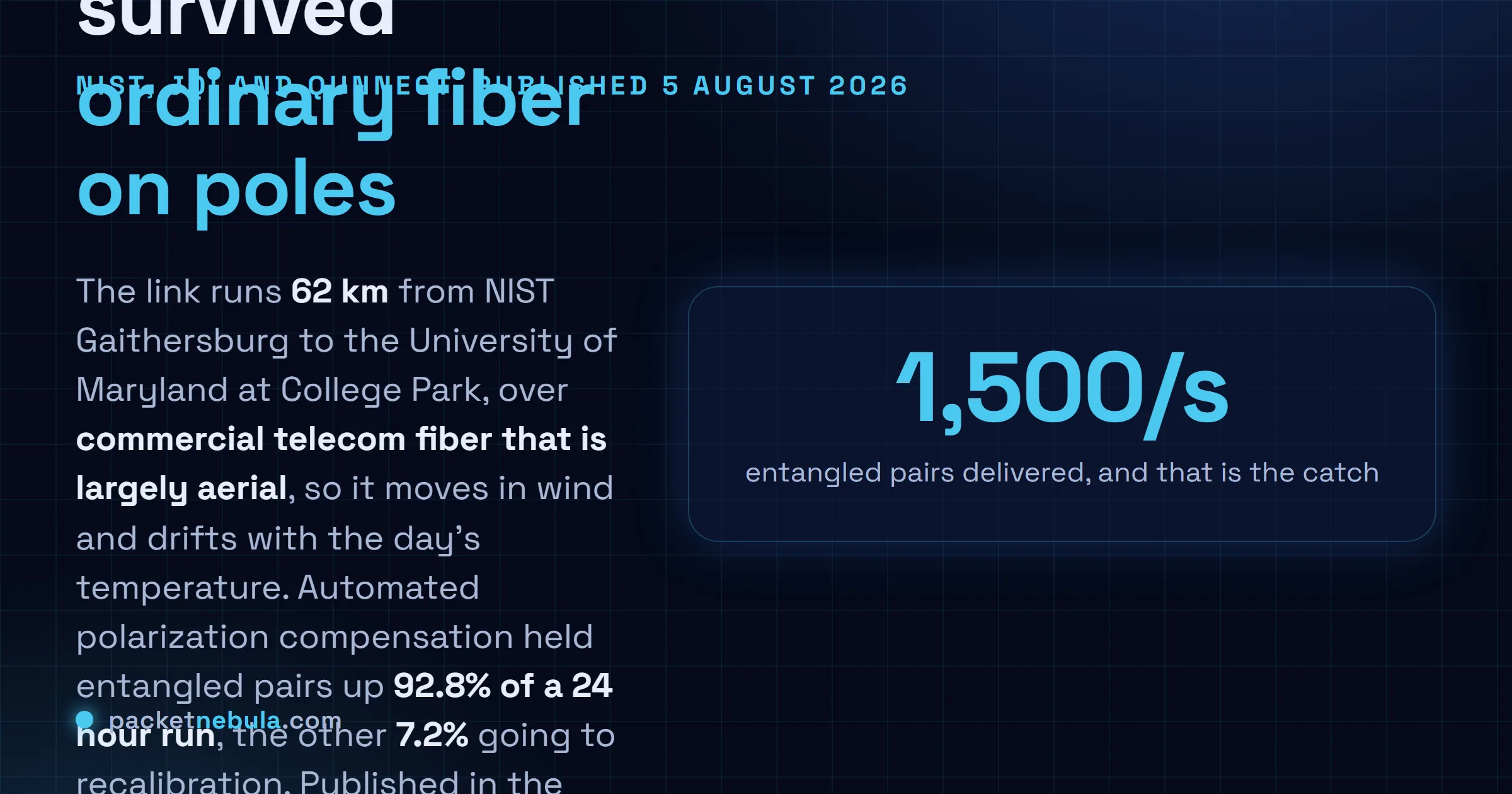
62 kmmostly aerial commercial fiber
92.8%of a 24 hour run, entangled
1,500/spairs, and there is the ceiling
Answer card: NIST, the Joint Quantum Institute at the University of Maryland and Qunnect distributed entangled photon pairs over 62 kilometres of commercial telecom fiber that is mostly strung from utility poles, holding entanglement 92.8 percent of a continuous 24 hour run at roughly 1500 pairs per second, with the remaining 7.2 percent spent recalibrating polarization.
The one-card version. Quantum states on the ugliest fiber available, and a throughput figure worth sitting with.

The bad fiber is the whole experiment

Every entanglement-over-fiber headline you’ve read for a decade came with an asterisk, and the asterisk was usually the fiber. Spooled in a lab. Buried in a trench. Dark, dedicated, thermally boring.

This one wasn’t.

The link runs from NIST’s Gaithersburg campus to the University of Maryland at College Park, and it’s commercial telecom fiber that spends most of its 62 kilometres in the air. Which means it does everything fiber in the air does. It sways. It expands through the afternoon and contracts overnight. Trucks go past and it shivers. All of that twists the fiber’s birefringence around, and since the entanglement here lives in photon polarization, twisting the fiber scrambles the thing you’re trying to preserve.

Yicheng Shi, the lead author, called it about as bad a connection as you can possibly have. He also said the quiet part: “We put this to an extreme test in an environment that’s really noisy. Amazingly, it still worked.”

I like that he sounded surprised.
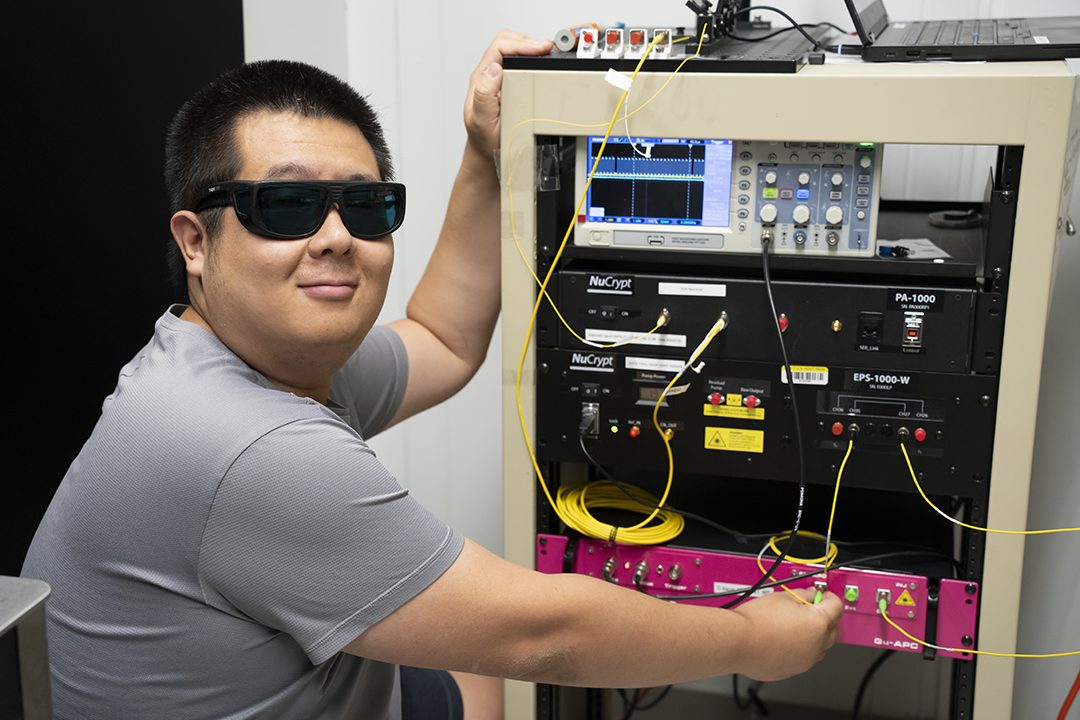
NIST physicist Yicheng Shi at the optical bench used to generate and measure the entangled photon pairs sent across 62 km of commercial fiber between Gaithersburg and College Park, Maryland.

Image: NIST

What held it up

Qunnect’s automated polarization compensation, doing a fairly old trick very fast.

Classical reference light goes down the same fiber as the quantum channel. It comes out transformed, the hardware reads how it was transformed, and it applies the inverse to the quantum path before the drift has moved on. A tracking loop, essentially, chasing a fiber that will not sit still.

The number that makes this honest is 7.2%. That’s how much of the 24 hour window went to recalibration rather than to carrying entangled pairs, and it’s the direct complement of the 92.8% everyone is quoting. Nobody hid it, NIST published both halves, and we’d rather see a result stated that way than as a clean uptime figure with the overhead tucked into a footnote.

Quantum Computing Report puts a CHSH parameter of S = 2.45 ± 0.08 on the run, and says the link stayed above the classical bound for more than 20 consecutive hours. We didn’t find that figure in NIST’s own release, so treat it as the outlet’s reading of the paper rather than a press-office number.
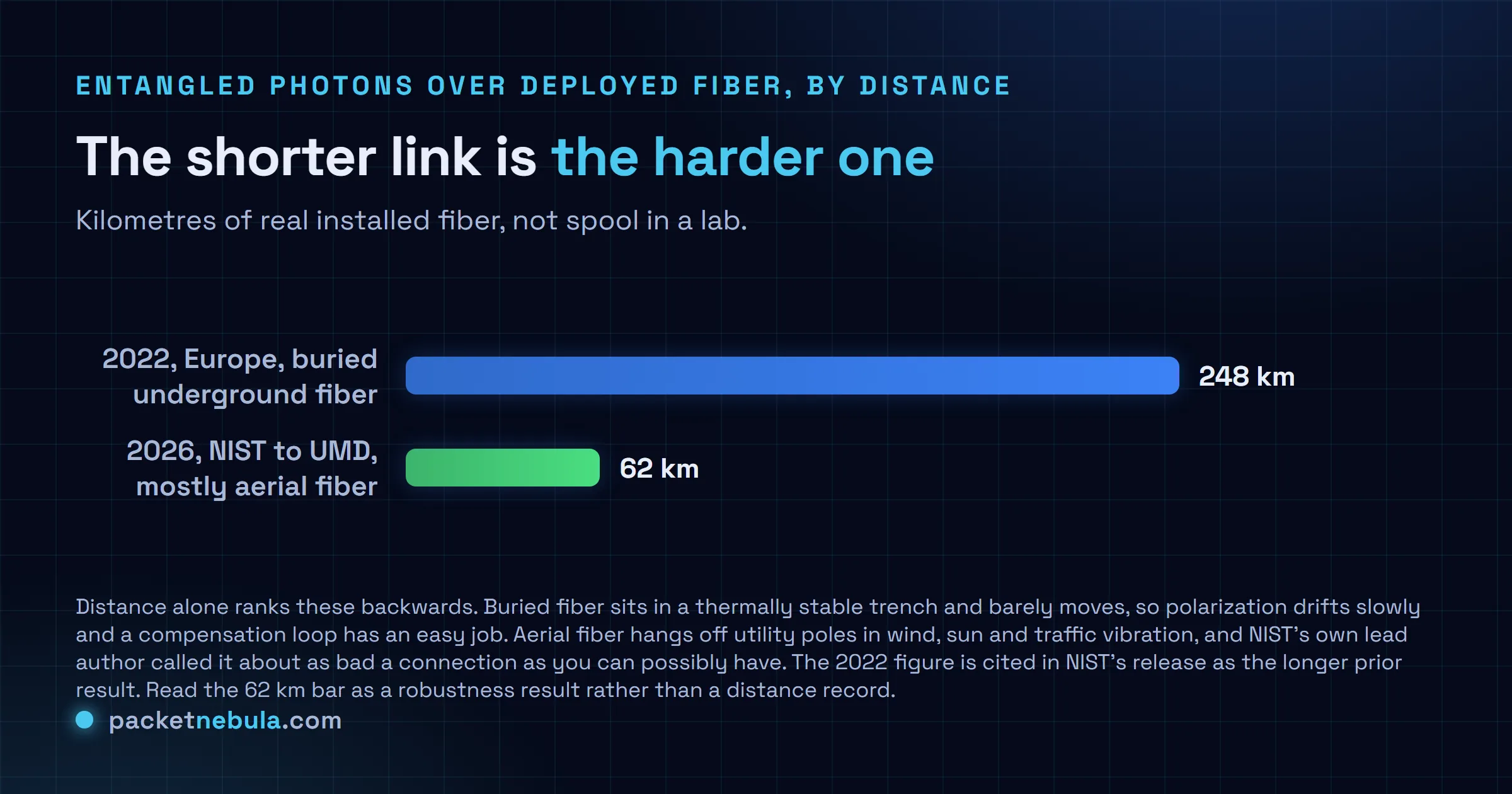
Comparison bars: a 2022 European demonstration distributed entanglement over 248 kilometres of buried underground fiber, while the 2026 NIST, JQI and Qunnect demonstration reached 62 kilometres over commercial fiber that is mostly aerial and exposed to weather.
Rank these by distance and you get the wrong answer. The short bar is the difficult one.

Now the part that should cool you down

1,500 entangled pairs per second.

That’s the delivery rate, and it’s a hard ceiling on everything you might want to build on top. Put it next to any link in your own rack. A 10 Gbps wavelength carries ten billion bits every second. This carries fifteen hundred correlated photon pairs, and a key derived from them would be some fraction of that after sifting and error correction, assuming you were running a key exchange protocol at all. Which they weren’t. This is entanglement distribution, full stop. No key rate is published because no keys were being made.

So when the write-ups say the trial validates metropolitan quantum networks and QKD channels over existing fiber, hold that at arm’s length. What it validates is the physical layer surviving a genuinely hostile span. That’s a real and expensive assumption to have tested, because the alternative was trenching dedicated fiber across a metro area and nobody was going to pay for that. But surviving the medium and being useful at rate are different milestones, and this is the first one.

There’s no repeater here either. Entanglement went end to end across a single span, so the reach is still whatever fiber loss allows, and the loss budget itself doesn’t appear in the public material. No wavelength, no dB figure, no state fidelity that we could find outside the paywall. Which makes it hard to judge how much headroom is left before the pair rate falls off a cliff.
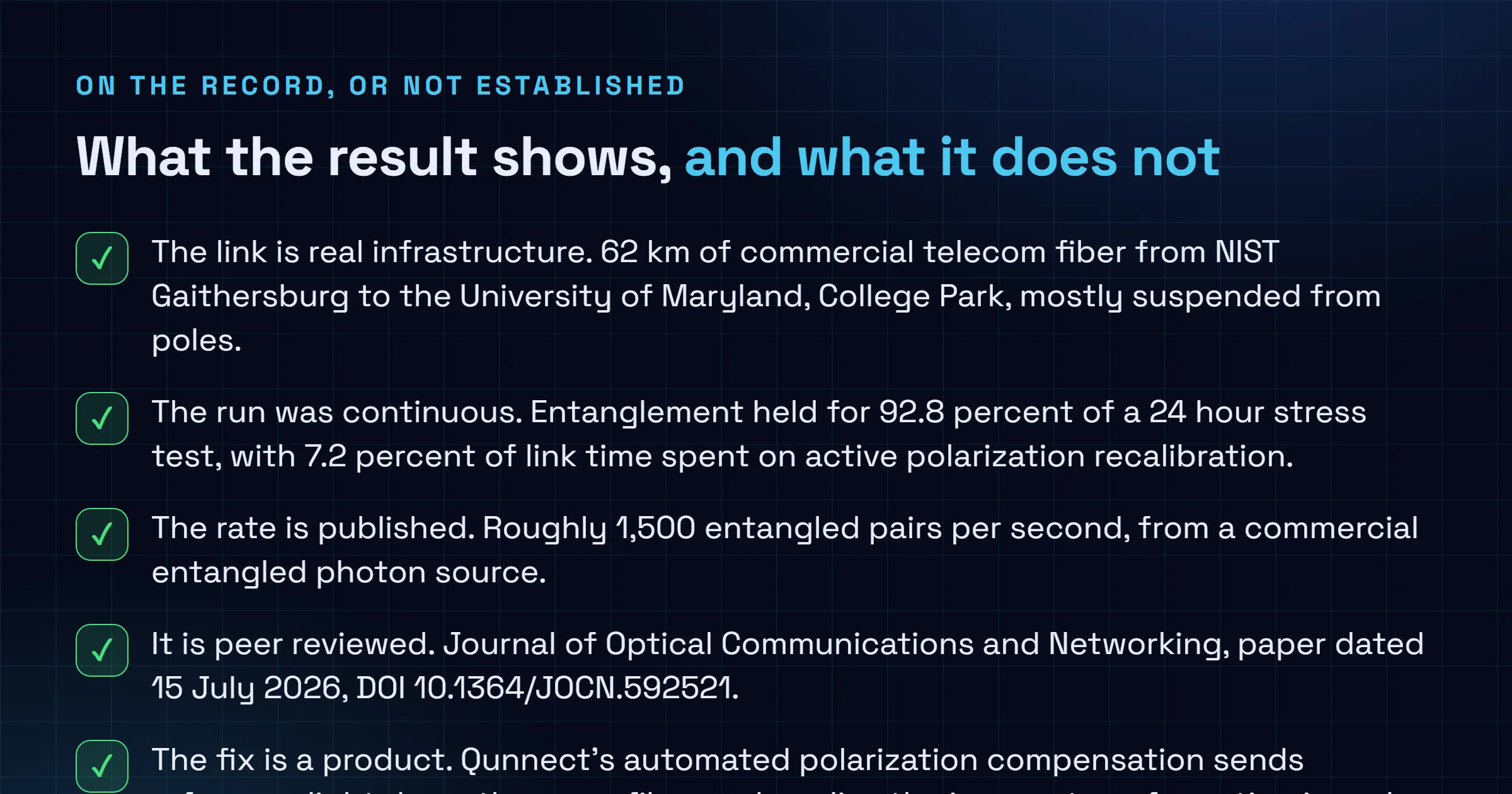
Checklist of what the NIST, JQI and Qunnect entanglement demonstration establishes, including the 62 kilometre deployed fiber link, the 1500 pairs per second rate, the 92.8 percent uptime and the peer reviewed venue, set against what it does not establish including key distribution, a quantum repeater, the optical loss budget and any change to the post-quantum migration.
Published on the record, against what the demonstration does not show.

If you run a network, here’s your action item

There isn’t one. That’s fine.

Nothing about your metro rings changes this quarter, or next year. What changes is the shape of the eventual pitch: when someone eventually sells you a quantum link, the sentence “we can run it on your existing aerial plant” now has a peer-reviewed result behind it instead of a hope. Worth knowing before that conversation, not before your next maintenance window.

The thing that actually has a calendar on it is still the classical one. ML-DSA shipped first in the post-quantum TLS stack, and Cloudflare turned on ML-DSA-44 to origins with OpenSSL 3.5, which is software you can deploy on a Tuesday. Entangled photons on utility poles are a lovely result. They are not a migration plan, and I’d be a little wary of anyone who presents them as one.

Sources

  • NIST, “‘Spooky’ Particles Transit DC Suburbs, a Step Toward a Quantum Network”, 5 August 2026, for the 62 km distance, the aerial commercial fiber, the 1,500 pairs per second, the 92.8% and 7.2% split, the journal reference and the Yicheng Shi quotes. Photograph credit NIST.
  • Journal of Optical Communications and Networking, Vol. 18 Issue 8, DOI 10.1364/JOCN.592521, the peer-reviewed paper behind the announcement, dated 15 July 2026.
  • Quantum Computing Report, for the CHSH value of S = 2.45 ± 0.08, the 20 hour figure above the classical bound and the description of Qunnect’s multiplexed reference-light compensation.
  • The Quantum Insider, for the comparison with the 2022 European 248 km buried-fiber result and the commercial entangled photon source.

Frequently asked questions

What did NIST actually demonstrate?

Entanglement distribution over 62 kilometres of deployed commercial telecom fiber running from NIST's Gaithersburg campus to the University of Maryland in College Park. The point isn't the distance. It's that the fiber is mostly aerial, strung from utility poles, so it moves in wind and its birefringence drifts with temperature all day. The team held entangled pairs across it for 92.8% of a continuous 24 hour run at roughly 1,500 pairs per second, using automated polarization compensation built by Qunnect. The work appeared in the Journal of Optical Communications and Networking, paper dated 15 July 2026, DOI 10.1364/JOCN.592521.

Is 62 km a record?

No, and NIST doesn't claim it is. Its own release points at a 2022 European demonstration that reached 248 kilometres, four times further. That one ran through buried fiber, which sits in a trench at a near constant temperature and hardly moves. The comparison is the story: the shorter link here was by far the nastier environment. Lead author Yicheng Shi described it as about as bad a connection as you can possibly have, and framed the whole experiment as a stress test.

Does this mean quantum key distribution is coming to my metro network?

Not on these numbers. 1,500 entangled pairs per second is the ceiling on everything downstream, and after sifting and error correction a key rate is some fraction of that. Compare it to a link you already run: a 10 Gbps wave moves ten billion bits a second. The demonstration also distributed entanglement, it did not run a key exchange protocol or publish a key rate. What it does establish is that the physical layer works on the fiber you already have, which is the expensive assumption everyone was making.

Should this change my post-quantum crypto plans?

No. Nothing at all. The migration to ML-KEM and ML-DSA is a software problem with a real calendar attached, and it runs over the classical internet whatever the quantum networking people manage next. QKD and post-quantum cryptography solve overlapping problems by completely different means, and only one of them ships in OpenSSL today. If you were hoping this buys you time on the PQC work, it doesn't.

What is polarization compensation doing here?

Holding the experiment together. The entanglement is encoded in photon polarization, and any real fiber rotates polarization as it flexes and warms. On buried fiber that drift is slow enough to ignore for a while. On aerial fiber it isn't. Qunnect's devices send classical reference light down the same fiber, measure how the fiber transformed it, then apply the inverse transformation to the quantum channel in real time. That correction loop cost 7.2% of the link's time over the 24 hour run, which is the honest price of the 92.8% figure.

Tags: fibernetworkingnewsnistqkdquantum
Share197Tweet123
stephane

stephane

  • Trending
  • Comments
  • Latest
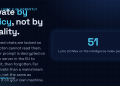
Answer card: Proton Lumo 2.0 is private by policy, not by locality. Saved history is locked so even Proton cannot read it, but the prompt is decrypted on a Proton EU server to answer it, then forgotten.

Proton Lumo 2.0 review: how private is it, really?

3 September 2026
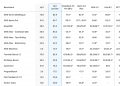
The Agentic Coding section of the official Hy4 preview benchmark appendix published by Tencent, a table comparing Hy3 and Hy4 preview against DeepSeek V4 Pro 0813, Qwen 3.8 Max, GLM 5.3, Kimi K3, GPT 5.6 Sol and Claude Opus 5 across SWE-bench Multilingual, SWE-bench Pro, DeepSWE, three SWE Atlas tasks, SWE-Marathon, Terminal-Bench 2.1, NL2Repo-Bench, CyberGym, ProgramBench, PostTrainBench and Harbor-Index.

Tencent’s 770B Hy4 tops one benchmark row in 46

3 September 2026
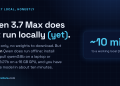
Answer card: Qwen 3.7 Max is API-only and cannot run locally yet; the open Qwen models (Qwen 3.6 27B, qwen3:8b to 32b) run offline via Ollama.

Qwen 3.7 local: what you can actually run offline

22 June 2026
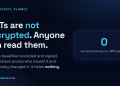
Answer card: JWTs are not encrypted, anyone can read them; the signature proves who issued the token, not who may read it.

Are JWTs encrypted? No, and the difference will bite you

0
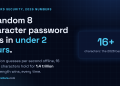
Answer card: a random 8 character password falls in under 2 hours offline, while 16 random characters hold for 1.4 trillion years at the same speed.

How long does it take to crack a password in 2026?

0
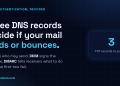
Answer card: three DNS records decide if your mail lands or bounces; SPF lists allowed senders, DKIM signs messages, DMARC sets the failure policy.

SPF, DKIM and DMARC explained: the records your email needs

0
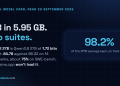
Answer card stating that Ternary Bonsai 2 27B, released by PrismML on 17 September 2026 under Apache 2.0, packs Qwen3.8 27B into 5.95 gigabytes at 1.72 bits per weight, keeps 98.2 percent of the 14-benchmark average, about 75 percent on SWE-bench Verified and Terminal-Bench 2.1, and needs PrismML's llama.cpp fork to run.

Does Bonsai 2 27B really keep 98% of Qwen3.8 in 5.95 GB?

20 September 2026
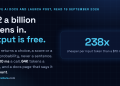
Answer card stating that Jev 1.13 from TypeSafe AI is a decision model in early access since 15 September 2026 that returns typed probabilities instead of text, priced at 42 dollars per billion input tokens with output tokens free, answering in 70 to 500 milliseconds, with a 64K token request budget, text input only, and a documented list of things it does badly, including counting and dates.

Jev 1.13 bills $42 a billion tokens, and it can’t count

19 September 2026
Answer card stating that Qwen3.8-Omni-Flash launched on 17 September 2026 as an API only model on Alibaba Cloud Model Studio, taking text, images, audio and video in a 1M token context and returning text only, priced at 0.15 dollars per million input tokens for every modality and 0.47 dollars per million output tokens in the international regions, with no open weights published and the Qwen-Live Harness GitHub repository returning 404.

Qwen3.8-Omni-Flash bills audio at $0.15 and ships no weights

18 September 2026
  • About
  • Contact
  • Privacy
  • Legal

Copyright © 2026 Stephane Cardon.

Welcome Back!

Login to your account below

Forgotten Password?

Retrieve your password

Please enter your username or email address to reset your password.

Log In
No Result
View All Result
  • Home
  • Articles
    • Security
    • Network
    • Dev
    • Sysadmin
    • SEO
    • Email & DNS
  • Tools
    • Network tools: free, fast, no signup
    • Security tools: free, fast, no signup
    • Developer tools: free, fast, no signup
    • Sysadmin tools: free, fast, no signup
    • SEO tools: free, fast, no signup
    • Email & DNS tools: free, fast, no signup
  • Download
  • About

Copyright © 2026 Stephane Cardon.