
• Latest
  • Trending
  • All
Answer card: DeepSeek V4 graduates from preview this month, and the deepseek-chat and deepseek-reasoner aliases stop responding after July 24, 2026, with reasoner mapping to v4-flash thinking rather than the larger v4-pro.

DeepSeek V4 is here: deepseek-chat breaks July 24

14 July 2026
The official xAI announcement card for Grok 4.7, white type on a dark grey and navy gradient.

Grok 4.7 keeps $2 and $6, and its gains over 4.6 are xhigh versus high

22 September 2026
Answer card stating that Qwen-Image-2.1, released on 20 September 2026, ships open weights with a 7 billion parameter diffusion transformer, a Qwen3-VL 8B text encoder and an RGBA VAE totalling about 33 gigabytes in BF16, under the Qwen Research License that limits use to research or evaluation and requires a separate commercial licence, unlike the Apache 2.0 licence of Qwen-Image 1.0.

Qwen-Image-2.1 brings the weights back, but not the Apache licence

21 September 2026
Answer card stating that Ternary Bonsai 2 27B, released by PrismML on 17 September 2026 under Apache 2.0, packs Qwen3.8 27B into 5.95 gigabytes at 1.72 bits per weight, keeps 98.2 percent of the 14-benchmark average, about 75 percent on SWE-bench Verified and Terminal-Bench 2.1, and needs PrismML's llama.cpp fork to run.

Does Bonsai 2 27B really keep 98% of Qwen3.8 in 5.95 GB?

20 September 2026
Answer card stating that Jev 1.13 from TypeSafe AI is a decision model in early access since 15 September 2026 that returns typed probabilities instead of text, priced at 42 dollars per billion input tokens with output tokens free, answering in 70 to 500 milliseconds, with a 64K token request budget, text input only, and a documented list of things it does badly, including counting and dates.

Jev 1.13 bills $42 a billion tokens, and it can’t count

19 September 2026
Answer card stating that Qwen3.8-Omni-Flash launched on 17 September 2026 as an API only model on Alibaba Cloud Model Studio, taking text, images, audio and video in a 1M token context and returning text only, priced at 0.15 dollars per million input tokens for every modality and 0.47 dollars per million output tokens in the international regions, with no open weights published and the Qwen-Live Harness GitHub repository returning 404.

Qwen3.8-Omni-Flash bills audio at $0.15 and ships no weights

18 September 2026
Answer card stating that on 15 September 2026 AWS said it is unable to restore access to resources and data hosted exclusively in the Middle East Bahrain region me-south-1 and in the mec1-az2 zone of the UAE region, because the damage spanned multiple Availability Zones and exceeded what multi-AZ services are designed to withstand.

AWS can’t restore me-south-1, six months after the drone strikes

17 September 2026
Answer card stating that Google released Gemini 3.8 Live and Gemini 3.8 Live Extended Thinking on 15 September 2026 at 3 dollars per million audio input tokens and 12 dollars out, that the thinking model requires asynchronous tools, and that Artificial Analysis scores it 82.6 on its Speech to Speech Quality Index.

Gemini 3.8 Live Extended Thinking rejects any tool that blocks

16 September 2026
Answer card summarising the Atria Dawn Preview release: 744B GLM-5.2 base, MIT licence, 1.5 TB BF16 and 756 GB FP8 checkpoints, 256K context, top on five of sixteen benchmark rows and trailing on SWE-bench Pro.

Atria Dawn Preview is 744B under MIT, and the BF16 weighs 1.5 TB

15 September 2026
Answer card stating that OpenAI released the Agents API in public beta on 10 September 2026 with no separate fee, billed through model tokens, tool calls and hosted sandbox time, with a choice of OpenAI hosted, self hosted or partner sandboxes, US only data residency and no Zero Data Retention support.

OpenAI’s Agents API has no fee, no ZDR and a one hour sandbox clock

14 September 2026
Answer card: Sakana Fugu Max at $2 and $6 per million tokens, Fugu Ultra v2 unchanged at $5 and $30, and Sakana saying Ultra v2 scores without Fable 5 or GPT-6 Astra in its pool.

Fugu Max costs $2 and $6 while Fugu Ultra v2 runs without Fable 5

13 September 2026
Answer card stating that DeepSeek released DeepSeek-V4.1-Flash on 10 September 2026 as a 552 billion parameter mixture of experts model with a new causal encoder decoder architecture that activates 8 billion parameters on input and 16 billion on output, with native vision, a one million token context and MIT licensed weights, that the API model name is now deepseek-flash at 0.15 dollars per million input tokens and 0.60 dollars per million output tokens off peak, and that DeepSeek announced V4 Pro would be routed to V4.1-Flash from 14 September and reversed that on 11 September.

DeepSeek V4.1-Flash arrived, and the V4 Pro retirement lasted a day

12 September 2026
Answer card stating that Cognition released SWE-2 on 10 September 2026, a coding model post-trained from Kimi K3, scoring 50.0 percent on FrontierCode 1.1 Main against 50.9 percent for Claude Fable 5.1 and 27.3 percent on Terminal-Bench 4 against 55.8 percent, available only inside Devin.

SWE-2 trails Fable 5.1 by one point, and by 28 on Terminal-Bench 4

11 September 2026
  • About
  • Contact
  • Privacy
  • Legal
Tuesday, September 22, 2026
  • Login
Packet Nebula
  • Home
  • Articles
    • Security
    • Network
    • Dev
    • Sysadmin
    • SEO
    • Email & DNS
  • Tools
    • Network tools: free, fast, no signup
    • Security tools: free, fast, no signup
    • Developer tools: free, fast, no signup
    • Sysadmin tools: free, fast, no signup
    • SEO tools: free, fast, no signup
    • Email & DNS tools: free, fast, no signup
  • Download
  • About
No Result
View All Result
Packet Nebula
No Result
View All Result
Home Dev

DeepSeek V4 is here: deepseek-chat breaks July 24

by stephane
14 July 2026
in Dev
0
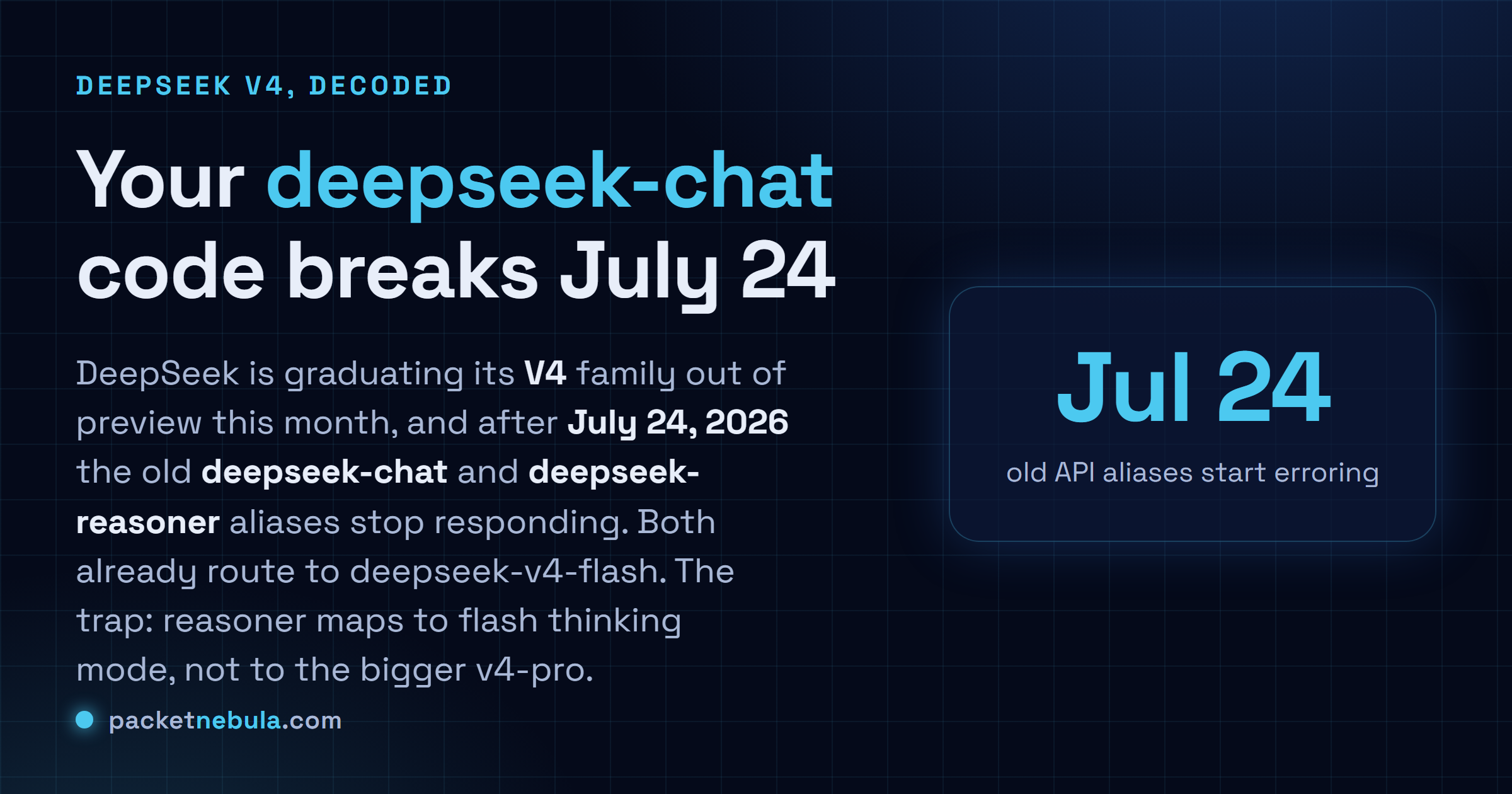
Answer card: DeepSeek V4 graduates from preview this month, and the deepseek-chat and deepseek-reasoner aliases stop responding after July 24, 2026, with reasoner mapping to v4-flash thinking rather than the larger v4-pro.
498
SHARES
1.4k
VIEWS
Share on FacebookShare on Twitter

So you wired up deepseek-chat months ago, it's been humming along, and you'd more or less forgotten it was even there. Bad news: that name has an expiry date. DeepSeek is graduating its V4 family out of preview this month, and after July 24, 2026 at 15:59 UTC the old deepseek-chat and deepseek-reasoner aliases stop responding. Your code doesn't fail slowly. It just starts erroring out. The fix is genuinely small, a one-line change to the model name on the same URL and key, but there's a trap tucked inside it that can quietly shrink the model behind your reasoning calls. We'll walk through what actually changed and the swap to make before the deadline.

The short answer

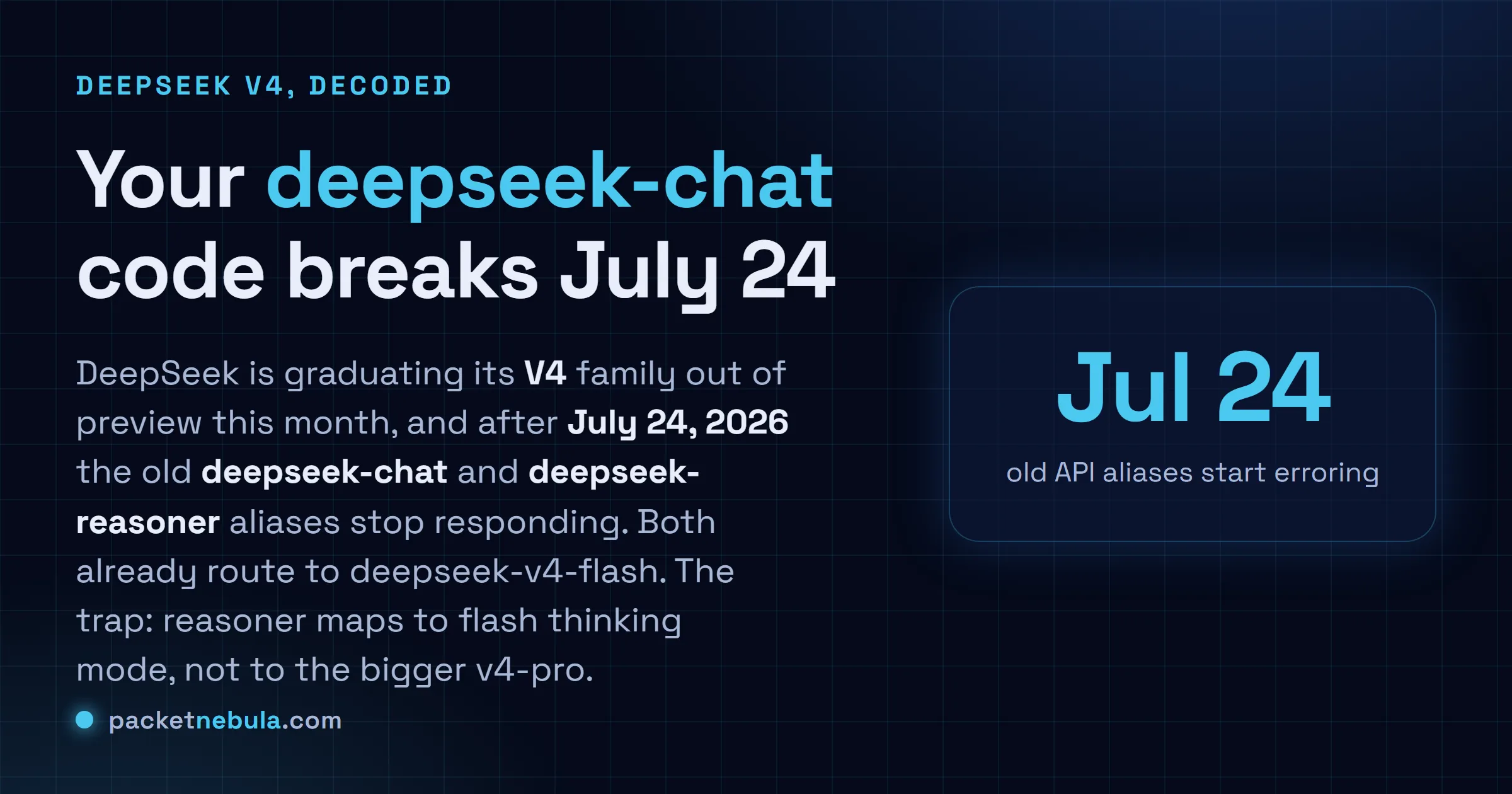
DeepSeek V4 is graduating from preview this month. After July 24, 2026 at 15:59 UTC, the deepseek-chat and deepseek-reasoner aliases stop responding. Both already route to deepseek-v4-flash, so migrating is a one-line model-name change. The catch: deepseek-reasoner maps to v4-flash thinking mode, not the larger deepseek-v4-pro, so heavy reasoning can quietly get a smaller model.
Jul 24old aliases start erroring
$0.28V4-flash output, per 1M
1Mcontext, both models
Answer card: DeepSeek V4 graduates from preview, deepseek-chat and deepseek-reasoner stop responding after July 24 2026, and reasoner maps to v4-flash thinking not the larger v4-pro.
One rename, one deadline, and one trap worth knowing about.

What’s actually happening

DeepSeek shipped V4 as a preview back in April, and this month it’s promoting that preview to the stable, official release. Nothing dramatic there. The part that matters for anyone with DeepSeek in production is quieter, and it’s easy to miss if you only skim the launch notes.

The two model names most people call, deepseek-chat and deepseek-reasoner, are being retired. DeepSeek set a hard cutoff: July 24, 2026, at 15:59 UTC. After that, a request to either alias comes back as an error, not an answer. No grace period, no soft fallback. If your code still names the old models on July 25, it’s broken.

Here’s the thing people get wrong. The models behind those names already changed. Since the V4 preview in April, deepseek-chat and deepseek-reasoner have been routing to deepseek-v4-flash under the hood. So you’re most likely already running V4 and didn’t notice. What dies on July 24 is the old label, not some old model you’ve been clinging to.

Where the old names land

DeepSeek collapsed the two legacy aliases onto a single new model with two modes. deepseek-chat becomes deepseek-v4-flash in its plain, non-thinking mode. deepseek-reasoner becomes the same deepseek-v4-flash, but with thinking switched on. One model, one price, a toggle for whether it reasons out loud before answering.
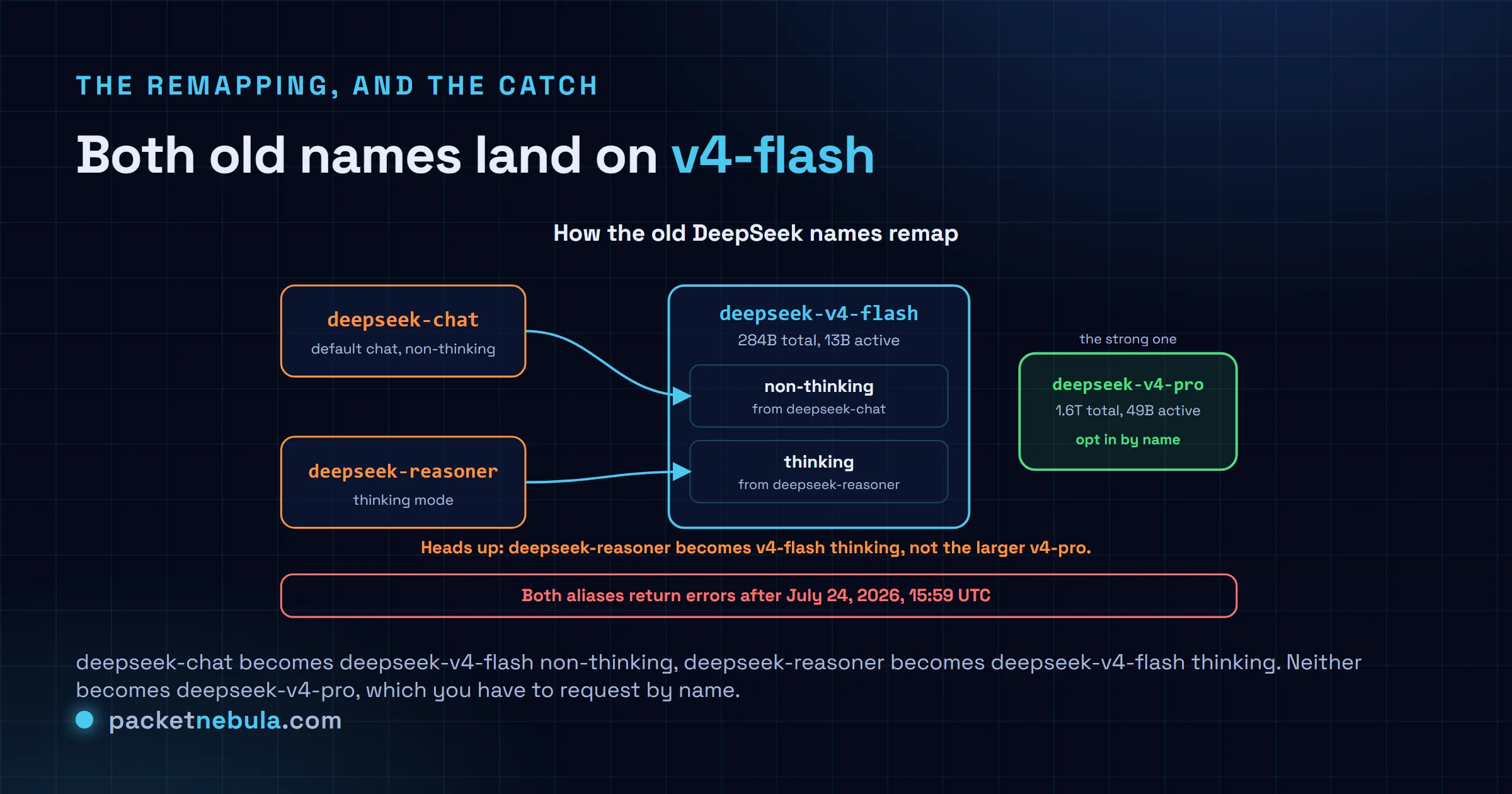
Diagram: deepseek-chat maps to deepseek-v4-flash non-thinking, deepseek-reasoner maps to deepseek-v4-flash thinking, and deepseek-v4-pro sits separate as an opt-in, with both old aliases erroring after July 24 2026.
Both legacy names funnel into v4-flash. The bigger v4-pro is a separate choice you make on purpose.

That consolidation is fine for most workloads. deepseek-v4-flash is a 284B mixture-of-experts model that only lights up about 13B parameters per token, so it’s quick and cheap, and its reasoning mode is genuinely capable. For chat, extraction, classification, the everyday stuff, you probably won’t feel a thing beyond the rename.

The trap, and it’s a real one

Now the part to read twice. deepseek-reasoner does not become deepseek-v4-pro.

V4-pro is the big model: 1.6T total parameters, 49B active, the one DeepSeek positions against the top closed-source names. It’s a separate model ID that you have to request by name. It is not what the reasoner alias falls back to. So if you’d been leaning on deepseek-reasoner for your hardest problems, the ones where you really wanted the strongest thing DeepSeek has, the automatic path drops you onto v4-flash thinking, which is the smaller model. Same quality of output on easy tasks. A real step down on the ones that stretched the model in the first place.

Honestly, this is the kind of change that doesn’t throw an error, so nobody catches it in code review. It just shows up weeks later as “the answers got a little worse and we’re not sure why.” If reasoning quality is load-bearing for you, switch those calls to deepseek-v4-pro on purpose and compare. Don’t let the default decide it for you.

What it costs now

Cheap. That’s the short version. DeepSeek V4 is priced well under most of what you’d reach for from the US labs, and the flash tier is almost aggressive about it.
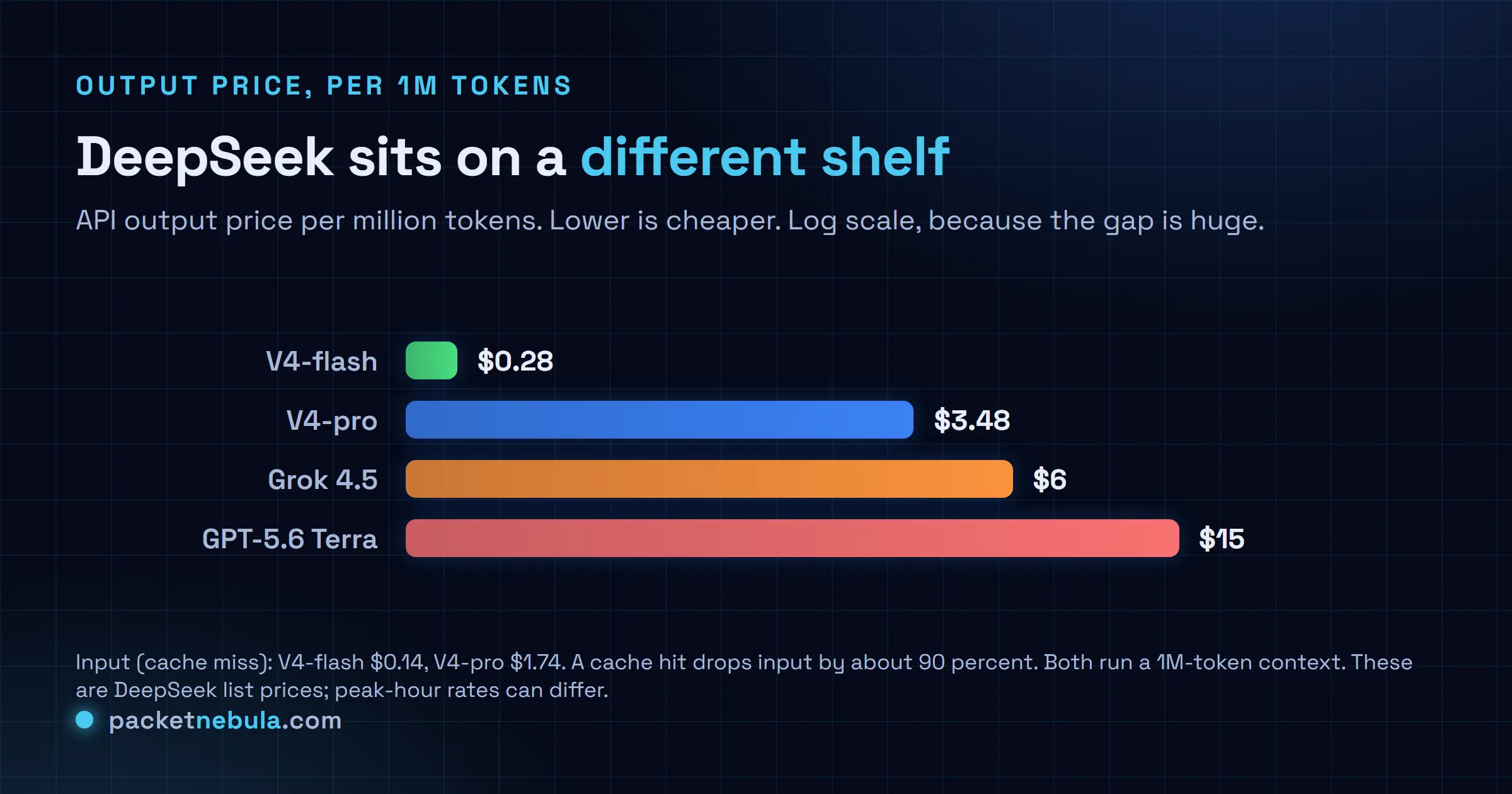
Log-scale bar chart of output price per million tokens: DeepSeek V4-flash 0.28 dollars, V4-pro 3.48 dollars, Grok 4.5 6 dollars, GPT-5.6 Terra 15 dollars.
Output price per million tokens, log scale. DeepSeek is sitting on a different shelf than the frontier.

V4-flash runs about 0.14 dollars per million input tokens on a cache miss and 0.28 on output. V4-pro is roughly 1.74 in and 3.48 out, so the strong model costs more than ten times the flash one, which is worth remembering before you reach for it by reflex. Cache hits knock roughly 90 percent off the input side, which adds up fast if you’re sending the same system prompt on every call. Both models carry a 1M-token context and up to 384K of output, so the size ceiling isn’t the thing you’ll bump into.

For the wider picture on how these cheap open models stack up against each other, our GLM-5.2 versus GPT-5.5 and Opus 4.8 breakdown covers where the value actually lands once you get past the launch numbers.

The swap to make before the deadline

The migration itself is boring, which is the good kind of migration. Same base URL, same API key. You change the model string and that’s basically it.
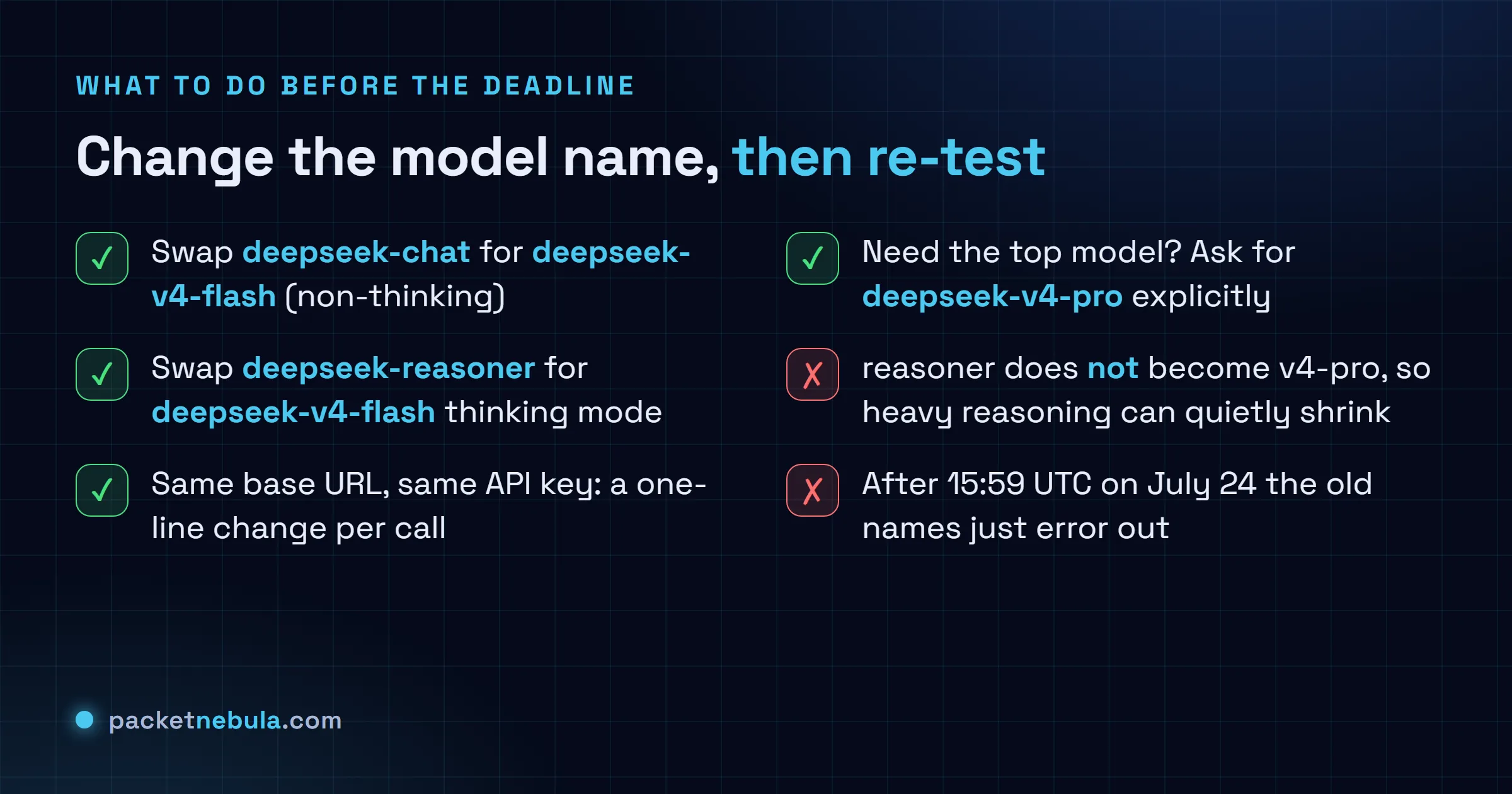
Checklist: swap deepseek-chat to deepseek-v4-flash, swap deepseek-reasoner to v4-flash thinking, same URL and key, request v4-pro explicitly if you need the top model, and note that reasoner does not become v4-pro.
Four small edits, one gotcha. Do it before July 24 rather than at 15:58 UTC.

Find every place your code sends deepseek-chat and change it to deepseek-v4-flash. Find deepseek-reasoner and point it at deepseek-v4-flash with thinking enabled. If any of those calls were carrying real weight, the reasoning-heavy ones, decide deliberately whether they should go to deepseek-v4-pro instead. Then run your own evals against the new names before the cutoff, not after, so a surprise shows up in staging and not in front of a user.

If you’d rather not depend on a hosted alias policy at all, remember V4 is open-weight. DeepSeek published the models the same way it did before, so self-hosting is on the table if you’ve got the GPUs, the same trade we walked through for Tencent’s open 295B Hy3 model. The hosted API is just the path of least resistance.

Is V4 worth staying on

For most teams, yes, and the migration is too small to be a reason to leave. V4-flash is fast and cheap enough that it’s hard to argue with for the bulk of everyday calls, and v4-pro is there when a job genuinely needs the bigger model. The only real homework is the one we keep coming back to: know which of your calls were quietly relying on the reasoner being strong, because those are the ones the automatic remap doesn’t serve well. Fix those by hand, rename the rest, and you’re done well before the 24th.

Sources: DeepSeek’s official V4 preview and API documentation for the model IDs, the deepseek-chat and deepseek-reasoner deprecation date, and the routing details, and Tech Times for the mid-July stable timing. Prices are DeepSeek’s published list rates and can vary by peak-hour billing; benchmark positioning is DeepSeek-reported and not yet independently reproduced.

Frequently asked questions

When do deepseek-chat and deepseek-reasoner stop working?

After July 24, 2026 at 15:59 UTC. Past that timestamp, calls to those two aliases return errors instead of a response. They already route to deepseek-v4-flash today, so the model behind them changed back in April. July 24 is when the old names themselves go away.

What do I change my code to?

Point the model parameter at deepseek-v4-flash instead of deepseek-chat, on the same base URL and API key. If you were calling deepseek-reasoner, use deepseek-v4-flash in thinking mode. It's a one-line change per call, not a rewrite.

Does deepseek-reasoner become deepseek-v4-pro?

No, and that's the part that trips people up. deepseek-reasoner maps to deepseek-v4-flash thinking mode, the smaller 284B model, not the 1.6T deepseek-v4-pro. If your workload leaned on the strongest reasoning, you'll want to ask for v4-pro by name or you'll quietly land on the lighter model.

How much does DeepSeek V4 cost?

V4-flash is about 0.14 dollars per million input tokens on a cache miss and 0.28 output. V4-pro is roughly 1.74 in and 3.48 out. A cache hit drops the input cost by about 90 percent. Both models run a 1M-token context with up to 384K output.

Is DeepSeek V4 open source?

Yes. DeepSeek open-sourced the V4 weights alongside the hosted API, same as it did with earlier versions, so you can self-host if you have the hardware. The hosted API is just the easy path.

Tags: aiapiarticledeepseekdev-toolsllm
Share199Tweet125
stephane

stephane

  • Trending
  • Comments
  • Latest
Answer card: Proton Lumo 2.0 is private by policy, not by locality. Saved history is locked so even Proton cannot read it, but the prompt is decrypted on a Proton EU server to answer it, then forgotten.

Proton Lumo 2.0 review: how private is it, really?

3 September 2026
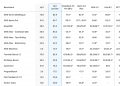
The Agentic Coding section of the official Hy4 preview benchmark appendix published by Tencent, a table comparing Hy3 and Hy4 preview against DeepSeek V4 Pro 0813, Qwen 3.8 Max, GLM 5.3, Kimi K3, GPT 5.6 Sol and Claude Opus 5 across SWE-bench Multilingual, SWE-bench Pro, DeepSWE, three SWE Atlas tasks, SWE-Marathon, Terminal-Bench 2.1, NL2Repo-Bench, CyberGym, ProgramBench, PostTrainBench and Harbor-Index.

Tencent’s 770B Hy4 tops one benchmark row in 46

3 September 2026
Answer card: Qwen 3.7 Max is API-only and cannot run locally yet; the open Qwen models (Qwen 3.6 27B, qwen3:8b to 32b) run offline via Ollama.

Qwen 3.7 local: what you can actually run offline

22 June 2026
Answer card: JWTs are not encrypted, anyone can read them; the signature proves who issued the token, not who may read it.

Are JWTs encrypted? No, and the difference will bite you

0
Answer card: a random 8 character password falls in under 2 hours offline, while 16 random characters hold for 1.4 trillion years at the same speed.

How long does it take to crack a password in 2026?

0
Answer card: three DNS records decide if your mail lands or bounces; SPF lists allowed senders, DKIM signs messages, DMARC sets the failure policy.

SPF, DKIM and DMARC explained: the records your email needs

0
The official xAI announcement card for Grok 4.7, white type on a dark grey and navy gradient.

Grok 4.7 keeps $2 and $6, and its gains over 4.6 are xhigh versus high

22 September 2026
Answer card stating that Qwen-Image-2.1, released on 20 September 2026, ships open weights with a 7 billion parameter diffusion transformer, a Qwen3-VL 8B text encoder and an RGBA VAE totalling about 33 gigabytes in BF16, under the Qwen Research License that limits use to research or evaluation and requires a separate commercial licence, unlike the Apache 2.0 licence of Qwen-Image 1.0.

Qwen-Image-2.1 brings the weights back, but not the Apache licence

21 September 2026
Answer card stating that Ternary Bonsai 2 27B, released by PrismML on 17 September 2026 under Apache 2.0, packs Qwen3.8 27B into 5.95 gigabytes at 1.72 bits per weight, keeps 98.2 percent of the 14-benchmark average, about 75 percent on SWE-bench Verified and Terminal-Bench 2.1, and needs PrismML's llama.cpp fork to run.

Does Bonsai 2 27B really keep 98% of Qwen3.8 in 5.95 GB?

20 September 2026
  • About
  • Contact
  • Privacy
  • Legal

Copyright © 2026 Stephane Cardon.

Welcome Back!

Login to your account below

Forgotten Password?

Retrieve your password

Please enter your username or email address to reset your password.

Log In
No Result
View All Result
  • Home
  • Articles
    • Security
    • Network
    • Dev
    • Sysadmin
    • SEO
    • Email & DNS
  • Tools
    • Network tools: free, fast, no signup
    • Security tools: free, fast, no signup
    • Developer tools: free, fast, no signup
    • Sysadmin tools: free, fast, no signup
    • SEO tools: free, fast, no signup
    • Email & DNS tools: free, fast, no signup
  • Download
  • About

Copyright © 2026 Stephane Cardon.