
• Latest
  • Trending
  • All
Answer card: reveal a saved WiFi password on Windows with netsh wlan show profile name=NetworkName key=clear, reading the Key Content line.

How to see a saved WiFi password on Windows

3 September 2026
Answer card stating that OpenAI released the Agents API in public beta on 10 September 2026 with no separate fee, billed through model tokens, tool calls and hosted sandbox time, with a choice of OpenAI hosted, self hosted or partner sandboxes, US only data residency and no Zero Data Retention support.

OpenAI’s Agents API has no fee, no ZDR and a one hour sandbox clock

14 September 2026
Answer card: Sakana Fugu Max at $2 and $6 per million tokens, Fugu Ultra v2 unchanged at $5 and $30, and Sakana saying Ultra v2 scores without Fable 5 or GPT-6 Astra in its pool.

Fugu Max costs $2 and $6 while Fugu Ultra v2 runs without Fable 5

13 September 2026
Answer card stating that DeepSeek released DeepSeek-V4.1-Flash on 10 September 2026 as a 552 billion parameter mixture of experts model with a new causal encoder decoder architecture that activates 8 billion parameters on input and 16 billion on output, with native vision, a one million token context and MIT licensed weights, that the API model name is now deepseek-flash at 0.15 dollars per million input tokens and 0.60 dollars per million output tokens off peak, and that DeepSeek announced V4 Pro would be routed to V4.1-Flash from 14 September and reversed that on 11 September.

DeepSeek V4.1-Flash arrived, and the V4 Pro retirement lasted a day

12 September 2026
Answer card stating that Cognition released SWE-2 on 10 September 2026, a coding model post-trained from Kimi K3, scoring 50.0 percent on FrontierCode 1.1 Main against 50.9 percent for Claude Fable 5.1 and 27.3 percent on Terminal-Bench 4 against 55.8 percent, available only inside Devin.

SWE-2 trails Fable 5.1 by one point, and by 28 on Terminal-Bench 4

11 September 2026
Answer card for Meta Muse, free to 100 million tokens a week then $20 a month, launched 8 September 2026 for United States adults only, running in a dedicated per user virtual machine.

Does Meta Muse do enough to earn your inbox and a card on file?

9 September 2026
Answer card stating that the public download pages for the VMware Virtual Disk Development Kit on developer.broadcom.com began returning 404 errors on 25 August 2026 with no announcement or deprecation notice, that Broadcom support tells customers the kit is no longer available for use or download, and that release lines 7.0.3.1, 8.x and 9.x are all affected.

Broadcom pulled VDDK 8.0 and 9.0, and the 404 is the only notice

8 September 2026
Answer card stating that OpenAI published its research acceleration measurements on 6 September 2026, that as of mid August 2026 its research organisation logged 3.1 agent workdays of coding agent runtime for every workday of human labour normalised to a standard eight hour day, and that OpenAI states this should not be read as a 3.1 times productivity gain because it measures runtime rather than delivered output.

OpenAI’s 3.1 agent-workdays per human day is not a 3.1x gain

7 September 2026
Answer card stating that Mullvad announced on 3 September 2026 that it is shutting down its public encrypted domain name system servers on 2 November 2026 and sponsoring the Quad9 Foundation instead, with 194.242.2.2 and its five sibling addresses all going away, and virtual private network customers unaffected.

Mullvad’s DNS servers go dark on 2 November, and Quad9 blocks no ads

5 September 2026
OpenAI announcement image for GPT-6 Astra, a spiral galaxy of white, blue and amber points of light curling around a bright core on a near black star field.

GPT-6 Astra lists at $10 and $50, 2.5x what GPT-5.6 Sol costs

6 September 2026
Google's official announcement image for the release, reading Introducing Gemini 3.8 Flash and 3.8 Flash Cyber in black type over a pale blue background with a blurred white chevron and the four colour Gemini spark below.

Gemini 3.8 Flash keeps the price and the 1 January cliff

3 September 2026
Answer card stating that Anthropic announced Enterprise Frontier Safeguards on 1 September 2026, that activity data used for misuse monitoring moves into cloud storage the customer controls under the customer own encryption keys, that Anthropic charges nothing for the feature while the cloud provider bills storage and egress, and that the phased rollout starts later in autumn 2026 with interim zero data retention on Fable 5 and Fable 5.1 for eligible customers.

Anthropic moves retention into your own cloud, for 30 days

3 September 2026
Official Google diagram of a client connection in three numbered steps: a DNS lookup with a query and an address, a TLS ClientHello and ServerHello, then a content exchange with a website. A callout on the DNS step reads 25% of global web traffic is now protected by encrypted DNS, and a callout beside an Android phone on the ClientHello step reads Android 17 supports ECH GREASE by default.

Android 17 hides the SNI, not your DNS or destination

3 September 2026
  • About
  • Contact
  • Privacy
  • Legal
Tuesday, September 15, 2026
  • Login
Packet Nebula
  • Home
  • Articles
    • Security
    • Network
    • Dev
    • Sysadmin
    • SEO
    • Email & DNS
  • Tools
    • Network tools: free, fast, no signup
    • Security tools: free, fast, no signup
    • Developer tools: free, fast, no signup
    • Sysadmin tools: free, fast, no signup
    • SEO tools: free, fast, no signup
    • Email & DNS tools: free, fast, no signup
  • Download
  • About
No Result
View All Result
Packet Nebula
No Result
View All Result
Home Network

How to see a saved WiFi password on Windows

by stephane
3 September 2026
in Network
0
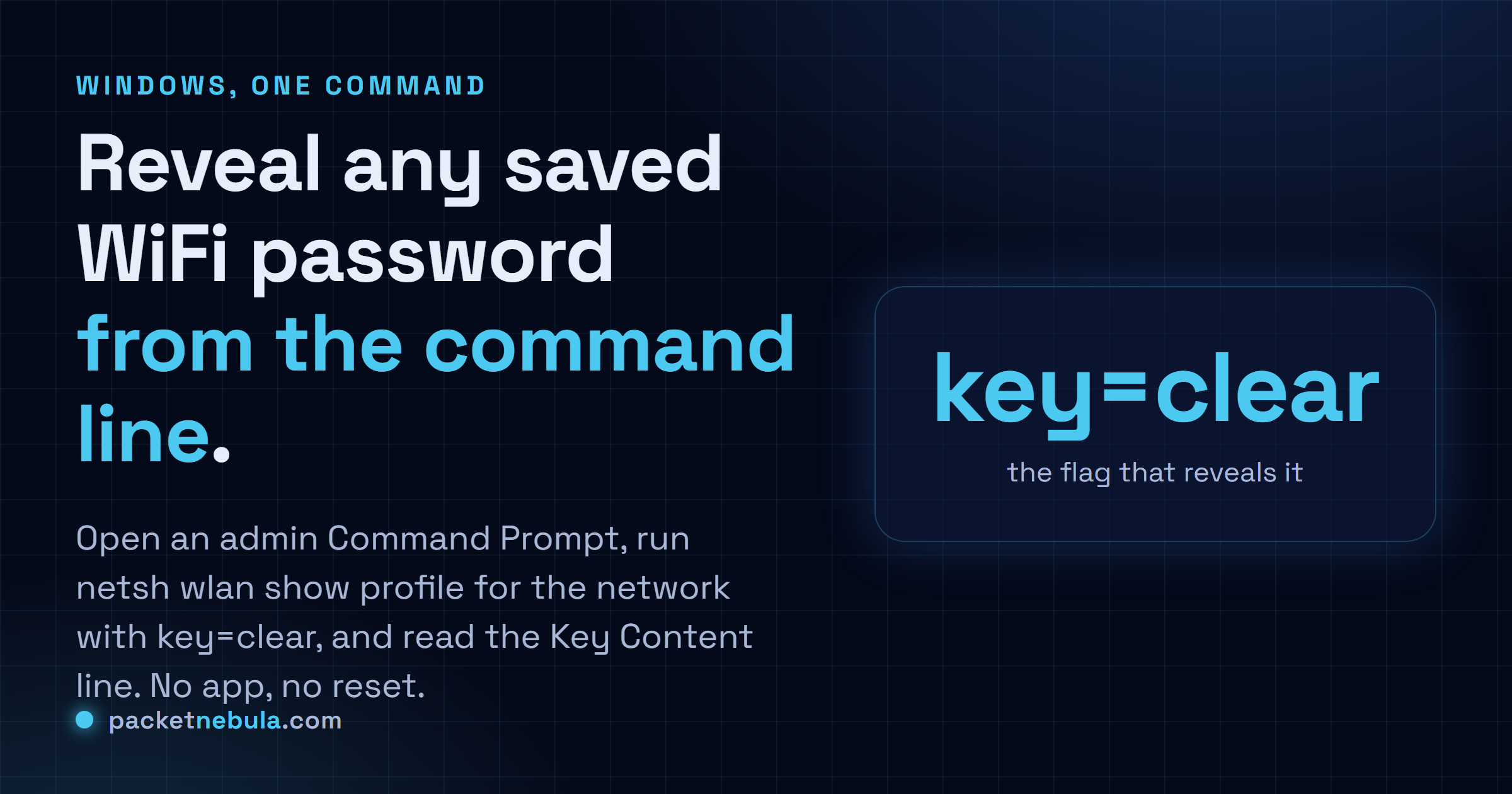
Answer card: reveal a saved WiFi password on Windows with netsh wlan show profile name=NetworkName key=clear, reading the Key Content line.
495
SHARES
1.4k
VIEWS
Share on FacebookShare on Twitter

Someone asks for the WiFi password and you realize you typed it once, two years ago, and it's gone from your head. Your PC hasn't forgotten: one netsh command prints any saved WiFi password on Windows in clear text, nothing to install, nothing to reset on the router. It works the same on Windows 10 and 11. The catch, and it's the one everyone hits, is that the password only shows from a Command Prompt opened as administrator, so that's where we start. Further down there's a PowerShell one-liner that dumps every saved password at once (handy on a new PC) and the two cases where no password will ever appear.

The short answer

Open a Command Prompt as administrator and run netsh wlan show profile name="YourNetwork" key=clear. The password is on the Key Content line. Windows has stored it ever since you first connected, so there’s nothing to reset.
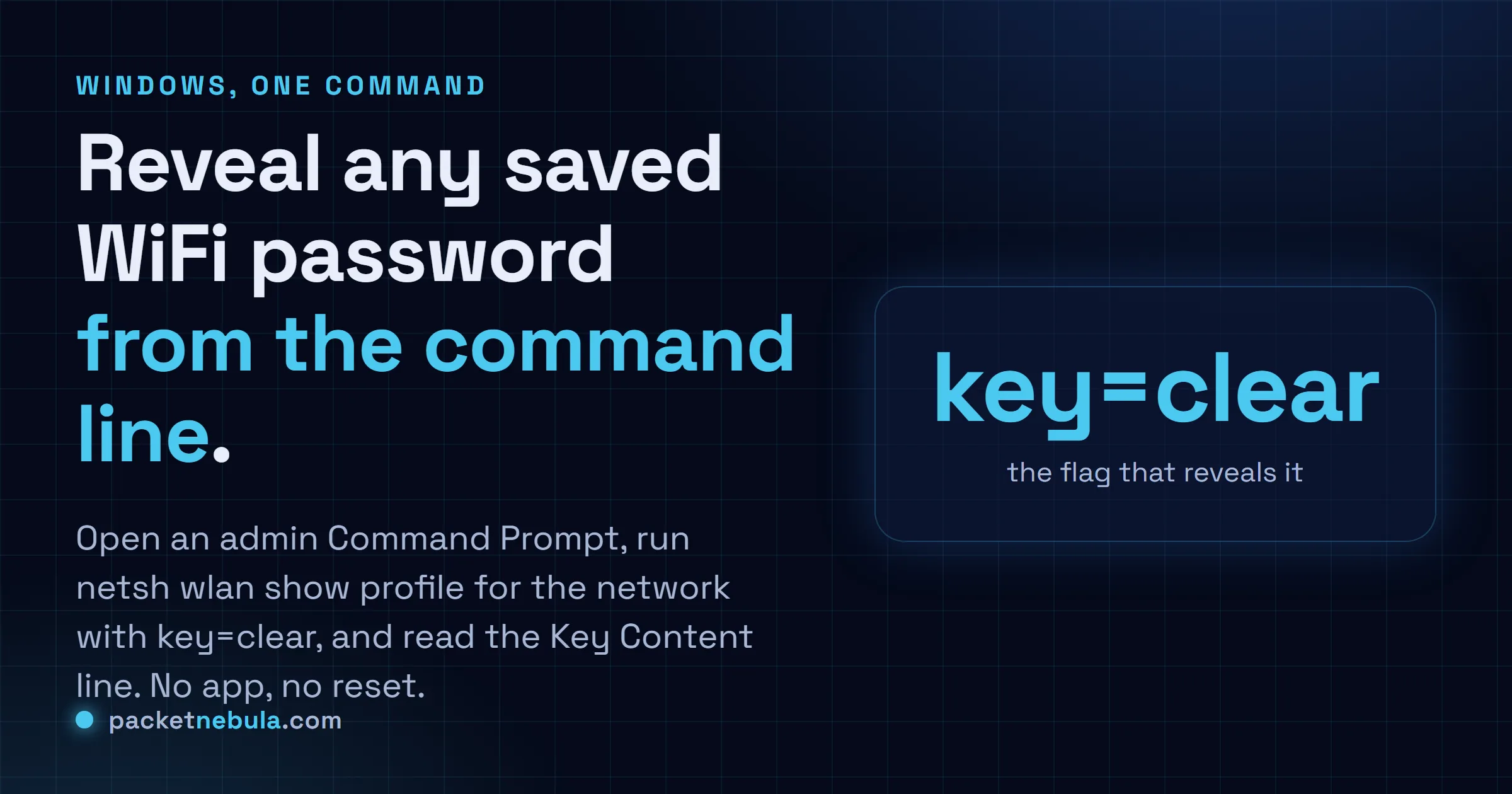
key=clearthe flag that prints it
AdminCommand Prompt required
10 & 11same on both
Answer card showing the netsh wlan command that reveals a saved WiFi password on Windows, with the password on the Key Content line.
The whole thing in one command. The rest is just finding the exact network name.

Open Command Prompt as administrator, then list the networks

This is the part people miss, then wonder why the password never shows. Press the Windows key, type cmd, and instead of hitting Enter, choose Run as administrator. The password only prints from an elevated prompt. A normal one will still list your networks, it just quietly leaves the Key Content line out. No error. Nothing.

You need the exact name of the network, spelled the way Windows saved it. List what it remembers:

Windows
netsh wlan show profiles

You’ll get a block titled “User profiles” with one “All User Profile” line per saved network. Copy the name you want, spelling and capitalization included. If it has spaces or accents, you’ll wrap it in quotes in the next step.

Reveal the password, one network or all of them

Swap in the network name and ask for the key in clear text:

Windows
netsh wlan show profile name="HomeWiFi" key=clear

Scroll to the Security settings section. The line you want is Key Content, and next to it sits your password in plain text. That’s it, really. Here’s the whole sequence end to end:
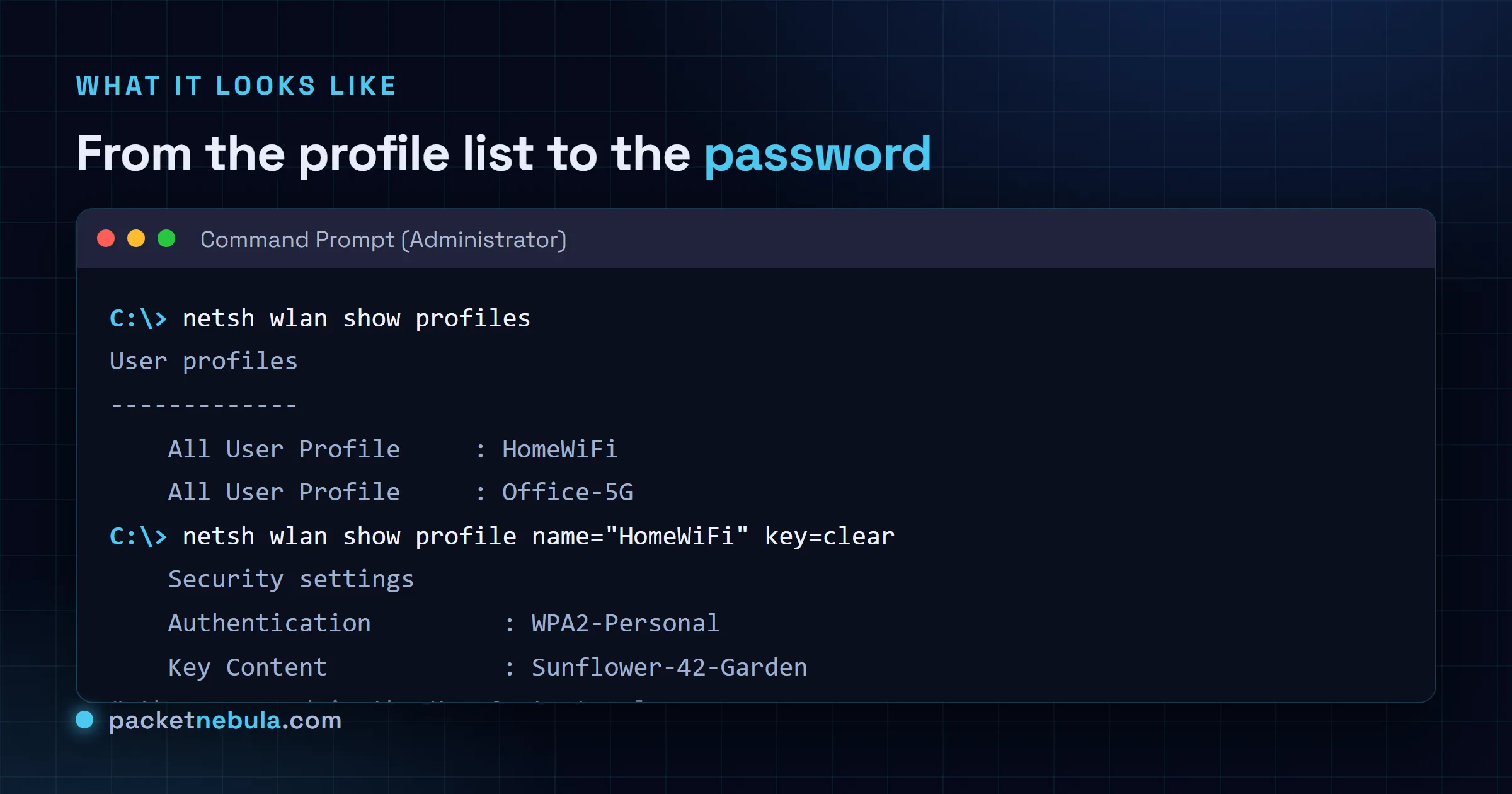
Command Prompt showing netsh wlan show profiles then show profile with key=clear, and the password on the Key Content line.
Profiles first, then the password. Network names and password here are examples.

Setting up a new laptop and want all of them? Open PowerShell as administrator and run this. It walks every profile and prints its name with its key:

PowerShell
(netsh wlan show profiles) | Select-String "All User Profile" | ForEach-Object { ($_ -split ":")[1].Trim() } | ForEach-Object { netsh wlan show profile name="$_" key=clear | Select-String "Key Content" | ForEach-Object { "$_" } }

It’s a bit dense, but it saves you running step 3 twenty times. Honestly I keep it in a notes file and paste it on every fresh install.

When it won’t work

Two real dead ends, plus one typo trap. On an open network there’s no key, so no Key Content, which is expected. On a corporate or campus network using WPA2-Enterprise (you logged in with a username, not a shared password), Windows never had a reusable key to store, so there’s nothing to recover here. And if you get “profile … isn’t found on the system”, recheck the name against the list from step 2, quotes and all.

Other systems work differently, and they each get their own guide: macOS hides saved WiFi keys in Keychain Access (or security find-generic-password in Terminal), and on Linux NetworkManager keeps them under /etc/NetworkManager/system-connections/, readable with nmcli.

Two cases where this genuinely won’t work, and it’s better to know before you start hunting. A corporate network on 802.1X has no shared password to reveal, because your credentials authenticate you rather than a key everyone shares, so key=clear returns nothing useful. And a profile that isn’t saved on this machine can’t be dumped at all, which sounds obvious until you realise Windows drops profiles when you tell it to forget a network.

If the command route is blocked by policy, there’s a graphical fallback for the network you’re connected to right now. Open ncpa.cpl, right click the Wi-Fi adapter, choose Status, then Wireless Properties, then the Security tab, and tick "Show characters". It only ever shows the current network, which is why we reach for the command line when we need more than one.

Frequently asked questions

Do I need administrator rights to see the WiFi password?

Yes. A normal Command Prompt will list your saved profiles just fine, but the key=clear part that prints the password only works from a Command Prompt opened as administrator. Skip the elevation and the Key Content line just isn't there. No error, no warning.

There’s no Key Content line. Why?

Usually it's the admin thing: the prompt wasn't opened as administrator. If it was, look at the network itself. An open network has no password to show. And an enterprise network (WPA2-Enterprise, 802.1X) never had a shared key at all, just your account credentials, which Windows doesn't store as a recoverable password.

Can I get the passwords for every saved network at once?

Yes. There's a short PowerShell one-liner in the last step below that loops over every profile and prints its Key Content. We reach for it every time we set up a new machine, it beats copying passwords one by one.

Does this work on Windows 10 and Windows 11?

Both, and identically. netsh has shipped with Windows for years and the wlan commands haven't changed, so the exact same steps work on Windows 10 and 11.

Tags: guidenetshpasswordwifiwindows
Share198Tweet124
stephane

stephane

  • Trending
  • Comments
  • Latest
Answer card: Proton Lumo 2.0 is private by policy, not by locality. Saved history is locked so even Proton cannot read it, but the prompt is decrypted on a Proton EU server to answer it, then forgotten.

Proton Lumo 2.0 review: how private is it, really?

3 September 2026
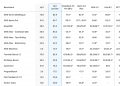
The Agentic Coding section of the official Hy4 preview benchmark appendix published by Tencent, a table comparing Hy3 and Hy4 preview against DeepSeek V4 Pro 0813, Qwen 3.8 Max, GLM 5.3, Kimi K3, GPT 5.6 Sol and Claude Opus 5 across SWE-bench Multilingual, SWE-bench Pro, DeepSWE, three SWE Atlas tasks, SWE-Marathon, Terminal-Bench 2.1, NL2Repo-Bench, CyberGym, ProgramBench, PostTrainBench and Harbor-Index.

Tencent’s 770B Hy4 tops one benchmark row in 46

3 September 2026
Answer card: Qwen 3.7 Max is API-only and cannot run locally yet; the open Qwen models (Qwen 3.6 27B, qwen3:8b to 32b) run offline via Ollama.

Qwen 3.7 local: what you can actually run offline

22 June 2026
Answer card: JWTs are not encrypted, anyone can read them; the signature proves who issued the token, not who may read it.

Are JWTs encrypted? No, and the difference will bite you

0
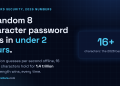
Answer card: a random 8 character password falls in under 2 hours offline, while 16 random characters hold for 1.4 trillion years at the same speed.

How long does it take to crack a password in 2026?

0
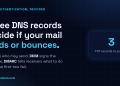
Answer card: three DNS records decide if your mail lands or bounces; SPF lists allowed senders, DKIM signs messages, DMARC sets the failure policy.

SPF, DKIM and DMARC explained: the records your email needs

0
Answer card stating that OpenAI released the Agents API in public beta on 10 September 2026 with no separate fee, billed through model tokens, tool calls and hosted sandbox time, with a choice of OpenAI hosted, self hosted or partner sandboxes, US only data residency and no Zero Data Retention support.

OpenAI’s Agents API has no fee, no ZDR and a one hour sandbox clock

14 September 2026
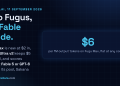
Answer card: Sakana Fugu Max at $2 and $6 per million tokens, Fugu Ultra v2 unchanged at $5 and $30, and Sakana saying Ultra v2 scores without Fable 5 or GPT-6 Astra in its pool.

Fugu Max costs $2 and $6 while Fugu Ultra v2 runs without Fable 5

13 September 2026
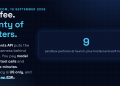
Answer card stating that DeepSeek released DeepSeek-V4.1-Flash on 10 September 2026 as a 552 billion parameter mixture of experts model with a new causal encoder decoder architecture that activates 8 billion parameters on input and 16 billion on output, with native vision, a one million token context and MIT licensed weights, that the API model name is now deepseek-flash at 0.15 dollars per million input tokens and 0.60 dollars per million output tokens off peak, and that DeepSeek announced V4 Pro would be routed to V4.1-Flash from 14 September and reversed that on 11 September.

DeepSeek V4.1-Flash arrived, and the V4 Pro retirement lasted a day

12 September 2026
  • About
  • Contact
  • Privacy
  • Legal

Copyright © 2026 Stephane Cardon.

Welcome Back!

Login to your account below

Forgotten Password?

Retrieve your password

Please enter your username or email address to reset your password.

Log In
No Result
View All Result
  • Home
  • Articles
    • Security
    • Network
    • Dev
    • Sysadmin
    • SEO
    • Email & DNS
  • Tools
    • Network tools: free, fast, no signup
    • Security tools: free, fast, no signup
    • Developer tools: free, fast, no signup
    • Sysadmin tools: free, fast, no signup
    • SEO tools: free, fast, no signup
    • Email & DNS tools: free, fast, no signup
  • Download
  • About

Copyright © 2026 Stephane Cardon.